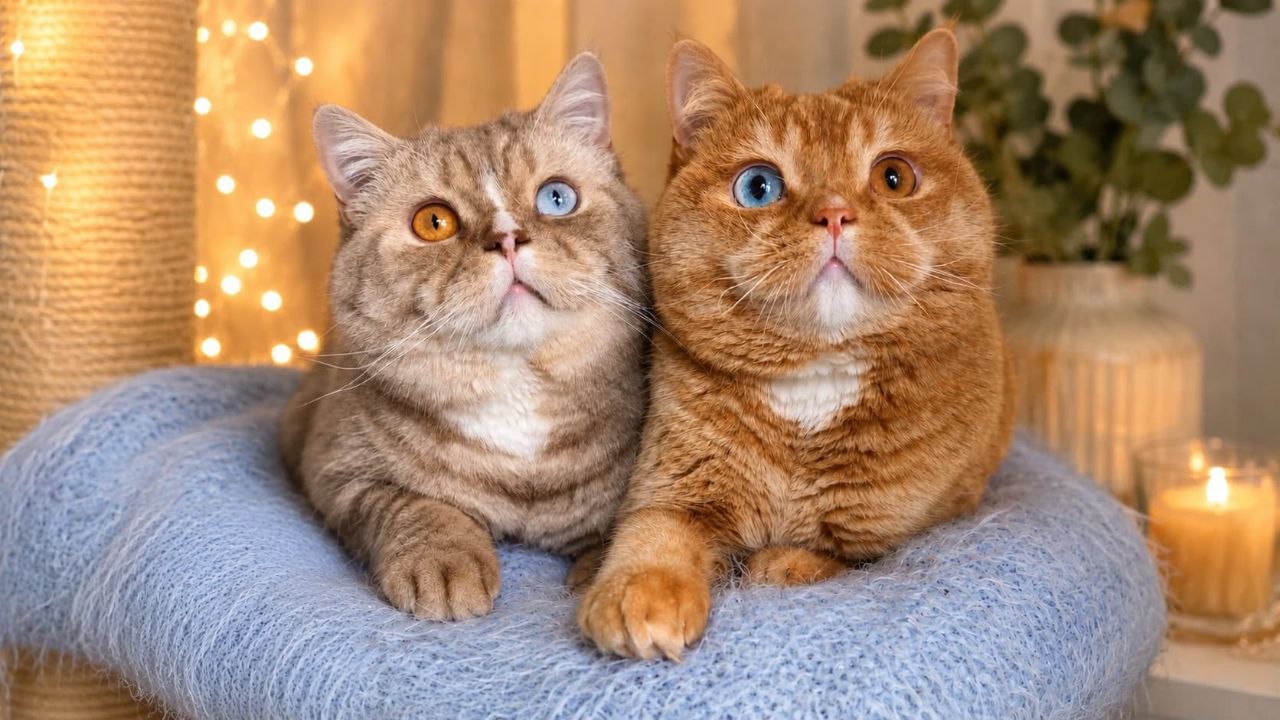
When admirers of pedigree felines search for a british grey cat, they are seeking the most iconic, historically celebrated variety in the felinological world: the classic British Blue (FIFe EMS code `BRI a`). Renowned for its uniform, velvety light-to-medium slate coat, broad round cheeks, muscular cobby physique, and blazing copper-orange eyes, the grey british shorthair has served as the flagship ambassador of the breed since Harrison Weir organized the first Crystal Palace cat show in London in 1871.
In official international registries—including the Fédération Internationale Féline (FIFe Standard #729) and the World Cat Federation (WCF)—all shades of slate, silver-ash, and lavender-slate solid coats are formally designated as "Blue." Yet outside the show ring, families almost universally refer to this plush aristocrat as the british grey or gray british cat. At Grand Liberty, operating under §11 of the German Animal Welfare Act (TierSchG) and FIFe registration #729, we preserve championship British Blue lineages backed by comprehensive Laboklin genetic screening and Doppler cardiac clearances. This guide explores the molecular genetics, show standards, eye color maturation, and care of the authentic british grey companion.
What Is a British Grey Cat? Felinological History of the Classic British Blue (BRI a)
To understand why the british grey commands such enduring global admiration, one must look at the origins of pedigree cat breeding in Victorian Britain. During the late nineteenth century, British breeders selected the strongest, roundest-faced native cats to establish a distinct national breed. While early exhibitions featured tabbies and blacks, the solid slate-blue variant rapidly captured the public imagination—so much so that for decades the breed was known simply as the "British Blue" before other color divisions were grouped under the broader British Shorthair title.
Following the devastation of European breeding stock during the First and Second World Wars, dedicated preservationists carefully reconstructed the grey british gene pool, utilizing selective crosses with Chartreux, Russian Blue, and blue Persian lines before closing the studbooks to stabilize the unmistakable British phenotype. Today, an authentic british grey (`BRI a`) is strictly defined by a massive spherical head, short broad neck, compact deep-chested torso, heavy legs, and a short, ultra-dense double coat that stands crisp and resilient away from the body.
Coat Genetics of the Grey British Shorthair: Dense Melanin Dilution (B/B, d/d)
From a molecular genetics standpoint, no feline actually produces a "grey" pigment molecule. Instead, the mesmerizing slate hue of a gray british cat is an optical effect created by the structural modification and clumping of black eumelanin granules within the developing hair shaft.
The classic `BRI a` phenotype requires the precise interaction of three primary genetic loci:
1. The Black Eumelanin Locus (`B/B`, `B/b`, or `B/bl`): The cat must carry at least one dominant wild-type `B` allele, instructing melanocytes to synthesize deep black eumelanin pigment rather than chocolate (`b`) or cinnamon (`bl`). 2. The Non-Agouti Solid Locus (`a/a`): To achieve a completely solid coat free of tabby stripes, the cat must be homozygous recessive (`a/a`) at the Agouti (ASIP) locus. This turns off the banding signal in individual hairs, ensuring pigment is deposited continuously from tip to root. 3. The Maltese Dilution Locus (`d/d`): The transformation from jet black (`BRI n`) to british grey (`BRI a`) occurs at the Melanophilin (MLPH) gene. When a kitten inherits two recessive dilution alleles (`d/d`), the transport of melanosomes within the hair follicle is altered. Instead of packing pigment evenly throughout the cortex, the `d/d` genotype causes eumelanin granules to clump irregularly, leaving microscopic spaces that scatter light and reflect a cool, powdery blue-grey tone to the human eye.
Why a True Gray British Coat Must Be Sound to the Roots Without Tabby Ghost Markings
Under FIFe Standard #729, evaluating a grey british coat involves four strict visual and tactile criteria:
- Tone and Uniformity: The preferred shade is a light to medium pure blue-grey, completely even across the head, back, flanks, and tail. Very dark charcoal-slate coats or uneven patches are penalized on the show bench.
- Soundness to the Root: When you part the plush fur of a championship british grey, every single hair shaft must maintain the exact same blue-grey intensity from the outer tip all the way down to the skin follicle. A pale or whitish undercoat indicates residual silver inhibitor genes or poor pigmentation soundness.
- Absence of Ghost Tabby Rings: While many solid gray british kittens display faint "ghost" tabby rings on their tails or flanks during their first four to six months of life, top pedigree bloodlines shed these juvenile markings completely as the dense adult double coat emerges between eight and twelve months of age.
- Leather and Nasal Pigmentation: Both the nose leather and all paw pads must be a uniform slate-blue, free of pink spots.
FIFe #729 Show Conformation Standards: British Grey vs. Lookalike Grey Breeds
Prospective buyers searching for a british grey frequently confuse the British Blue (`BRI a`) with two other historical grey breeds—the Russian Blue and the Chartreux—or with unpedigreed grey domestic cats. While all four wear grey coats, their skeletal architecture, fur mechanics, and eye colors are radically different:
| Morphological Feature | British Grey / Blue (`BRI a` - FIFe #729) | Russian Blue (`RUS`) | Chartreux (`CHA`) | Grey Domestic Shorthair |
|---|---|---|---|---|
| Body Conformation | Cobby, low-slung, massive bone & broad chest | Long, lithe, graceful foreign build | Robust and muscular on fine legs | Variable; typically slender to medium frame |
| Head & Facial Shape | Massive spherical skull, chubby cheeks, broad nose | Flat skull, straight wedge profile, prominent whisker pads | Inverted trapezoid head with high flat space between ears | Triangular or oval head with narrower muzzle |
| Adult Eye Color | Deep, vivid copper, orange, or rich gold | Vivid emerald green ONLY | Pale gold to copper-orange | Yellow-green, hazel, or pale amber |
| Coat Texture & Structure | Short, ultra-dense, crisp plush double coat | Double coat with translucent silver-tipped guard hairs | Slightly longer, woolly double coat that breaks open | Flat-lying single or light double coat |
| Adult Weight Range | 3.5–5.5 kg (Females) / 5.0–7.7 kg (Males) | 2.5–3.8 kg (Females) / 3.5–5.0 kg (Males) | 3.0–4.5 kg (Females) / 4.5–6.5 kg (Males) | 3.0–4.5 kg average |
Eye Color Maturation in a Grey British Kitten: From Juvenile Blue-Grey to Deep Copper
One of the most captivating visual signatures of an adult british grey cat is the dramatic contrast between its cool slate-blue fur and its fiery copper-orange eyes. However, prospective owners viewing young kittens must understand that no kitten is born with copper eyes.
Every grey british kitten opens its eyes between seven and twelve days of age revealing a protective neonatal blue-grey iris. Melanocytes within the anterior stromal layer of the iris begin synthesizing warm pheomelanin and eumelanin pigments around six to eight weeks of age:
1. Weeks 6 to 12 (Transition Phase): An amber or olive-gold ring forms around the pupil and gradually expands outward toward the limbus as the juvenile blue haze recedes. 2. Months 4 to 8 (Developing Orange Phase): By the time a kitten leaves Grand Liberty at 14 to 16 weeks, the iris displays a clear, promising golden-amber hue free of permanent green rims. 3. Months 12 to 24 (Peak Copper Maturity): Full pigment saturation continues deepening throughout the cat's first two years, culminating in the deep burnished copper or ripe persimmon orange prized by FIFe judges.
Important Caution: In an authentic solid `BRI a` gray british cat, a permanent green ring around the pupil in adulthood is considered a conformational fault, often resulting from improper outcrossing with silver shaded (`BRI ns 11`) lines. At Grand Liberty, we maintain strictly separated copper-eyed solid breeding programs and emerald-eyed silver/golden programs to preserve pure ocular pigmentation.
Health, Hereditary Screening (Laboklin PKD1 & HCM), and Coat Care for a Gray British Cat
Because the british grey is the most popular variety worldwide, it has been targeted by commercial backyard breeders who mate unscreened blue cats without regard for genetic health. Protecting your family from preventable veterinary heartbreak requires verifying rigorous clinical standards before reserving a kitten.
Buyer Verification & Care Checklist for an Authentic British Grey
Use this practical checklist when evaluating a breeder and preparing for your british grey companion:
- [ ] Verify Official Pedigree (`BRI a`): Confirm that both parents hold registered four-to-five-generation pedigrees from FIFe, WCF, TICA, or GCCF, and verify that their lineage consists of copper-eyed solid/dilution ancestors.
- [ ] Demand Laboklin PKD1 DNA Clearance: Insist on inspecting original veterinary laboratory certificates from Laboklin GmbH confirming both parents are genetically negative (N/N) for Polycystic Kidney Disease.
- [ ] Check Annual HCM Doppler Echocardiography: Ensure both sire and dam undergo regular cardiac ultrasound screening by a board-certified veterinary cardiologist to rule out Hypertrophic Cardiomyopathy.
- [ ] Confirm Blood Group Compatibility (Type A vs. Type B): Approximately 20% to 35% of classic British Blue lines carry the recessive Blood Type B (`b/b`) allele. Ethical breeders Laboklin-test every breeding cat's blood group (`N/N`, `N/b`, or `b/b`) to prevent fatal Neonatal Isoerythrolysis in newborns—and knowing your kitten's blood type is vital prior to any future surgery.
- [ ] Avoid Direct Sun Bleaching ("Rusting"): Prolonged exposure to intense UV sunlight combined with tyrosine amino acid deficiencies can oxidize eumelanin in a gray british coat, creating a brownish "rust" tint. Feed a high-meat wet diet rich in animal protein to keep the slate coat cool and pure.
- [ ] Brush Weekly with a Rubber Grooming Glove or Steel Comb: Maintain the crisp plush texture by gently lifting shed undercoat once or twice a week without using sharp deshedding blades.
Welcoming an Aristocratic British Grey Kitten from Grand Liberty
With its serene disposition, teddy-bear contours, and timeless slate-and-copper palette, the british grey remains the quintessential aristocrat of the feline kingdom. Raised underfoot in our §11 TierSchG licensed home nursery for 14 to 16 weeks, every Grand Liberty kitten arrives fully vaccinated, microchipped, and accompanied by an official FIFe pedigree and comprehensive health warranty.
Browse our currently available British Shorthair kittens for sale, admire our champion breeding studs and queens, or learn more about our international delivery and reservation procedures. To discuss upcoming classic British Blue litters, book an appointment through our master breeder consultation service.