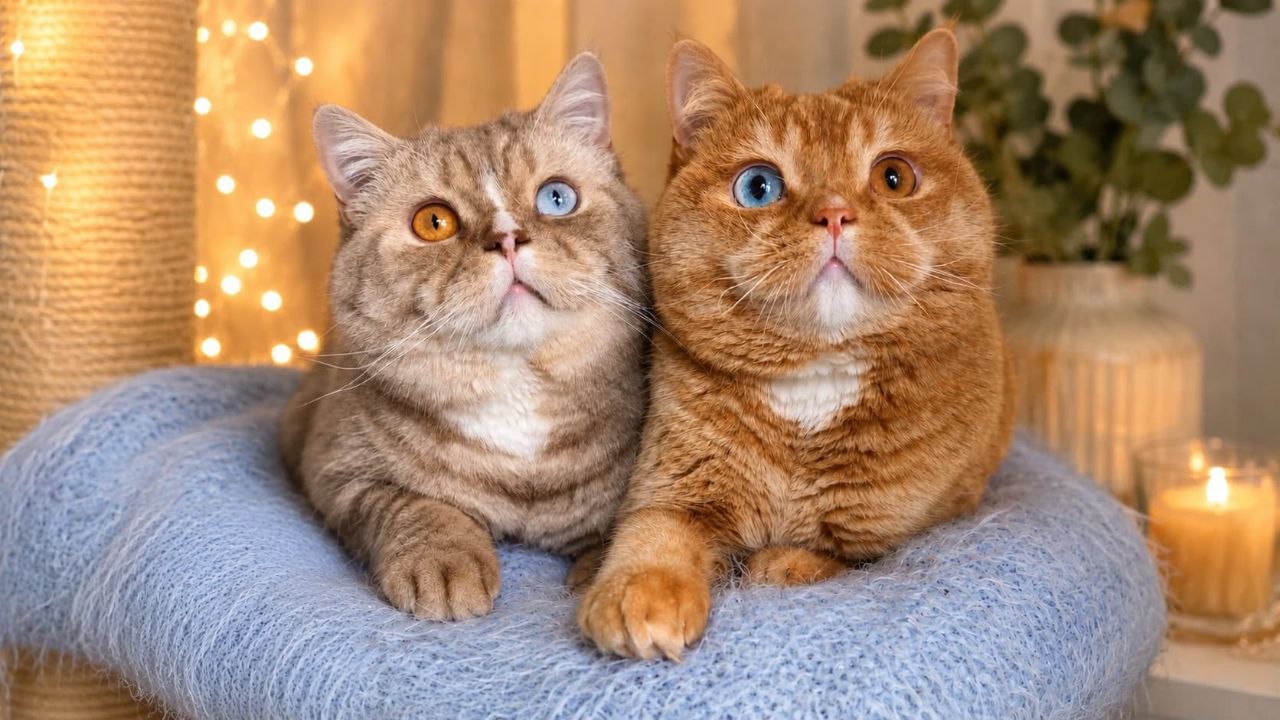
Designing an optimal british shorthair diet is the single most impactful daily decision a guardian makes for their cat's muscular development, coat density, renal longevity, and cardiovascular health. Because the British Shorthair is a heavy-boned, slow-maturing breed with a calm indoor lifestyle, generic supermarket feeding regimens frequently lead to visceral obesity, feline lower urinary tract disease (FLUTD), and dull, shedding coats. Answering what do british shorthair cats eat requires returning to feline evolutionary biology: as strict obligate carnivores, British Shorthairs thrive on a high-moisture (75–80%), high-animal-protein (>70% skeletal muscle and nutrient-rich organ meat), grain-free, and sugar-free wet diet.
At Grand Liberty—licensed under Section 11 of the German Animal Welfare Act (§11 TierSchG) and registered with FIFe (#729) and WCF—every litter is raised on human-grade, species-appropriate wet nutrition alongside Laboklin-verified genetic health protocols. This clinical nutrition guide details how to select the best food for british shorthair cat wellness, establishes a month-by-month british shorthair kitten diet schedule, and teaches you how to decode commercial pet food labels with veterinary precision.
What Do British Shorthair Cats Eat? Obligate Carnivore Physiology and Macronutrient Needs
To understand what constitutes the best food for british shorthair companions, one must examine the anatomical specialization of Felis catus. Unlike omnivorous dogs or humans, cats possess a short, highly acidic gastrointestinal tract evolved specifically to digest raw animal prey (mice, small birds, and insects) containing roughly 70–75% water, 55–60% protein on a dry-matter basis, 25–30% animal fat, and less than 2% carbohydrates.
Consequently, a biologically appropriate british shorthair diet must respect four non-negotiable metabolic laws:
1. Dependence on Animal Amino Acids (Taurine & Arginine): Cats cannot synthesize adequate amounts of the sulfonic amino acid taurine from plant precursors. Taurine deficiency causes irreversible dilated cardiomyopathy (DCM), central retinal degeneration (blindness), and reproductive failure. Because British Shorthairs already require vigilant cardiac stewardship, feeding heart-muscle-rich wet british shorthair food providing at least 1,500 to 2,500 mg of taurine per kilogram of dry matter is vital. 2. Inability to Process High Dietary Carbohydrates: Felines lack salivary amylase and have limited pancreatic amylase activity and hepatic glucokinase function. When fed cereal-heavy or potato-heavy kibble containing 30–45% starch, a British Shorthair experiences prolonged postprandial hyperglycemia and insulin spikes, converting unutilized carbohydrates directly into abdominal fat and predisposing the cat to Type 2 feline diabetes mellitus. 3. Preformed Vitamin A, Arachidonic Acid, and Vitamin D3: Cats lack the intestinal enzymes required to convert plant beta-carotene into active Vitamin A or plant linoleic acid into arachidonic acid. These nutrients must be supplied directly through animal liver, egg yolk, and poultry or marine fats. 4. Low Thirst Drive and Moisture Reliance: Descended from desert wildcats (Felis lybica), British Shorthairs have a naturally blunted thirst reflex. They are physiologically programmed to absorb 75–80% of their daily water intake directly from their food rather than a water bowl.
Defining the Best Food for British Shorthair Cat Health and Longevity
When evaluating any commercial british cat food, the gold standard is a complete, open-declaration wet food (marked Alleinfuttermittel under EU/German feed regulations) containing 70% to 95% clearly named animal ingredients (such as turkey heart, chicken breast, beef lung, duck liver, or venison), 2% to 5% low-glycemic vegetable fiber (such as pumpkin or zucchini for hairball transit), zero grains, zero added sugars or caramel, and balanced calcium-to-phosphorus ratios (ideally 1.15:1 to 1.25:1).
Wet Food vs. Dry Kibble: Choosing the Best Food for British Shorthair Urinary and Renal Wellness
One of the most persistent misconceptions in pet care is that dry extruded kibble cleans feline teeth and serves as a convenient staple british shorthair cat food. Veterinary dentistry and nephrology studies have repeatedly debunked this myth: standard kibble shatters upon first contact with the carnassial teeth without scraping subgingival plaque, while its 8–10% moisture content leaves the cat in a state of chronic subclinical dehydration.
When a British Shorthair subsists primarily on dry kibble, urine specific gravity rises sharply and urinary volume drops, creating a supersaturated bladder environment where struvite (magnesium ammonium phosphate) and calcium oxalate crystals precipitate. In male British Shorthairs—whose penile urethra is narrow—urinary crystals or mucous plugs can cause life-threatening urethral obstruction within 24 to 48 hours.
Nutritional Comparison Matrix: British Shorthair Cat Food Modalities
The table below compares the three primary feeding modalities used for british shorthair food:
| Nutritional Parameter | High-Meat Complete Wet Food (Recommended) | Biologically Appropriate Raw Food (Balanced BARF) | Commercial Dry Kibble (Not Recommended as Staple) |
|---|---|---|---|
| Moisture Content | 75% – 82% (Protects kidneys & urinary tract) | 70% – 78% (Natural cellular hydration) | 7% – 10% (Induces chronic low-grade dehydration) |
| Animal Protein Quality | 70% – 90%+ named muscle & organ meats | 95%+ raw muscle meat, heart, liver & bone | 20% – 45% (Often diluted with pea/corn plant proteins) |
| Carbohydrate Load (Dry Matter) | < 3% – 5% (Prevents obesity & insulin spikes) | < 1% – 2% (Physiologically optimal) | 25% – 45% starch (Required to bind extruded pellets) |
| Urinary Stone & CKD Risk | Very Low (High urine dilution & optimal pH 6.2–6.5) | Very Low when Ca:P ratio is precisely balanced | High risk of struvite/oxalate crystals & renal strain |
| Digestibility & Stool Odor | High digestibility; small, low-odor stools | Maximum bioavailability; minimal stool volume | Lower digestibility; bulky, malodorous stools |
| Preparation & Biosecurity | Ready to serve; steam-sterilized in sealed cans | Requires strict supplement calculation & freezing | Convenient, but oxidizes rapidly & breeds storage mites |
British Shorthair Kitten Diet: How to Feed British Shorthair Kitten Stages (3 to 12 Months)
Because British Shorthairs build massive bone density and heavy cobby musculature during their first year, establishing a structured british shorthair kitten diet is critical. Kittens have tiny stomach capacities paired with metabolic energy requirements two to three times higher per kilogram of body weight than adult cats.
Selecting the Best Food for British Shorthair Kitten and Best Kitten Food for British Shorthair Growth
When searching for the best food for british shorthair kitten development—or comparing options labeled as the best kitten food for british shorthair lines—note that in nature, weaned kittens do not eat "kitten mice." If you feed a premium, high-meat wet brand containing >70% animal meat and rich natural taurine and calcium, both its Kitten mousse and Adult fine-paté formulas provide outstanding growth nutrition—kittens simply eat larger relative portions.
Follow this age-calibrated schedule for how to feed british shorthair kitten stages from weaning through adulthood:
- Weeks 4 to 14 (Nursery Weaning & Socialization at Grand Liberty): Kittens transition gradually from maternal milk to warm, finely minced poultry and beef wet mousse mixed with goat milk or colostrum, offered 5 to 6 times daily. By 14 weeks, kittens are eating 200 to 280 grams of high-meat wet food daily across five meals.
- Months 4 to 6 (Post-Adoption Rapid Growth Phase): Offer 4 to 5 fresh wet meals per day, totaling 250 to 350 grams daily depending on gender and appetite. Never restrict calories in a healthy kitten under six months of age; growing bones and organs require abundant bioavailable protein and fat.
- Months 6 to 10 (Adolescent Elongation & Dental Completion): Transition to 3 to 4 meals per day (approximately 250 to 320 grams of wet food). Around six to seven months, offer occasional raw chicken necks or chewy freeze-dried meat strips (under supervision) to massage gums and exercise the jaw muscles.
- Months 10 to 12+ (Transition to Adult Maintenance): Settle into a lifelong rhythm of 3 structured wet meals per day (morning, late afternoon, and bedtime), feeding roughly 40 to 50 grams of high-meat wet food per kilogram of ideal adult body weight (approximately 200–250g/day for an adult female and 250–320g/day for an adult male).
Reading Labels on British Shorthair Food: Essential Nutrients vs. Harmful Fillers
Marketing claims on the front of a british cat food can or pouch—such as "Gourmet," "Breed Specific," or "With Salmon"—are legally meaningless unless backed by the statutory analytical declaration on the back label.
Daily Feeding & British Cat Food Label Inspection Checklist
Use this veterinary checklist whenever auditing a british shorthair cat food brand or structuring your daily kitchen routine:
- [ ] Verify Open Ingredient Declaration: The label must state exact percentages for every meat source and organ (e.g., "70% Chicken (consisting of 45% chicken muscle meat, 15% chicken hearts, 10% chicken liver, 28.8% broth, 1% minerals)"). Reject vague closed declarations like "Meat and animal derivatives (of which 4% beef)."
- [ ] Check Guaranteed Analytical Constituents (Wet Food): Look for Crude Protein ≥ 10.5%–12.0%, Crude Fat 5.0%–6.5%, Crude Ash ≤ 2.0%–2.2%, Crude Fiber 0.3%–0.5%, and Moisture 75%–80%.
- [ ] Confirm Zero Grains, Gluten, Soy, and Sugar: Eliminate any formula containing wheat, corn gluten, soy protein isolate, rice fillers, caramel coloring, or inulin/sugar syrups.
- [ ] Serve Food at "Mouse Body Temperature" (35°C–38°C): Never serve wet food straight from the refrigerator; cold food dulls aroma and causes gastric irritation or regurgitation. Stir in 1 to 2 tablespoons of warm filtered water before serving to release natural meat aromas and boost hydration.
- [ ] Use Wide, Shallow Ceramic or Stainless Steel Bowls: British Shorthairs have broad faces and sensitive vibrissae (whiskers). Deep, narrow bowls cause "whisker fatigue." Use flat, wide ceramic saucers and wash them after every meal to prevent feline chin acne (feline furunculosis).
- [ ] Place Ceramic Drinking Fountains Away from Food Bowls: Instinctively, wild cats avoid drinking water near a carcass due to contamination risk. Position running water fountains in separate rooms at least two meters away from feeding stations and litter boxes.
Hydration, Dental Myths, and Weight Management in Pedigree Bloodlines
A truly holistic british shorthair diet works in harmony with verified genetics and weight stewardship. Because authentic British Shorthairs from Grand Liberty originate from parents certified clear of PKD1 via Laboklin GmbH DNA testing and screened annually via Doppler echocardiography for HCM, preserving that pristine organ health through moisture-rich, low-phosphorus-ash wet food allows your companion to thrive for 15 to 20 years.
To monitor how your feeding regimen translates into healthy skeletal and muscular growth, consult our British Shorthair weight and month-by-month growth chart. If you are preparing to welcome a kitten raised on gold-standard nutrition from day one, explore our available British Shorthair kittens for sale, meet our champion breeding sires and dams, review our international delivery and reservation guide, or schedule a tailored nutritional and selection call through our master breeder consultation service.