FIFe #729 & WCF #36768-2021(B) Standard

British Shorthair Colours & Coat Genetics

Explore all 12 recognized British Shorthair colour varieties bred at Grand Liberty Cattery in Germany (§11 TierSchG). Compare EMS codes, eye colours, genetics, and coat care.

Bi-color British Shorthair

EMS: BRI 03

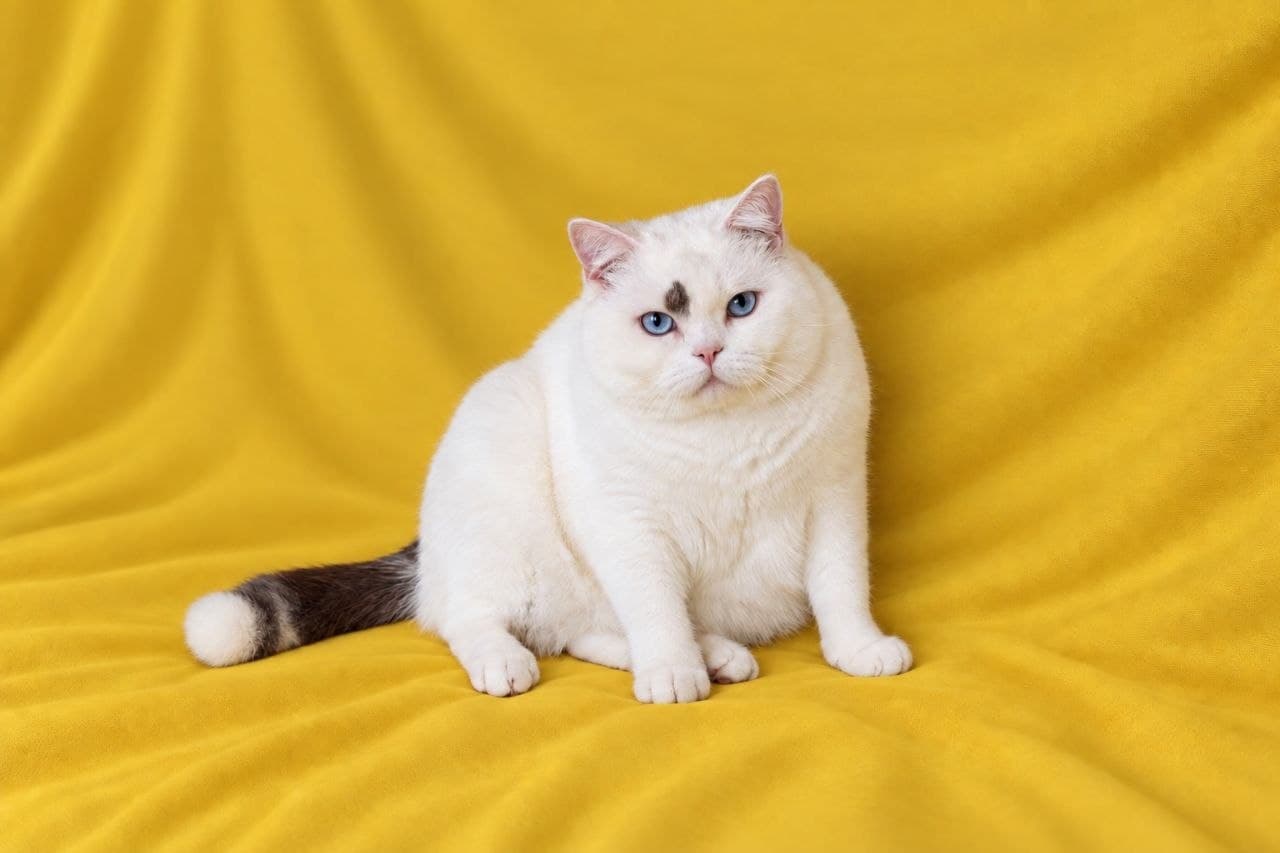
The bi color british shorthair is a masterpiece of feline genetics, combining the sturdy, plush elegance of the BSH breed with striking white markings. Often described as a british shorthair with white, these cats feature a pristine white base accented by patches of solid or tabby colors such as blue, black, or chocolate. This contrast creates a visually stunning "tuxedo" or "patched" effect that has made them a favorite among cat enthusiasts worldwide. The distinctive look of a bicolor bsh kitten is governed by the white spotting gene (S). This incomplete dominant gene determines how much white appears on the coat. In the competitive show world, a classic "bi-color" typically has between one-third and one-half white. If the cat is mostly white with color only on the head and tail, it is known as a "Van" pattern, while "Harlequin" falls somewhere in between. Ideally, for show requirements, the color patches should be clear, well-defined, and uniform in color, often featuring a symmetrical "inverted V" of white on the face, which adds to their aristocratic charm. Beyond their stunning appearance, bi-colors are celebrated for their exceptional temperament. At Grand Liberty Cattery, we often find that our bicolor kittens are particularly social and outgoing. While all British Shorthairs are known for their "calm and collected" nature, the bi-color variety often exhibits a more inquisitive and playful personality. They are affectionate companions who integrate seamlessly into busy family life, making them a top choice for those seeking a balanced, velvety friend. Owning a british shorthair with white requires a bit of extra attention to grooming. While the plush, dense coat is relatively low-maintenance, the white areas can easily show dirt or dust. Regular brushing helps maintain the coat's density and health, but owners should pay special attention to eye staining, which is much more visible against white fur. Using a damp, soft cloth to gently clean the eye area daily will keep your bi color british shorthair looking sharp and exhibition-ready. The demand for the bicolor bsh kitten continues to grow as connoisseurs appreciate the unique "fingerprint" each cat carries—no two markings are exactly alike. Whether you are looking for a show-quality feline or a loving household pet, the bi-color British Shorthair offers a perfect blend of robust health, striking beauty, and a heart of gold.

Explore Bi-color guide & kittens →

Black British Shorthair

EMS: BRI nAvailable: Dandy

A Black British Shorthair (EMS code BRI n) embodies timeless feline nobility, featuring an ultra-dense, plush double coat dyed in absolute obsidian from root to tip. In international cat fancy standards (FIFe and WCF), achieving a pure solid black coat without reddish rust undertones, ghost tabby markings, or white stray hairs represents one of the most demanding achievements in pedigree breeding. This comprehensive guide details the eumelanin genetics governing the B allele and non-agouti locus, compares true solid black with smoke and chocolate varieties, examines international show standards, and outlines Grand Liberty's certified breeding program in Germany. Dense pigmentation in the domestic cat begins with eumelanin granules. The genetic architecture of a show-standard solid black British Shorthair relies on three primary genetic markers: Primary Brown Locus (TYRP1): Governed by the dominant Black allele (B). A cat may possess a homozygous genotype (B/B) or carry hidden recessive chocolate (B/b) or cinnamon (B/bl) alleles while phenotypically presenting as uniform coal-black. Agouti Locus (ASIP): Controlled by the homozygous recessive non-agouti allele pair (a/a). This gene suppresses the agouti banding pattern, ensuring that pigment production remains constant throughout the hair shaft and completely eliminates residual tabby stripes. Dense Pigmentation (MLPH): Expresses the dominant non-dilute allele (D/-), preventing pigment clumping and maintaining jet-black saturation instead of diluting into blue (d/d). Prospective owners frequently seek clarification regarding solid black versus shaded or deep brown phenotypes. The distinguishing physical and genetic markers are detailed in the comparative framework below: | Characteristic | Solid Black (BRI n) | Black Smoke (BRI ns) | Dark Chocolate (BRI b) | | : | : | : | : | | Phenotype | Pitch-black plush to roots | Black mantle with white roots | Deep cocoa to dark chocolate | | Genetic Formula | B/- a/a D/- i/i | B/- a/a D/- I/- | b/b a/a D/- i/i | | Undercoat | Uniform coal-black | Silvery-white (Silver Inhibitor gene I) | Uniform warm cocoa-brown | | Nose Leather | Pure coal-black | Pure coal-black | Milk-to-dark chocolate | | Paw Pads | Pitch-black | Pitch-black | Chocolate-brown to dark beige | | Eye Colour | Deep copper, amber, or blue (DBE) | Copper, orange, or green | Luminous copper or deep orange | Unlike Black Smoke or silver varieties where the dominant silver inhibitor gene (I) creates striking contrast at the hair base (demonstrated by our kitten Dandy Grand Liberty), a true Solid Black British Shorthair possesses solid black pigment along 100% of the hair shaft. Show standards codified by the Fédération Internationale Féline (FIFe) and the World Cat Federation (WCF) place uncompromising demands on solid black felines: Coat Texture & Crispness: Short, exceptionally dense double coat with natural bounce and spring ("crisp" plush). The coat must never feel soft, long, or flat. Uniform Soundness: Pitch-black color must be completely uniform to the roots without white hairs, silver tipping, or brownish discoloration. Cobby Conformation: Heavy-boned, muscular body with a broad chest, short powerful legs, rounded paws, and a thick tail with a rounded tip. Eye Radiance: Large, round, wide-set eyes shining in vivid copper, deep orange, or luminous amber without green rims. Established in 2006, Grand Liberty holds official registrations under FIFe (#729) and WCF (#36768-2021(B)), backed by official German veterinary breeding authorization pursuant to §11 of the Animal Welfare Act (TierSchG) in Rhineland-Palatinate. Feline Exemplar Tiara Grand Liberty: Our queen Tiara represents the quintessential solid black British Shorthair (BRI n)—boasting an immaculate velvet-black plush coat, deep copper-amber eyes, and flawless cobby balance. Kitten Exemplar Dandy Grand Liberty: Our young male Dandy showcases the breathtaking Black Smoke (BRI ns) variety, featuring an obsidian mantle revealing frosty silver underfur in motion. Exclusive Blue-Eyed Program (DBE): Alongside classical copper-eyed lines, Grand Liberty conducts selective breeding with rare Dominant Blue Eyes (DBE) genetics, producing world-class solid black felines with piercing sapphire-blue gazes—a mesmerizing aesthetic rarity in felinology. Video showcases of Tiara and Dandy are featured below. Preventing Pigment Oxidation ("Rusting"): Prolonged exposure to intense ultraviolet sunlight or excessive moisture can oxidize eumelanin into a reddish-brown shade ("rust"). Keeping cats in climate-controlled indoor environments preserves deepest obsidian saturation. Dietary Tyrosine and Phenylalanine: Black eumelanin synthesis relies directly on the amino acids tyrosine and phenylalanine. A balanced, protein-rich species-appropriate diet supports rich, dark pigmentation from the hair follicle onward. Grooming Protocol: Weekly grooming with a natural bristle brush or grooming glove removes loose dead undercoat without thinning the plush density. Avoid metal de-shedding blades that slice protective guard hairs. Every kitten born at Grand Liberty is raised in our family home under continuous veterinary supervision. Veterinary Verification: Kittens receive age-appropriate vaccinations, comprehensive veterinary health certificates, microchipping, and an official EU Pet Passport. Individual laboratory diagnostics (such as PKD, HCM echocardiography, and genetic panels) are performed upon request. Personal Family Escort: We strictly reject third-party animal cargo shipping. Kittens are delivered hand-to-hand across Europe via private transport, or escorted internationally in the passenger aircraft cabin (VIP In-Cabin) personally by the sons of founder Irina Yakovleva. Explore our available kittens or review our guides for Chocolate British Shorthairs and Cinnamon British Shorthairs. 1. Fédération Internationale Féline (FIFe): Breed Standards: British Shorthair (BRI) and Recognized Colour Varieties (EMS System). 2. World Cat Federation (WCF): Official Standard for the British Shorthair (BRI). 3. Laboklin GmbH & Co. KG (Bad Kissingen, Germany): Feline Coat Colour Genetics: ASIP, TYRP1, and MLPH Gene Panels. 4. Eizirik, E., et al. (2003): Molecular genetics and evolution of melanism in the cat family. Current Biology, 13(5), 448–453.

Explore Black guide & kittens →

Blue British Shorthair

EMS: BRI a

The Blue British Shorthair, affectionately known as the "British Blue," is the quintessential representative of this ancient breed. As the most iconic and recognized color, the solid blue BSH has become a symbol of feline dignity and plush comfort. With its striking blue-gray coat and mesmerizing copper eyes, this variety remains the premier choice for families seeking a loyal, calm, and visually stunning companion. Genetically, the blue color is a dilute version of black, resulting in a spectrum of shades ranging from a delicate pale lavender-blue to a medium slate gray. The hallmark of a high-quality blue british shorthair is an even, solid tone from root to tip, devoid of any white hairs or ghost tabby markings. Their coat is legendary—exceptionally dense, plush, and "crisp" to the touch, standing away from the body due to its sheer thickness. This luxurious fur accentuates their cobby, muscular frame, broad chest, and rounded features, perfectly completing the "living teddy bear" aesthetic. The personality of the British Blue is as refined as its appearance. Known for being incredibly laid-back and dignified, these cats are the ultimate low-maintenance friends. They are not demanding of constant attention but prefer to follow their owners from room to room, settling nearby for quiet companionship. This loyal nature makes them excellent for modern families, as they possess the serene patience required to thrive in households with children and other pets. Maintaining a solid blue BSH is remarkably straightforward. Their dense, low-shedding fur requires only a weekly brushing to manage loose hairs and maintain its crisp texture. However, owners should provide a stable, climate-controlled environment, as their thick coats make them sensitive to extreme heat. At Grand Liberty Cattery, we take immense pride in our blue lines. Our breeding program focuses on preserving the traditional cobby structure, vibrant copper eye color, and the stable temperament the breed is famous for. When you choose a british blue kitten from Grand Liberty, you are bringing home a piece of feline history, bred with expertise, health, and heart.

Explore Blue guide & kittens →

Chocolate British Shorthair

EMS: BRI b

A Chocolate British Shorthair (EMS code BRI b) is one of the richest, warmest, and most aristocratic color varieties of the breed. Exhibiting a luscious coat reminiscent of premium milk to bittersweet dark cocoa, the chocolate Briton combines heavy cobby bone structure with a velvety, ultra-dense double coat. In this comprehensive felinological guide, we explore the recessive b/b genetics at the primary brown locus (TYRP1), outline FIFe and WCF show standards, detail the distinctions between chocolate, black, cinnamon, and lilac, showcase Grand Liberty's breeding lines featuring Donna (BRI b 25) and Victor (BRI bs 22), and outline our certified adoption protocol in Germany. Coat pigmentation in domestic felines is driven by the distribution and microscopic geometry of eumelanin granules. The genetic foundation of a show-standard Chocolate British Shorthair is governed by specific loci: Primary Brown Locus (TYRP1): The chocolate phenotype is controlled by the recessive b allele. The dominance hierarchy operates as B (Black) > b (Chocolate) > bl (Cinnamon). The b mutation alters the synthesis of tyrosinase-related protein 1, shifting dense black ellipsoidal granules into smaller, rounded cocoa granules that reflect warm brownish tones. Homozygosity Requirement (b/b): Because chocolate is recessive to black, a chocolate kitten must inherit a b allele from both parents (b/b). If either parent contributes a dominant black allele (B), the kitten will present as black (carrying chocolate). Dense Pigmentation Locus (MLPH): Pure chocolate requires the dominant non-dilute allele (D/-). If a homozygous chocolate cat inherits two recessive dilute alleles (d/d), the pigment granules cluster and disperse, transforming the coat into Lilac British Shorthair (b/b d/d). Agouti Architecture: Solid chocolate cats carry homozygous non-agouti alleles (a/a), eliminating tabby striping. When paired with agouti (A/-) and wideband/ticking genes, it creates spectacular ticked varieties like BRI b 25, or with the inhibitor gene (I), rare chocolate silver tabby patterns like BRI bs 22. Prospective owners frequently seek clarity when distinguishing chocolate from related varieties. Felinological standards establish precise phenotypic boundaries: | Characteristic | Chocolate (BRI b) | Solid Black (BRI n) | Cinnamon (BRI o) | Lilac (BRI c) | | : | : | : | : | : | | Genetic Formula | b/b D/- a/a | B/- D/- a/a | bl/bl D/- a/a | b/b d/d a/a | | Plush Undertone | Warm, deep cocoa to dark bittersweet | Jet-black obsidian to the root | Warm reddish Ceylon terracotta | Frosty dove-grey with pinkish cast | | Nose Leather | Milk-to-dark chocolate | Pitch coal-black | Cinnamon-pink / terracotta | Faded lilac / lavender-pink | | Paw Pads | Chocolate-brown / deep cocoa | Jet-black | Cinnamon-pink | Soft pinkish-lilac | | Eye Radiance | Deep copper, amber, or orange | Vivid copper or amber | Deep copper, amber, or blue (DBE) | Luminous amber, copper, or blue (DBE) | Unlike Solid Black British Shorthairs, a true chocolate cat displays no cold or bluish tones in its undercoat. Compared to Cinnamon British Shorthairs, chocolate is darker, deeper, and completely free of orange-reddish or cinnamon-terracotta glow. Official show standards from the Fédération Internationale Féline (FIFe) and the World Cat Federation (WCF) impose exacting criteria on chocolate felines: Coat Soundness & Texture: The coat must be short, extraordinarily dense, and resilient with a firm, springy plush feel ("crispness") that stands away from the body. Coloration must be sound to the roots, free of white hairs, residual ghost tabby markings (in solids), rustiness, or grey undertones. Extremity Pigmentation: Nose leather and paw pads must strictly display a rich chocolate tone harmonizing with the coat. Cobby Conformation: Heavy-boned, powerful muscular physique supported by short, sturdy legs with rounded paws, a broad chest, short powerful neck, and a thick tail ending in a rounded tip. Facial Geometry & Eyes: Broad, round head with full muscular cheeks, well-developed muzzle, short straight nose with a gentle dip, and large, round eyes shining in radiant copper or deep amber. Grand Liberty Cattery specializes in rare and classic chocolate variations, pairing flawless pedigree health with exceptional conformation: Donna Grand Liberty (BRI b 25): Our breeding queen Donna represents the pinnacle of chocolate ticking. Her coat displays a warm, rich milk-chocolate hue with multi-banded agouti ticking, entirely free of torso striping, complemented by luminous copper eyes. Victor Grand Liberty (BRI bs 22, Litter V): An extraordinary exemplar of feline rarity—a chocolate silver blotched tabby male kitten. Victor showcases crisp, swirling dark chocolate marble markings over a shimmering silver undercoat (Silver Inhibitor gene I), paired with immense plush density. View Victor's featured video and portrait gallery below on this page. Preventing Photochemical Oxidation ("Rusting"): Sunlight UV rays can degrade brown melanin, leading to reddish-orange tips on dark fur. Keeping cats in climate-controlled indoor environments protects coat uniformity. Grooming Protocol: Weekly grooming with a natural bristle brush or grooming mitt is optimal for removing loose undercoat while maintaining the natural plush bounce. Avoid harsh wire brushes or fur-cutting de-shedding tools that damage guard hairs. Species-Appropriate Nutrition: Optimal eumelanin pigmentation requires dietary precursors including the amino acids tyrosine and phenylalanine, along with balanced omega-3/6 fatty acids to support follicle resilience and coat sheen. Grand Liberty was founded in 2006, registered with FIFe (#729) and WCF (#36768-2021(B)), and holds official German veterinary breeding authorization pursuant to §11 of the Animal Welfare Act (TierSchG) in Rhineland-Palatinate. Veterinary Oversight: Every kitten is raised underfoot in our family home with comprehensive clinical care, receiving age-appropriate vaccinations, microchipping, and an official EU Pet Passport. Individual diagnostic tests (such as PKD DNA testing, HCM Doppler echocardiography, and FeLV/FIV screening) are conducted upon request. Zero-Cargo Personal Escort: We categorically decline third-party animal cargo freight. Kittens travel hand-to-hand across Europe via private vehicle or internationally in the passenger aircraft cabin (VIP In-Cabin) escorted personally by the sons of Irina Yakovleva. Explore our available kittens or review our related guides on Lilac British Shorthairs, Cinnamon British Shorthairs, and Black British Shorthairs. 1. Fédération Internationale Féline (FIFe): Breed Standards: British Shorthair (BRI) and Recognized Colour Varieties (EMS Code System). 2. World Cat Federation (WCF): Official Breed Standard of the British Shorthair (BRI). 3. Lyons, L. A., et al. (2005): Chocolate and cinnamon coat color variants in cats are associated with mutations in the TYRP1 gene. Animal Genetics, 36(5), 381–388. 4. Laboklin GmbH & Co. KG (Bad Kissingen, Germany): Feline Coat Colour Genetics: Brown Locus (TYRP1 Analysis).
Explore Chocolate guide & kittens →

Cinnamon British Shorthair

EMS: BRI oAvailable: Uran

A Cinnamon British Shorthair (EMS code BRI o) is characterized by a warm, reddish-brown plush coat reminiscent of Ceylon cinnamon and terracotta. Genetically, it represents one of the rarest solid varieties of the breed, requiring a homozygous recessive genotype at the primary brown locus. In this guide, you will learn how the bl/bl genotype operates, how to distinguish true cinnamon from chocolate or sun-bleached fur, what official FIFe and WCF show standards require, and how to verify pedigree documentation. Coat pigmentation in domestic cats begins with eumelanin (dark pigment granules). In wild-type cats, this produces black fur. The primary brown locus is controlled by the TYRP1 gene (Tyrosinase-Related Protein 1), which follows a clear dominance hierarchy: Black (B): Dominant over chocolate and cinnamon. Chocolate (b): Recessive to black, dominant over cinnamon. Cinnamon (bl): The most recessive allele in the series. To express a true cinnamon phenotype, a kitten must inherit the recessive bl allele from both parents (bl/bl). If either parent contributes a dominant B or b allele, the warm cinnamon coloration is masked. Both parents must therefore either display cinnamon or carry the hidden recessive bl gene. Because cinnamon is occasionally confused with light chocolate or red, the distinguishing physical and genetic markers are summarized below: | Characteristic | Cinnamon (BRI o) | Chocolate (BRI b) | Red / Orange (BRI d) | | : | : | : | : | | Coat Shade | Warm terracotta / Ceylon cinnamon | Dark cocoa to bittersweet chocolate | Warm copper-red to orange | | Genetic Locus | TYRP1 (bl/bl) | TYRP1 (b/b) | Orange gene (O on X chromosome) | | Nose Leather | Cinnamon-pink to light terracotta | Milk-chocolate brown | Brick-red to coral-pink | | Paw Pads | Cinnamon-pink | Chocolate to deep beige | Pink | | Eye Colour | Deep copper, amber, or blue (DBE) | Copper, orange, or amber | Copper to deep amber | Unlike Chocolate British Shorthairs, which carry cool dark undertones, true cinnamon expresses warm reddish-brown melanin throughout the hair shaft down to the roots. Official show standards established by the Fédération Internationale Féline (FIFe) and the World Cat Federation (WCF) evaluate the cinnamon British Shorthair on specific physical criteria: Coat Quality: Short, dense, and crisp plush with substantial undercoat ("crispness"). Coloration must be sound and uniform without ghost tabby rings, white hairs, or grey undercoat. Pigmentation: Nose leather and paw pads must match the coat tone in cinnamon-pink without black spots. Conformation: Compact, sturdy body ("cobby type") supported by short, muscular legs and rounded paws. Temperament: British Shorthairs are typically calm, balanced, and composed companions. Breed-typical temperament develops through structured early socialization and healthy parentage, rather than coat pigmentation genes. Carrier Status Cannot Be Evaluated Visually: A cat carrying a single copy of the cinnamon gene (B/bl or b/bl) appears phenotypically black or chocolate. Visual inspection of photos cannot confirm carrier status; definitive proof requires official multi-generation pedigree records or genetic sequencing of the TYRP1 gene. Sun Bleaching vs. Genetic Cinnamon: Black or chocolate cats exposed to intense ultraviolet sunlight often experience pigment oxidation ("rusting"), resulting in reddish hair tips with dark roots. Genuine cinnamon fur is uniformly pigmented from the skin to the tip of each hair shaft. Grand Liberty Cattery was established in 2006, registered with FIFe (#729) and WCF (#36768-2021(B)), and holds an official German veterinary breeding authorization pursuant to §11 of the Animal Welfare Act (TierSchG) in Rhineland-Palatinate. Breeding Stud Uran Grand Liberty: Our young male (BRI o 09 22 61) displays rare cinnamon blotched tabby patterning paired with sapphire-blue eyes from our dominant blue-eyed (DBE) lineage. Uran is of balanced medium size with dense plush texture and represents the sire of our Litter V. Veterinary Protocol: All breeding cats receive continuous clinical veterinary supervision. Independent laboratory testing (such as PKD, HCM Doppler echocardiography, and coat colour genotyping via Laboklin) is conducted, with specialized tests available upon request. Personal Escort: We never ship kittens via commercial cargo holds. Kittens travel hand-to-hand across Europe or internationally in the aircraft cabin (In-Cabin) escorted personally by our family. You can view our available kittens or learn about related shades such as the Fawn British Shorthair. 1. Fédération Internationale Féline (FIFe): Breed Standard British Shorthair (BRI) and EMS Code System, Category 3. 2. World Cat Federation (WCF): Standard for British Shorthair (BRI) and Recognized Colour Varieties. 3. Laboklin GmbH & Co. KG (Bad Kissingen, Germany): Feline Coat Colour Genetics: Brown Locus (TYRP1 Gene Analysis). 4. Lyons, L. A., et al. (2005): Chocolate and cinnamon coat color variants in cats are associated with mutations in the TYRP1 gene. Animal Genetics, 36(5), 381–388.

Explore Cinnamon guide & kittens →

Cream British Shorthair

EMS: BRI e

A Cream British Shorthair (EMS code BRI e) represents one of the most exquisite and soothing pastel varieties in the feline fancy, distinguished by an ultra-dense, plush coat shaded in delicate peach-cream and warm ivory. As the dilute expression of sex-linked red pheomelanin, a show-quality solid cream British Shorthair embodies subtle aristocratic beauty paired with brilliant copper eyes and a substantial, muscular cobby body. This comprehensive scientific guide examines the O + d/d genetic architecture, compares true cream with fawn and red varieties, details FIFe and WCF show standards, and outlines Grand Liberty's certified breeding program in Germany. Coat pigmentation in felinology is divided into dark eumelanin (black, chocolate, cinnamon) and yellow-red pheomelanin. The genetic mechanism creating a purebred Cream British Shorthair involves two distinct loci: The Orange Locus (O): Located on the feline X chromosome. The dominant O allele epistasis-blocks eumelanin synthesis in hair follicles, directing pigment production exclusively into yellow-red pheomelanin. The Dense Dilution Locus (MLPH, d/d): A homozygous recessive mutation in the melanophilin gene causes pheomelanin granules to clump irregularly along the hair shaft. This process softens intense brick-red into a delicate, powdery pastel cream (BRI e). Sex-Linked Inheritance Patterns: Males (XOY d/d): Possessing only one X chromosome, a male requires merely a single O allele inherited from his mother plus the homozygous dilute genotype (d/d) from both parents to display a solid cream coat. Females (XOXO d/d): Having two X chromosomes, a female must inherit the O allele from both her father (who must be red or cream) and her mother (who must be red, cream, or tortie), in addition to receiving the dilute d allele from both sides. A female inheriting only one Orange allele (XOXo d/d) manifests as a Blue-Cream tortie (BRI g). Because cream, fawn, and lilac share soft pastel aesthetics, prospective owners frequently confuse these colors. Felinological standards establish unequivocal distinctions: | Characteristic | Cream (BRI e) | Fawn (BRI p) | Lilac (BRI c) | Red / Orange (BRI d) | | : | : | : | : | : | | Base Pigment | Pheomelanin (red series) | Eumelanin (cinnamon series) | Eumelanin (chocolate series) | Pheomelanin (red series) | | Genetic Locus | O/- d/d | bl/bl d/d | b/b d/d | O/- D/- | | Coat Tone | Warm pastel peach / ivory | Cool cashmere beige / rosy mushroom | Frosty dove-grey with pinkish glow | Intense copper-red / warm orange | | Nose Leather | Pure pink | Pale fawn-pink / cocoa-pink | Faded lavender-pink / lilac | Brick-red to coral-pink | | Paw Pads | Delicate pink | Fawn-pink / warm beige | Soft pinkish-lilac | Pink or coral-red | | Eye Colour | Deep copper or dark orange | Copper, amber, or sapphire (DBE) | Luminous amber or copper | Deep copper to intense orange | While Fawn British Shorthairs stem from cinnamon eumelanin and display a cool, mushroom-beige tone, a purebred Cream British Shorthair is bathed in gentle peach-ivory luminescence without grey or slate cast. Show standards established by the Fédération Internationale Féline (FIFe) and the World Cat Federation (WCF) place uncompromising demands on cream felines: Soundness & Freedom from Ghost Striping: Achieving a sound solid cream coat represents a notorious challenge in feline breeding, as the non-agouti gene (a/a) does not completely suppress tabby patterning in pheomelanic (red and cream) cats. An ideal exhibition specimen exhibits an even, pale pastel cream hue down to the roots, with ghost tabby markings minimized across the forehead, flank, and tail. Plush Texture & "Crispness": The double coat must be short, exceptionally dense, and springy, standing away from the body with firm undercoat support. Cobby Conformation: Heavy-boned, low-slung body with a broad chest, muscular shoulders, short substantial legs, round paws, and a thick tail with a rounded tip. Facial Architecture: A broad, rounded head with full jowls, strong chin, short nose with a gentle dip, and large, round eyes shining in vivid copper or fiery amber. Gentle and Affectionate Demeanor: Cream British Shorthairs are widely celebrated among breeders for their serenely placid, sweet-tempered disposition. They are deeply devoted to their human families, patient with children, and coexist harmoniously with other household pets. Grooming Protocol: Weekly grooming with a natural bristle brush or grooming mitt effortlessly removes shedding undercoat while preserving the plush texture. Wire-toothed dematting rakes or fur-thinning blades must be avoided to prevent damage to the protective guard hairs. Protection Against Sunlight Discoloration: Exposure to intense ultraviolet light can trigger mild pigment oxidation and surface warmth on delicate pastel fur. Maintaining cats in comfortable indoor conditions safeguards coat purity. Established in 2006, Grand Liberty holds official registrations under FIFe (#729) and WCF (#36768-2021(B)), backed by veterinary breeding authorization pursuant to §11 of the German Animal Welfare Act (TierSchG) in Rhineland-Palatinate. Veterinary Supervision: All breeding adults and kittens receive continuous clinical oversight. Kittens are dewormed, receive comprehensive core vaccinations, microchipping, and an official EU Pet Passport. Individual laboratory testing (such as PKD, HCM Doppler echocardiography, and genetic panels) is performed upon request. Family Delivery (0% Cargo): We never ship kittens as cargo. Within the EU, delivery within about 200 km one way is free; longer distances and international delivery are arranged individually — most often a member of our family brings the kitten or flies with it in the passenger cabin (In-Cabin). Explore our available kittens or review our guides on Red British Shorthairs and Lilac British Shorthairs. 1. Fédération Internationale Féline (FIFe): Breed Standards: British Shorthair (BRI) and Recognized Colour Varieties (EMS System). 2. World Cat Federation (WCF): Official Standard for the British Shorthair (BRI). 3. Schmidt-Küntzel, A., et al. (2005): Tyrosinase-related protein 1 (TYRP1) and melanophilin (MLPH) variants in feline coat pigmentation. Animal Genetics, 36(5), 405–412. 4. Ishida, Y., et al. (2006): A homozygous single-base deletion in MLPH causes the dilute coat colour phenotype in the domestic cat. Genomics, 88(6), 698–705. 5. Laboklin GmbH & Co. KG (Bad Kissingen, Germany): Feline Coat Colour Dilution (MLPH) and Agouti Diagnostic Panels.

Explore Cream guide & kittens →

Fawn British Shorthair

EMS: BRI pAvailable: Quwentin

A Fawn British Shorthair (EMS code BRI p) is a soft pastel variety characterized by a warm, rosy-champagne or cashmere-beige plush coat. As the dilute expression of cinnamon, fawn represents one of the most genetically demanding colors to achieve in purebred British Shorthair breeding. This guide explains the double-recessive bl/bl d/d inheritance, compares fawn with lilac and cream, outlines FIFe and WCF show standards, and provides practical advice on pedigree verification and coat care. Fawn occurs through the simultaneous interaction of two distinct recessive gene pairs: 1. Primary Brown Locus (TYRP1): Must carry homozygous cinnamon alleles (bl/bl). 2. Dense Dilution Locus (MLPH): Must carry homozygous dilution alleles (d/d), which alters pigment distribution by causing eumelanin granules to clump, softening dark tones into pastel shades. The resulting genetic formula is bl/bl d/d. Both parents must pass down both a recessive cinnamon allele and a recessive dilute allele. If either parent provides a dominant non-dilute allele (D) or non-cinnamon allele (B or b), the kitten will not exhibit the fawn phenotype. Fawn is frequently confused with lilac or cream by prospective owners. The genetic and visual distinctions are detailed below: | Trait | Fawn (BRI p) | Lilac (BRI c) | Cream (BRI e) | | : | : | : | : | | Base Pigment | Dilute cinnamon (bl/bl d/d) | Dilute chocolate (b/b d/d) | Dilute red (O + d/d) | | Coat Tone | Warm rosy-champagne / cashmere beige | Frosty dove-grey with pinkish sheen | Pastel peach to warm ivory | | Nose Leather | Pale fawn-pink / cocoa-pink | Soft lavender-pink | Coral-pink | | Paw Pads | Fawn-pink / warm beige | Pinkish-lilac | Pink | | Eye Colour | Deep copper, amber, or blue (DBE) | Luminous amber or copper | Deep orange or copper | While Lilac British Shorthairs display a cool, frosty dove-grey tone and Cream British Shorthairs reflect yellow-red pheomelanin, fawn is distinctly warm, mushroom-beige with delicate rosy luminescence. Show standards evaluated by FIFe and WCF specify the following requirements for fawn: Even Colour Distribution: A solid fawn coat must be completely sound and uniform to the roots, free from ghost tabby striping, tipping, or white hairs. Coat Texture: Short, exceptionally dense double coat with natural spring ("crisp" texture) that stands away slightly from the body. Physical Conformation: Heavy-set, compact body ("cobby type") with a broad chest, short sturdy legs, and rounded paws. Temperament: British Shorthairs are typically quiet, affectionate, and patient domestic companions. Character is determined by early life socialization and familial genetics rather than colour alleles. Coat Maintenance: Light pastel coats require regular gentle grooming with a soft natural-bristle brush to remove shedding undercoat without damaging coat structure. Excessive direct sunlight can cause oxidation or uneven toning in light fur. Verifying Fawn Carrier Genetics: A solid-colour cat carrying hidden fawn alleles cannot be identified by outward appearance. Confirming whether a cat carries the bl and d alleles requires certified pedigree analysis or laboratory DNA testing of the TYRP1 and MLPH genes (such as Laboklin panels). Grand Liberty Cattery was established in 2006, registered with FIFe (#729) and WCF (#36768-2021(B)), with state veterinary authorization pursuant to §11 TierSchG in Germany. Fawn Bloodline Representation: Exemplified by our retired champion stud Quwentin Grand Liberty (BRI p), who combines sound champagne-rose plush density with vivid sapphire-blue eyes from our dominant blue-eyed (DBE) program (now neutered and living as a cherished family companion). Health and Veterinary Oversight: Continuous clinical veterinary oversight is maintained for all animals. Additional genetic testing (PKD, HCM echocardiography, FeLV/FIV) is available upon request. Family Escort Delivery: We never utilize freight cargo. Every kitten is escorted hand-to-hand across Europe or internationally in the aircraft cabin (In-Cabin) personally by our family. You can explore our available kittens or review our Cinnamon British Shorthair guide. 1. Fédération Internationale Féline (FIFe): Breed Standards: British Shorthair (BRI) and Recognized Colour Varieties. 2. World Cat Federation (WCF): British Shorthair Standard and EMS Nomenclature. 3. Ishida, Y., et al. (2006): A homozygous single-base deletion in MLPH causes the dilute coat colour phenotype in the domestic cat. Genomics, 88(6), 698–705. 4. Laboklin GmbH & Co. KG: Feline Coat Colour Dilution (MLPH Gene Analysis).

Explore Fawn guide & kittens →

Golden British Shorthair

EMS: BRI ny 11 / ny 25

The golden shaded british shorthair is often described as a living masterpiece, radiating an aura of luxury and warmth that is hard to ignore. This captivating color variety has seen a meteoric rise in popularity in recent years, captivating enthusiasts with its sun-kissed coat and striking emerald-green eyes. Unlike the solid varieties, the shaded golden cat possesses a unique coat structure where only the tips of the hairs are pigmented, creating a shimmering, ethereal effect that shifts with every movement. Genetically, this color belongs to the prestigious shaded silver and golden series. The hallmark of a true golden shaded is the delicate tipping—approximately one-eighth of the hair shaft is colored, while the undercoat remains a warm, rich apricot or golden tone. This dramatic look is perfectly complemented by the cat’s distinct "mascara" lines around the eyes, nose, and lips, which highlight their expressive features and intense green gaze. Beyond their breathtaking appearance, these cats are known for a temperament that matches their "showy" looks. A golden bsh kitten typically grows into a confident, poised, and affectionate companion. While they retain the characteristic British Shorthair independence, the golden varieties are often noted for being particularly sociable and curious, thriving on gentle interaction and the admiration of their owners. Maintaining the splendor of their long, plush coat requires regular grooming. While not as demanding as long-haired breeds, the dense double coat of the British Shorthair needs consistent brushing to keep the golden hues vibrant and the texture soft. As a premier choice for those seeking both beauty and substance, the golden shaded variety stands as a testament to the breeder's art. Whether you are searching for a show-stopping feline or a loyal family member, the golden shaded british shorthair offers a unique blend of elegance and charm that remains unparalleled.

Explore Golden guide & kittens →

Lilac British Shorthair

EMS: BRI cAvailable: Gledis

A Lilac British Shorthair (EMS code BRI c) is one of the most refined and aristocratic pastel varieties of the breed, renowned for its frosty, dove-grey plush coat washed with an ethereal pinkish-lavender glow. Often described by felinologists as "frosty pinkish grey" or the hue of a dove's wing, lilac represents a complex double-recessive dilution of chocolate eumelanin. This comprehensive scientific guide explores the b/b d/d genetic architecture, compares true lilac with British Blue and Fawn, examines FIFe and WCF show standards, highlights Grand Liberty's 9 kg champion sire Grammy, and outlines our certified breeding program in Germany. Coat pigmentation in domestic cats is governed by precise biochemical pathways. In the British Shorthair, lilac does not derive from black or blue pigment, but requires homozygous recessive mutations at two separate genetic loci: Primary Brown Locus (TYRP1): Must carry the homozygous chocolate allele pair (b/b). The chocolate allele alters eumelanin granules from dense ellipsoids into smaller, lighter ovate structures. Dense Dilution Locus (MLPH): Must carry the homozygous dilute allele pair (d/d). This melanophilin mutation causes pigment granules to cluster unevenly along the hair shaft, softening rich cocoa tones into a delicate pastel lavender-grey. The resulting genetic formula is b/b d/d (paired with non-agouti a/a for solid self-lilac, or A/- with wideband/ticking for ticked lilac). Because both chocolate (b) and dilution (d) are fully recessive to dominant black (B) and dense colour (D), a kitten can only express the lilac phenotype if both parents contribute both a b and a d allele. If either parent contributes a dominant non-dilute (D) or black (B) gene, the lilac coloration is genetically suppressed. Prospective owners frequently confuse Lilac with British Blue or Fawn. Felinological standards establish clear phenotypic and genetic boundaries: | Characteristic | Lilac (BRI c) | British Blue (BRI a) | Fawn (BRI p) | Chocolate (BRI b) | | : | : | : | : | : | | Genetic Locus | TYRP1 + MLPH (b/b d/d) | Dense Dilute (B/- d/d) | Cinnamon Dilute (bl/bl d/d) | Dense Brown (b/b D/-) | | Coat Tone | Frosty dove-grey with pinkish sheen | Cool slate-blue to steel-grey | Warm rosy-champagne / cashmere | Deep cocoa to bittersweet chocolate | | Nose Leather | Faded lavender-pink / lilac | Deep slate-grey | Pale fawn-pink / cocoa-pink | Rich milk-chocolate | | Paw Pads | Soft pinkish-lilac | Slate-blue to grey | Fawn-pink / beige | Chocolate-brown | | Eye Colour | Luminous amber, copper, or sapphire (DBE) | Deep copper to orange | Copper, amber, or sapphire (DBE) | Vivid copper or orange | While British Blue felines exhibit cool, steel-grey fur derived from black eumelanin, a true Lilac British Shorthair expresses no bluish or cold slate undertones. Its warmth stems directly from diluted chocolate pigment (compare with our chocolate silver marbled kitten Victor Grand Liberty), producing a shimmering frost-pink bloom unique in feline aesthetics. Show standards established by the Fédération Internationale Féline (FIFe) and the World Cat Federation (WCF) place stringent demands on the lilac coat and conformation: Soundness & Texture: The coat must be short, dense, and resilient with a firm, springy undercoat ("crisp" plush). Colour must be completely sound to the roots, free from tipping, white stray hairs, ghost tabby markings (in solid varieties), or brownish rust. Extremity Pigmentation: Nose leather and paw pads must strictly display a uniform faded lilac or lavender-pink tone harmonizing with the fur. Conformation: Sturdy, muscular body with broad shoulders and chest, short substantial legs, rounded paws, and a thick tail ending in a rounded tip. Facial Architecture & Eyes: Broad round head with full cheeks, strong chin, well-developed muzzle, and large, round eyes shining in deep amber, copper, or vivid blue in rare DBE lines. A living testament to peak physical conformation and exquisite lilac genetics in our cattery is Grammy Grand Liberty (EMS code BRI c 25, Lilac Ticked Tabby, 9 kg, born September 17, 2023): European Show Triumph: Grammy achieved prestigious honors at the European Championship exhibition in Paris (Paris Versailles 2024), earning the highest rating EX 1 and nomination for Best in Show (NOM BIS). Conformation & Coat: Weighing a magnificent 9 kg, Grammy combines imposing muscular scale with an immaculate, multi-banded lilac ticked coat, completely free of residual banding on the torso. Dominant Blue Eyes (DBE) Program: Alongside classical amber-eyed lines, Grand Liberty selectively pairs lilac bloodlines with our verified dominant blue-eyed (DBE) program, producing extraordinarily rare lilac kittens with piercing sapphire-blue eyes. Watch Grammy in motion in our featured video gallery below. Grooming Protocol: The dense, dual-layered plush coat of a lilac British Shorthair requires weekly grooming with a soft natural bristle brush or silicone grooming glove. Avoid wire slickers or fur-cutting de-shedding blades that slice through protective guard hairs and thin the plush texture. Protection Against Sunlight Oxidation: Excessive exposure to intense direct sunlight can cause photochemical breakdown in light eumelanin, causing a temporary warm "rusting" or yellowish cast on hair tips. Maintaining a climate-controlled indoor environment preserves pristine dove-grey purity. Species-Appropriate Nutrition: A balanced diet rich in high-quality animal proteins, essential taurine, and omega-3/6 fatty acids (EPA and DHA) supports dense follicle vitality and natural coat resilience. Grand Liberty was founded in 2006, registered with FIFe (#729) and WCF (#36768-2021(B)), and holds official German veterinary breeding authorization pursuant to §11 of the Animal Welfare Act (TierSchG) in Rhineland-Palatinate. Veterinary Supervision: All breeding adults and kittens receive continuous clinical oversight. Kittens are dewormed, receive comprehensive core vaccinations, microchipping, and an official EU Pet Passport. Individual laboratory testing (such as PKD, HCM Doppler echocardiography, and infectious panels) is conducted upon request. Family Delivery (0% Cargo): We never ship kittens as cargo. Within the EU, delivery within about 200 km one way is free; longer distances and international delivery are arranged individually — most often a member of our family brings the kitten or flies with it in the passenger cabin (In-Cabin). Explore our available kittens or review our guides on Chocolate British Shorthairs and Fawn British Shorthairs. 1. Fédération Internationale Féline (FIFe): Breed Standards: British Shorthair (BRI) and Recognized Colour Varieties (EMS System). 2. World Cat Federation (WCF): Official Standard for the British Shorthair (BRI). 3. Lyons, L. A., et al. (2005): Chocolate and cinnamon coat color variants in cats are associated with mutations in the TYRP1 gene. Animal Genetics, 36(5), 381–388. 4. Ishida, Y., et al. (2006): A homozygous single-base deletion in MLPH causes the dilute coat colour phenotype in the domestic cat. Genomics, 88(6), 698–705. 5. Laboklin GmbH & Co. KG (Bad Kissingen, Germany): Feline Coat Colour Dilution (MLPH) and Brown Locus (TYRP1) Diagnostic Panels.

Explore Lilac guide & kittens →

Red British Shorthair

EMS: BRI d

The orange British Shorthair, frequently referred to as "Red" in professional breeder circles, is one of the most striking and visually arresting variations of the breed. At Grand Liberty Cattery, we admire these cats for their vibrant, warm glow that stands out sharply against the more traditional blue or lilac hues. A high-quality red BSH possesses a deep, rich mahogany-like tone, ideally presented with a crisp, solid finish that minimizes "ghost markings"—the faint tabby stripes that often persist in the red series. The genetics behind the ginger BSH are truly fascinating. The red color is sex-linked, carried on the X chromosome. This biological quirk explains why the vast majority of solid red cats are males. For a female red British Shorthair kitten to be born, she must inherit the red gene from both her father (who must be red) and her mother (who must be red or tortoiseshell). Consequently, solid red females are a rarity; more often, females carrying the red gene express it as part of a beautiful tortoiseshell pattern. Beyond their fiery appearance, many owners and breeders observe a distinct "ginger temperament." These cats are often more outgoing, adventurous, and even "dog-like" compared to their more reserved blue counterparts. An orange British Shorthair is typically the first to greet guests at the door, displaying a confident, playful, and highly affectionate nature. They thrive on interaction, making them excellent companions for active households. To be considered a true masterpiece of the breed, the plush red coat must be paired with deep copper or intense orange eyes. There is nothing quite as mesmerizing as the contrast between a thick, vibrant coat and the glowing, ember-like intensity of copper eyes. This bold, monochromatic look is the hallmark of the red series. Maintaining the intensity of the red pigment requires specific attention. One little-known fact is that the orange coat can be sensitive to UV light. Excessive sunbathing can cause the fur to fade or develop "sun bleaching," turning the rich red into a duller, yellowish tone. To preserve that brilliant luster, we recommend providing plenty of indoor enrichment and filtered light. With the right care, your orange British Shorthair will remain a radiant centerpiece of your home for years to come.

Explore Red guide & kittens →

Silver Tabby British Shorthair

EMS: BRI ns 22 / ns 24

A Silver Tabby British Shorthair (EMS codes BRI ns 22 Classic Tabby and BRI ns 24 Spotted Tabby) is among the most iconic, distinguished, and sought-after color varieties in the entire feline world. Famously celebrated in popular culture as the "Whiskas cat", a true pedigree Silver Tabby BSH combines striking contrast — jet-black markings carved sharply into a luminous, sparkling silver-white undercoat — with the robust, cobby British conformation and captivating emerald-green eyes. In this comprehensive breed and genetics guide, explore the action of the dominant Silver Inhibitor gene, compare Classic and Spotted patterns, examine official FIFe and WCF show standards, and discover Grand Liberty's dedicated breeding program in Germany. The breath-taking appearance of a Silver Tabby British Shorthair is an intricate interaction of multiple genetic loci: The Silver Inhibitor Gene (I): Located on feline chromosome D4, the dominant Inhibitor allele (I-) suppresses the production of phaeomelanin (yellow/red pigment) in the hair shaft without affecting eumelanin (black pigment). This leaves the ground coat pure, icy, sparkling silver-white, while the black tabby markings retain deep, uninhibited density. The Agouti Gene (ASIP, A): Silver Tabbies require at least one dominant Agouti allele (A/-). Agouti allows pigment bands to form along individual hairs, revealing the underlying tabby pattern rather than masking it in a solid coat. The Tabby Pattern Locus (Mc / mc): Classic / Blotched Tabby (mc/mc, BRI ns 22): Controlled by homozygous recessive alleles at the tabby locus. It produces bold butterfly markings across the shoulders, parallel spinal bands, and symmetrical "bullseye" whorls across both flanks. Spotted Tabby (Mc/- with spotted modifiers, BRI ns 24): Produces numerous distinct, clearly isolated round or oval spots distributed evenly across the body without merging into stripes. Prospective owners often compare Silver Tabby patterns or wonder how Silver Tabby differs from Black Smoke: | Feature | Classic Silver Tabby (BRI ns 22) | Spotted Silver Tabby (BRI ns 24) | Black Smoke (BRI ns) | | : | : | : | : | | Tabby Pattern | Marble whorls ("bullseye") & butterfly | Distinct round or oval dark spots | Solid black mantle (non-agouti a/a) | | Genotype | B/- A/- I/- mc/mc | B/- A/- I/- Mc/- | B/- a/a I/- -/- | | Ground Coat | Pure sparkling silver-white | Pure sparkling silver-white | Bright silver-white base only visible on parting | | Facial Markings | Prominent "M" on forehead, dark eyeliners | Prominent "M" on forehead, mascara lines | Solid black face, silvery ear tufts | | Eye Colour | Vivid emerald-green (64) or amber (62) | Vivid emerald-green (64) or amber (62) | Deep amber or radiant copper | | Nose Leather | Brick-red with crisp black outline | Brick-red with crisp black outline | Solid black | International show standards established by FIFe (Fédération Internationale Féline) and WCF (World Cat Federation) place rigorous demands on Silver Tabby British Shorthairs: Silver Purity & Absence of Rufism: The undercoat and ground color must be pure, sparkling silver-white. Any yellowish or brownish tarnish (rufism), particularly on the muzzle, paws, or back, is considered a fault in exhibition cats. Pattern Definition: The jet-black markings must be sharply defined against the silver background with maximum contrast. Necklaces on the chest must be unbroken, bracelets on the legs distinct, and tail rings complete to the solid black tip. Head & Eye Conformation: Massive, rounded head with full cheeks, broad nose, and large, round eyes. Emerald-green eyes (EMS code 64) outlined in jet-black "eyeliner" represent the coveted pinnacle of show expression. Plush Double Coat ("Crispness"): Short, dense, and resilient plush coat with a thick undercoat that stands away from the body rather than lying flat. Maintaining the dazzling radiance of a silver coat requires informed, consistent management: Preventing Rufism (Tarnish): While rufism is primarily governed by polygenic modifiers, environmental and nutritional factors matter. Diets excessively high in copper or beta-carotene (such as heavy kelp or carrot supplements) can provoke unwanted reddish tones in silver fur. High-protein meat-based feline nutrition preserves cool, pristine silver pigmentation. Grooming Protocol: Brush once weekly with a natural bristle brush or stainless-steel comb to remove shedding undercoat without damaging the delicate guard hairs. Avoid stripping blades (like standard Furminators) which slice the black hair tips and dull the pattern's crisp definition. Grand Liberty Cattery was founded in 2006, holds official registrations with FIFe (#729) and WCF (#36768-2021(B)), and operates under formal state veterinary authorization pursuant to §11 of the German Animal Welfare Act (TierSchG) in Rhineland-Palatinate: Breeding Representatives: Our breeding lines feature exceptional silver cats such as Vera Grand Liberty (BRI ns 24, Black Silver Spotted Tabby) with textbook pattern clarity and luminous eyes, as well as our rare chocolate-silver classic male Victor Grand Liberty (BRI bs 22). Veterinary Supervision: All parent cats and kittens undergo rigorous clinical veterinary care. Official club pedigrees, EU Pet Passports, microchips, and standard pediatric immunizations accompany every kitten. Specialized health diagnostics (PKD DNA testing, HCM Doppler echocardiography) are available upon request. Personal In-Cabin Hand Delivery: We never transport kittens as commercial cargo. Every kitten is escorted personally by our family — hand-to-hand by car across Europe or in the passenger cabin (VIP In-Cabin) internationally. Discover our available kittens or explore our related guides on Black British Shorthairs and Golden Shaded varieties.

Explore Silver Tabby guide & kittens →

White British Shorthair

EMS: BRI wAvailable: Ornela

A White British Shorthair (EMS code BRI w) represents the undisputed summit of sculptural feline aesthetics and noble grace. Often unjustly overshadowed at cat exhibitions and sidelined by commercial breeders, this variety is an extraordinary visual revelation: on a solid, powerful, densely padded British cobby body, immaculate pure white fur looks truly breathtaking! This pristine coat suits true British cats like no other: their substantial bone structure, full rounded cheeks, and springy double plush coat gain the monumental majesty of an ancient marble sculpture in white. While demanding the highest genetic expertise in breeding, solid white rewards with unparalleled pristine radiance free of yellowing, creating a hypnotic contrast against brilliant amber-copper eyes (BRI w 62), vivid sapphire blue (BRI w 61), or captivating odd eyes (Odd-Eyed, BRI w 63). At Grand Liberty, all white breeding lines undergo mandatory BAER audiometric hearing testing to ensure robust genetic health and perfect hearing.

Explore White guide & kittens →
Pedigreed Genetics in Germany • §11 TierSchG

Interested in a British Shorthair kitten from rare lineages (Cinnamon, Fawn, DBE)?

FIFe #729 & WCF Breed Standard • §11 TierSchG

British Shorthair Colors & Genetics Classifier (Complete Matrix)

Compare all recognized British Shorthair color categories: genetic alleles (Eumelanin / Phaeomelanin), official EMS nomenclature, eye color matching, and international rarity benchmarks bred at Grand Liberty.

Official British Shorthair Color Classification and Genetic Inheritance Table
Colour Variety & EMSGenetic LocusEye PigmentationMorphology & Bloodline NotesRarityGuide
British Blue (Blue)
EMS: BRI a
B/- d/d (Eumelanin + Dilute)Copper / Deep AmberThe iconic founding color; solid slate-blue plush with silver sheen and zero ghost markings.ClassicGuide→
Solid Black
EMS: BRI n
B/- D/- (Dichtes Eumelanin)Deep Copper / OrangeCoal-black pigmentation saturated to the hair roots; velvet panther sheen with zero rust tones.PrestigiousGuide→
Chocolate
EMS: BRI b
b/b D/- (Rezessives Braungen)Copper / Dark AmberLuxurious dark-cocoa chestnut hue; warm velvety coat texture with uniform saturation.RareGuide→
Lilac
EMS: BRI c
b/b d/d (Chocolate + Dilute)Luminous CopperFrosty dove-gray with subtle pink-lavender luster; benchmarked by stud Grammy (9 kg).AristocraticGuide→
Cinnamon
EMS: BRI o
bl/bl D/- (Doppelt-rezessiv bl)Copper • Exclusive DBE: Sapphire BlueWarm reddish cinnamon-terracotta; one of the rarest feline colors on Earth, led by Sire Uran.Ultra RareGuide→
Fawn
EMS: BRI p
bl/bl d/d (Cinnamon + Dilute)Amber • DBE: Luminous BluePowdered champagne cashmere with rose paw pads; double-recessive marvel (Sire Quwentin).Ultra RareGuide→
Red
EMS: BRI d
O/- D/- (Phäomelanin-Lokus)Deep Copper / OrangeVibrant fiery copper-red plush; championed in our cattery by kitten A-Dendi Kindle (BRI d 25).RareGuide→
Cream
EMS: BRI e
O/- d/d (Verdünntes Phäomelanin)Copper / AmberCool pastel ivory-cream with zero hot red tones; powdery velvet coat with delicate softness.RareGuide→
Pure White
EMS: BRI w
W/- (Epistatisches Weiß)Copper (62), Blue (61), or Odd-Eyed (63)Flawless snowy brilliance; mandatory audiometric BAER hearing clearance (Queen Ornela).PrestigiousGuide→
Silver Tabby
EMS: BRI ns 22 / 24
I/- A/- (Inhibitor + Agouti)Emerald Green (64) with Kohl RimPure sterling silver contrast with jet-black classic blotched or spotted tabby (Vera & Victor).Cult ClassicGuide→
Black Smoke
EMS: BRI ns
I/- a/a (Inhibitor + Non-Agouti)Glowing Copper / AmberLooks solid coal-black at rest, parting in motion to reveal an icy-white undercoat (Sire Dandy).Very RareGuide→
Bicolor / Harlequin
EMS: BRI 03
S/- (Weißscheckungs-Allel)Copper / AmberSymmetrical inverted white V on facial mask, white chest and boots; sharply contoured patches.Popular ShowGuide→
Golden Shaded
EMS: BRI ny 11 / ny 25
Wb/Wb A/- (Wideband-Gen CORIN)Emerald Green with Dark EyelinerLuminous apricot-honey undercoat tipped with black at hair tips; jewel-like aristocratic presence.Luxury GradeGuide→
Dominant Blue Eyes (DBE)
EMS: BRI ... 61 (DBE)
DBE Locus (Farbunabhängig blau)Vivid Cobalt & Sapphire BlueSignature Grand Liberty specialty: electric blue eyes occurring in solid and tabby coats (Cinnamon, Fawn).Worldwide SingularGuide→

Interested in adopting a kitten from these rare lineages?

Grand Liberty Cattery (FIFe #729, WCF #36768-2021(B), §11 TierSchG) • In-Cabin Delivery

View Available Kittens →
Felinological Genetics Matrix • FIFe & WCF

British Shorthair Coat Genetics Matrix: Dense vs. Dilute Inheritance

In purebred British Shorthair breeding, offspring coloration strictly follows Mendelian inheritance across the primary melanin loci (B/b/bl), the sex-linked Orange gene (O), and the dilution locus (D/d). Dilute varieties only express when homozygous d/d is inherited from both parents.

Genetic SeriesDense Pigmentation (D/-)Dilute Expression (d/d)Eye Colour Standard
Black / Brown (B)Locus TYRP1 (B/-)Black (Solid Black, BRI n)Lackschwarz / Антрацит (B/- D/-)Blue (British Blue, BRI a)Schieferblau / Классический сизый (B/- d/d)Kupfer / Bernstein (Amber) • Seltene DBE Linien: Saphirblau
Chocolate (b)Rezessiv (b/b)Chocolate (BRI b)Zartbitter-Kastanie / Какао (b/b D/-)Lilac (BRI c)Frostiges Taubengrau / Платина (b/b d/d)Intensives Kupfer / Dunkelorange
Cinnamon (bl)Doppelt-rezessiv (bl/bl)Cinnamon (BRI o)Warmes Zimt-Terracotta (bl/bl D/-)Fawn (BRI p)Pudriger Champagner-Kaschmir (bl/bl d/d)Kupfer • Exklusiv bei Grand Liberty: Saphirblau (DBE)
Red / Phäomelanin (O)X-chromosomal gebundenRed (BRI d)Leuchtendes Kupferrot (O D/-)Cream (BRI e)Sanftes Pastell-Elfenbein (O d/d)Kupfer / Tiefbernstein
Shaded & Wideband (Wb)Agouti + Wideband (CORIN)Golden Shaded (BRI ny 11)Goldenes Unterfell + schwarzes TippingSilver Shaded (BRI ns 11)Silber-Inhibitor (I) + SmaragdaugenLeuchtendes Smaragdgrün / Türkis mit schwarzem Kajal

Frequently Asked Questions: British Shorthair Colours & Genetics

What colors do British Shorthairs come in?

British Shorthairs come in over 30 recognized variations. The primary categories recognized by FIFe and WCF include Solid classics (Blue, Black, Chocolate, Lilac, Red, Cream, White, Cinnamon, Fawn), Tortoiseshell, Shaded/Tipped (Golden and Silver Shaded ny 11 / ns 11), Tabby patterns (Classic, Spotted, Ticked), Smoke (e.g. Black Smoke BRI ns), and Bicolor/Tricolor (BRI 03). Grand Liberty specializes in rare chocolate, cinnamon, fawn, golden shaded, and dominant blue-eyed (DBE) lines.

What is the rarest British Shorthair color?

The rarest British Shorthair colors are Cinnamon (BRI o) and Fawn (BRI p), along with Dominant Blue Eyes (DBE) combinations across solid or smoke coats. Fawn is a double-recessive mutation requiring homozygous cinnamon (bl/bl) and dilute (d/d) alleles. Cinnamon expresses homozygous recessive bl/bl at the primary brown locus. Producing show-quality kittens with uniform coats in these shades requires verified multi-generational pedigree planning.

How are eye colors determined across British Shorthair color varieties?

Eye color is genetically tied to coat variety under FIFe and WCF standards. Solid and bi-color British Shorthairs typically possess deep brilliant copper, orange, or amber eyes. Silver and Golden Shaded varieties (BRI ny 11/25, ns 11/22) feature luminous emerald-green or turquoise eyes with dark rimming. Pointed cats feature intense sky-blue eyes, while rare Dominant Blue Eyes (DBE) lines bred at Grand Liberty express sapphire-blue eyes independently of coat pigmentation.

What documentation and veterinary oversight accompany Grand Liberty British Shorthair kittens?

Grand Liberty Cattery (founded in 2006, registered with FIFe #729 and WCF #36768-2021(B)) operates under formal state veterinary authorization pursuant to §11 of the German Animal Welfare Act (TierSchG). All kittens receive official club pedigrees, EU Pet Passports, microchips, and clinical vaccinations. Specialized health screening (PKD, HCM echocardiography, FeLV/FIV) is available upon request. Kittens travel exclusively via personal family in-cabin delivery.

Find your companion

Looking for a British Shorthair Kitten?

All Grand Liberty kittens descend from pedigree lines registered with FIFe and WCF, under regular clinical veterinary supervision, with personal family delivery worldwide.

View Available Kittens