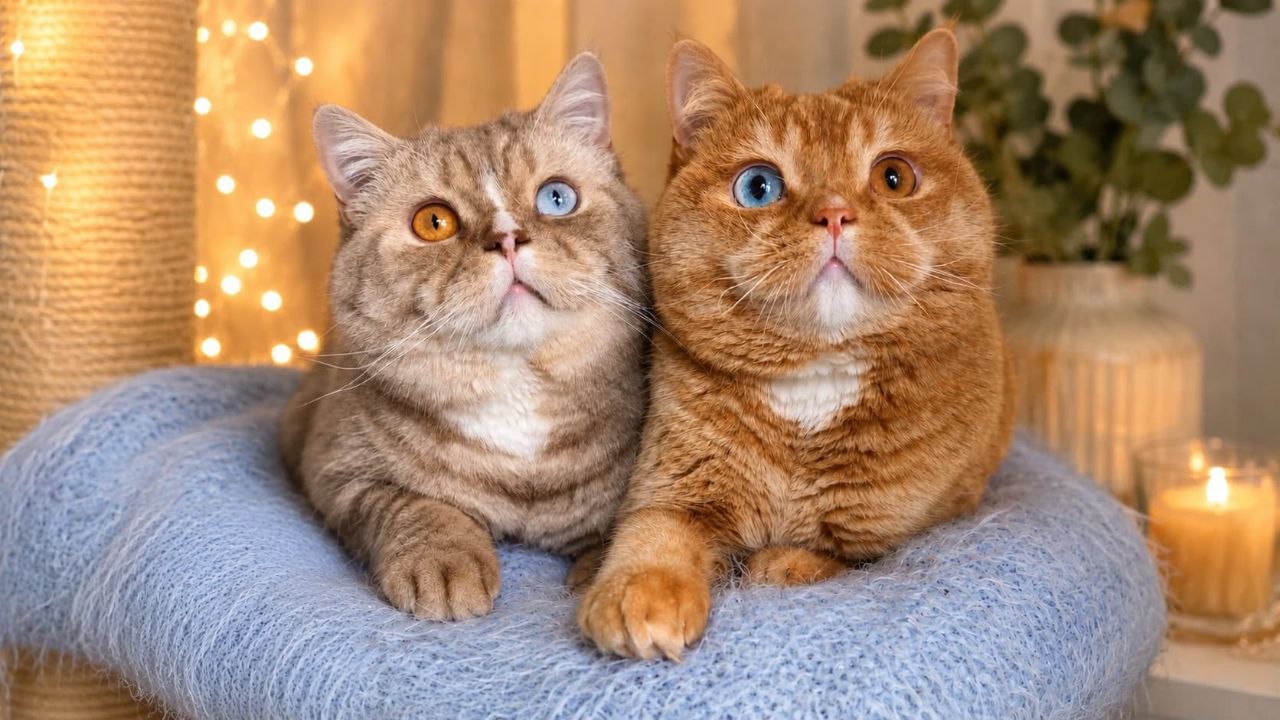
The comparison between the american shorthair vs british shorthair is one of the most frequent debates among feline enthusiasts seeking a robust, affectionate, short-coated pedigree companion. At first glance, both breeds evoke a shared historical lineage: muscular builds, broad faces, athletic origins, and gentle domestic temperaments. However, a closer examination reveals substantial differences in cranial architecture, skeletal density, coat mechanics, behavioral energy, and felinological show standards.
Adding to the confusion, many novice cat owners struggle to differentiate between the british shorthair vs domestic shorthair. While a domestic shorthair (DSH) is a generic classification for a random-bred cat with unknown ancestry, both the British Shorthair (BRI) and the American Shorthair (ASH) are distinct, registered pedigree breeds governed by independent breed standards in the Fédération Internationale Féline (FIFe), World Cat Federation (WCF), and the Cat Fanciers' Association (CFA).
At Grand Liberty—licensed under Section 11 of the German Animal Welfare Act (§11 TierSchG) and breeding under FIFe registration #729 since 2006—we believe that informed guardians make the best pet parents. In this comprehensive comparative monograph, we break down the definitive american shorthair british shorthair difference, examine skeletal and coat genetics, analyze household suitability, and provide guidance for choosing between a shorthair kitten british and american.
Historical Divergence: Two Continents, Two Distinct Breed Evolutions
To understand the modern morphological contrast between these breeds, one must examine their historical working environments:
- The British Shorthair Heritage: The British Shorthair descends from domestic cats brought to the British Isles by Roman legions during the first century AD. These felines adapted to the cold, damp maritime climate of the British Isles by developing a dense, weather-resistant double coat and a heavy, compact "cobby" frame. In 1871, Harrison Weir refined and standardized the breed for the first formal cat show at the Crystal Palace in London, establishing the British Blue as a symbol of Victorian elegance.
- The American Shorthair Evolution: The ancestors of the American Shorthair crossed the Atlantic Ocean aboard merchant ships—including the historic Mayflower in 1620—to protect valuable cargo and grain stores from rodents. Over three centuries of pioneering across North America, these cats were selected for working agility, endurance, and hunting prowess. Originally registered as the "Domestic Shorthair" in 1906, the breed was renamed the "American Shorthair" in 1966 to celebrate its unique pedigree status and distinct athletic conformation.
Conformation and Structural Contrast: American Shorthair British Shorthair Difference Explained
When placing an American Shorthair and a British Shorthair side by side, their contrasting structural geometry becomes immediately obvious:
1. Cranial Architecture and Facial Features
- The British Shorthair: The skull is massive, round, and broad, featuring full, rounded cheeks and prominent whisker pads that create the famous resting "Cheshire smile." The nose is short and broad with a gentle profile dip. The ears are small to medium, set wide apart, with rounded tips that fit smoothly into the circular contour of the head.
- The American Shorthair: The head is slightly longer than it is wide, presenting an oblong shape with a squared-off muzzle designed for grasping prey. The nose has a gentle concave slope rather than a distinct dip. The ears are medium in size, set slightly higher on the head, with more upright placement.
2. Body Conformation and Skeletal Density
- The British Shorthair (Cobby Build): Defined by a low-slung, stocky conformation. The chest is exceptionally broad and deep, the back is short and level, and the legs are short, thick-boned, and muscular, ending in neat, rounded paws. Adult males typically weigh 6.0 to 8.5 kg, while females average 4.0 to 5.5 kg.
- The American Shorthair (Semi-Cobby Athletic Build): Built for agility and sustained pursuit. The body is medium to large, rectangular, and powerfully muscular, but noticeably longer in the torso with medium-length legs. Adult males typically weigh 5.0 to 7.0 kg, while females average 3.5 to 5.5 kg.
Coat Architecture and Texture: Plush Density vs. Hard Working Coat
The most dramatic tactile difference between the two breeds lies in the structure and density of their fur:
- British Shorthair (The Crisp Double Coat): The British coat is short, exceptionally dense, and crisp to the touch. Because the woolly undercoat is nearly as long as the guard hairs, the fur stands open from the body like plush velvet rather than lying flat. When you stroke an authentic British Shorthair, your fingers feel an elastic, plush resistance.
- American Shorthair (The Hard Weather-Resistant Coat): In stark contrast, the American Shorthair has a hard, lustrous, close-lying coat. It is designed to shed water and protect the working cat from briars and thorns. It has a moderate undercoat, but the fur lies sleekly along the contours of the body.
Dissecting British Shorthair vs Domestic Shorthair: Pedigree Lineage vs Random-Bred Phenotype
Prospective pet owners often ask: How does a registered British Shorthair differ from an everyday domestic shorthair?
The domestic shorthair (DSH) is not a standardized breed; it is a catch-all term for felines of unrecorded, multi-generational mixed heritage. While domestic shorthairs are resilient, diverse, and delightful companions, they lack: 1. Genetic Predictability: A domestic shorthair kitten's adult size, skeletal structure, coat texture, and facial conformation cannot be predicted in infancy. 2. Temperament Consistency: Without generations of selective breeding for calm, non-reactive temperaments, domestic cats exhibit behavioral extremes ranging from skittish independence to high territorial aggression. 3. Mandatory Veterinary Health Screening: Accidental domestic litters are rarely screened for hereditary Polycystic Kidney Disease (PKD1) or Hypertrophic Cardiomyopathy (HCM), leaving owners vulnerable to unexpected veterinary crises.
Side-by-Side Morphological and Temperament Comparison Matrix
The table below contrasts the British Shorthair, American Shorthair, and Domestic Shorthair across primary felinological dimensions:
| Dimension / Trait | British Shorthair (BRI) | American Shorthair (ASH) | Domestic Shorthair (DSH) |
|---|---|---|---|
| Body Conformation | Heavy-boned, cobby, low-slung, compact | Athletic, rectangular, semi-cobby, muscular | Highly variable (slender to moderate) |
| Cranial Geometry | Massive round skull, full jowls, round lines | Slightly oblong, squarish muzzle, firm chin | Variable; wedge, oval, or flat |
| Coat Mechanics | Dense, crisp double coat standing open | Hard, close-lying, lustrous working coat | Single or light double coat, lies flat |
| Eye Shape & Placement | Large, round, wide-set, exceptionally expressive | Large, rounded upper lid, almond lower lid | Variable; oval, round, or slanted |
| Temperament Demeanor | Placid, serene, quiet, reserved companion | Playful, adaptable, curious, energetic hunter | Highly unpredictable; broad spectrum |
| Activity Level | Low to moderate; enjoys calm observation | Moderate to high; enjoys active interactive play | Variable; frequently high prey drive |
| Vocalization | Extremely quiet; soft, melodious trills | Moderate voice; expressive communicators | Highly variable |
| Genetic Health Testing | Obligatory Laboklin PKD1 DNA & Doppler HCM | Moderate (variable across registries) | Rare to non-existent in casual litters |
| International Pedigree | Recognized by FIFe, WCF, TICA, CFA | Primarily registered with CFA, TICA | None (Not an official pedigree breed) |
Selecting the Right Companion: Evaluating a Shorthair Kitten British and American in Your Home
When choosing between a shorthair kitten british and american, prospective families must honestly assess their household lifestyle, activity level, and expectations:
Household Suitability Checklist
- [ ] Household Noise and Pace: If your home is quiet, calm, or you prefer a serene companion who will recline peacefully beside your workspace without demanding constant stimulation, the British Shorthair is an ideal fit. If your household is lively, bustling, and full of interactive activities, the American Shorthair's outgoing nature thrives.
- [ ] Grooming Dedication: The British Shorthair's crisp double coat requires dedicated weekly combing with a dual-length metal comb to prevent undercoat buildup. The American Shorthair's close-lying coat requires minimal maintenance.
- [ ] Handling Preferences: British Shorthairs love affection, head scratches, and resting close to family members, but they generally dislike being held aloft like a baby. American Shorthairs tend to be slightly more tolerant of diverse physical handling during active play.
- [ ] Children and Other Pets: Both breeds excel in multi-pet households. However, the British Shorthair will quietly retreat to a cozy perch when children become too boisterous, whereas an American Shorthair is more likely to join in the active game.
Breeder Standards and E-E-A-T Authenticity: Protecting Your Investment
Whether you decide on an American or British companion, avoiding unregulated backyard sellers is critical. Authentic pedigree preservation requires substantial financial investment and medical accountability:
1. Laboklin PKD1 DNA Verification: Both British and American pedigree lines have historical Persian ancestry that introduced Polycystic Kidney Disease (PKD1). Sires and dams must possess certified negative laboratory results. 2. Annual Doppler HCM Cardiology Scans: Hypertrophic Cardiomyopathy (HCM) is an inherited risk in all heavy-muscled feline breeds. Insist on seeing official Doppler ultrasound reports performed within the past 12 to 18 months. 3. Official Pedigree Documentation: Do not accept pet shop certificates or handwritten family trees. Legitimate kittens must possess 4-to-5 generation certified pedigrees from recognized bodies (FIFe, WCF, CFA, TICA). 4. State Veterinary Approval (§11 TierSchG): In Germany and the EU, ethical breeding catteries must hold official animal welfare certification issued by the municipal veterinary authority.
Discover the Timeless Elegance of British Pedigree at Grand Liberty
While both breeds represent magnificent examples of domestic feline development, the British Shorthair remains the ultimate choice for lovers of round, teddy-bear aesthetics and serene, aristocratic companionship.
At Grand Liberty, our kittens are raised with unconditional love and scientific precision. We invite you to view our exceptional breeding cats, browse our currently available kittens, and review our transparent billing and European courier delivery policies. To speak directly with our master breeder about welcoming a British kitten into your family, schedule a consultation via our master breeder consultation service.