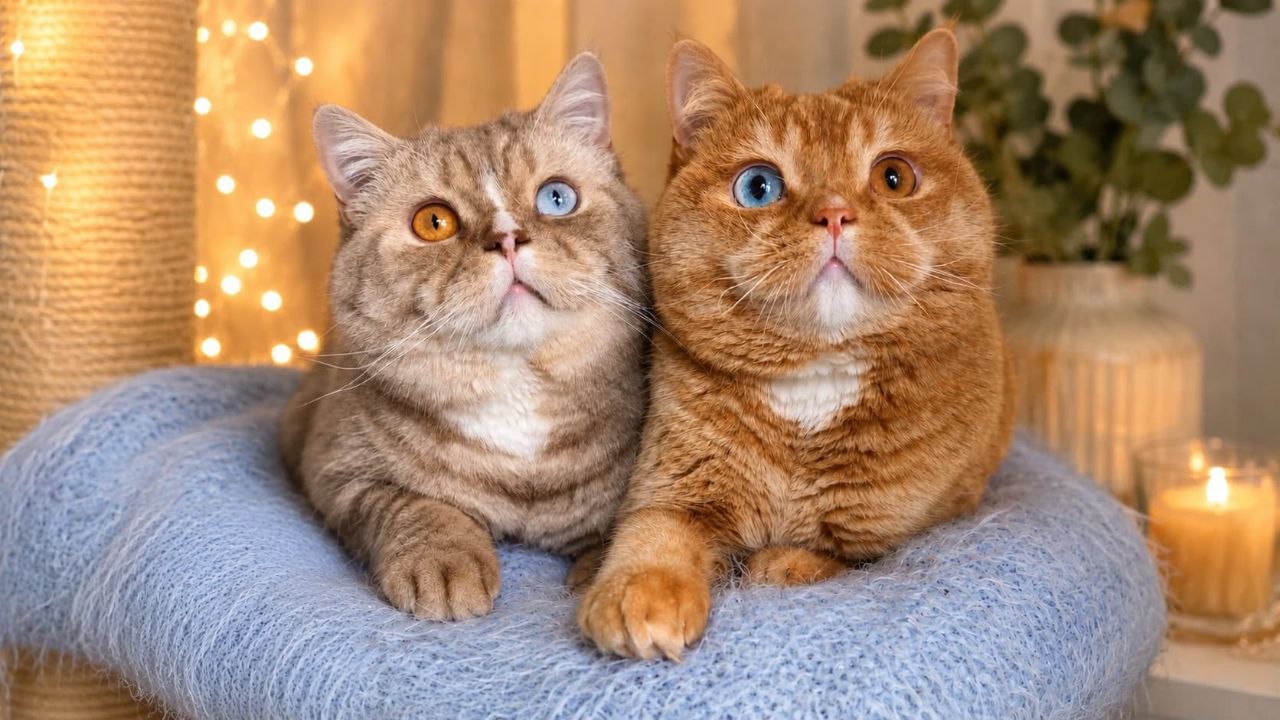
The black British Shorthair is one of the most magnificent, dramatic, and sculptural felines in the pedigree fancy. Frequently described by admirers as a "miniature living panther" or a "velvet teddy-bear of the shadows," this variety combines an intensely saturated jet-black coat with enormous, luminous copper-orange eyes. Despite its noble heritage and aristocratic appearance, the british shorthair black has historically been subject to cultural superstitions—yet among connoisseurs and international judges, it is celebrated as an undisputed masterpiece of feline morphology.
A purebred black British Shorthair cat embodies total physical harmony: massive bone structure, a broad and powerful chest, short muscular legs, and full rounded cheeks, all swathed in dense, crisp fur that absorbs light like black velvet. Paired with an extraordinarily calm, loving, and steadfast personality, the black British Shorthair makes an incomparable family companion.
In this authoritative breed monograph, Grand Liberty examines the eumelanin genetics behind the solid black coat, explains the standard for luminous orange eye pigmentation, provides clinical guidelines to prevent coat "rusting," and outlines the ethical criteria required when reserving a black British Shorthair kitten.
The Black British Shorthair: The Living Miniature Panther of the Fancy
In international felinological federations such as the Fédération Internationale Féline (FIFe) and the World Cat Federation (WCF), the solid black variety is registered under the EMS code BRI n. The show standard demands complete, uncompromised saturation:
- Coat Uniformity: The coat of the black british cat must be pure jet black from the tip of the hair shaft straight to the follicle roots. It must be completely free from rustiness, white stray hairs, or lingering ghost tabby markings.
- Tactile Texture: True to the British Shorthair standard, the fur is short, crisp, and exceptionally dense, with an abundant supportive undercoat that stands away from the muscular torso.
- Pigmentation of Extremities: The nose leather must be pitch black, and the paw pads must be solid black or deep seal charcoal. Any pink or pale pigmentation is considered a severe show fault.
- Superstition Debunked: While medieval folklore once associated black felines with misfortune, Scottish and Celtic traditions have long revered the black cat as an omen of prosperity, protection, and domestic harmony. In the modern home, black british shorthair cats are beloved for their gentle, grounded, and deeply affectionate nature.
Genetics of Deep Jet Pigmentation: Eumelanin and Non-Agouti Alleles
The molecular biology of the black british short hair cat is governed by precise genetic mechanisms operating at the primary pigment loci:
1. *The Dominant Black Allele (B): Feline melanin exists in two primary chemical forms: dark eumelanin and warm phaeomelanin. At the primary B locus (chromosome B4), the dominant B* allele produces densely packed, spherical eumelanin granules that absorb nearly the entire spectrum of visible light, producing intense black. 2. *The Non-Agouti Mutation (a/a): To produce a solid black coat, the cat must inherit two copies of the recessive non-agouti allele (a/a*). This shuts off the periodic agouti banding mechanism, forcing hair follicles to deposit continuous eumelanin from the beginning to the end of each growth cycle. 3. *Absence of Dilution (D/-): A solid black cat carries at least one dominant dense pigment allele (D/D or D/d). If the cat were homozygous for recessive dilution (d/d*), the black eumelanin would clump unevenly, producing the classic solid blue (grey) coat.
Eye Colour Standards: Black British Shorthair with Orange and Copper Eyes
The visual hallmark of a high-standard british short hair black is the breathtaking contrast between pitch-black fur and burning copper irises. Judges look for:
- Standard Formulation: Official breed standards require eye color to be deep, glowing copper, fiery orange, or intense warm amber. A black british shorthair orange eyes specimen creates an unforgettable, hypnotic portrait.
- Melanocyte Concentration: The rich copper hue results from an exceptional density of stromal melanocytes within the iris tissue. Ethical breeders selectively pair adults over generations to intensify iris saturation.
- Show Disqualifications: Eyes displaying green rims, greenish halos, or pale yellow washed-out tones are heavily penalized or disqualified under FIFe show rules.
The table below contrasts the black British Shorthair standard with related dark solid and smoke varieties:
| Variety & EMS Code | Coat Coloration & Depth | Undercoat Hue | Nose Leather & Paw Pads | Official Eye Colour Standard |
|---|---|---|---|---|
| Black Solid (BRI n) | Jet black to the roots, light-absorbing | Solid jet black | Pure pitch black | Intense copper, deep orange, or amber |
| Black Smoke (BRI ns) | Black hair tips (top 2/3), silvery root (lower 1/3) | Pure luminous silver-white | Pitch black | Glowing copper or warm orange |
| Chocolate Solid (BRI b) | Warm bittersweet cocoa brown | Warm milk chocolate | Milk chocolate to hazelnut | Copper, warm amber, or golden orange |
| Blue Solid (BRI a) | Medium-to-dark slate blue-grey | Uniform slate blue | Slate blue-grey | Vivid copper or deep orange |
Coat Care and Nutrition: Preventing Rusting and Sun-Bleaching in Black Fur
One of the most common challenges faced by owners of a black british short hair is "rusting"—the undesirable emergence of reddish-brown or rusty highlights in the dark coat. This phenomenon is driven by two main factors:
1. Photo-Oxidation (Sun-Bleaching)
Eumelanin granules are sensitive to intense ultraviolet radiation. Prolonged sunbathing in unshaded windows breaks down dark eumelanin polymers into oxidized brown compounds. To preserve coal-black depth:
- Provide shaded lounging perches away from intense direct afternoon sunlight during summer months.
- Use UV-protective films on sun-drenched home windows.
2. Nutritional Tyrosine and Phenylalanine Balance
The enzymatic synthesis of black eumelanin relies directly on the amino acid L-tyrosine and its precursor, phenylalanine. If a cat's diet lacks bioavailable tyrosine, melanocytes cannot complete eumelanin synthesis, resulting in reddish phaeomelanin breakthrough:
- Feed complete super-premium wet food rich in muscle meat (beef, poultry, game), avoiding low-grade formulas packed with plant proteins and cereal fillers.
- Ensure optimal dietary levels of copper and zinc, which serve as essential chemical co-factors for tyrosinase enzyme activity.
- Supplement with wild salmon oil to support dermal moisture, preventing flakiness and hair dullness.
Kitten Development: From Ghost Striping to Pure Velvet Coal
Prospective guardians observing a black british shorthair kitten or dark british shorthair kitten during its first weeks of life are often surprised by juvenile coat variations:
- Juvenile Ghost Markings: It is entirely natural for a very young british shorthair black kitten to display faint greyish-brown ghost stripes or scattered silver hairs. This juvenile phenomenon (often termed fever coat or kitten molting) occurs while pigment synthesis stabilizes.
- Eye Colour Maturation: Like all felines, kittens are born with dark slate-blue eyes. Around 6 to 8 weeks of age, the blue fades into a cloudy grey-amber, gradually deepening into brilliant orange or deep copper by 4 to 7 months of age.
- Adult Molt: Between 6 and 12 months, the kitten sheds its soft juvenile fuzz, revealing the dense, crisp, coal-black adult double coat that defines the mature british shorthair kitten black.
How to Choose and Reserve a Verified Black British Shorthair Kitten
When looking to welcome black british shorthair kittens into your family, thorough breeder evaluation is essential:
1. Inspect Coat Soundness: Part the fur on the kitten's back to confirm the undercoat is black to the roots, ruling out poorly bred smokes or bleached coats. 2. Review Laboklin Genetic Certificates: Confirm that both parents are certified negative for Polycystic Kidney Disease (PKD1) via independent laboratory DNA panels. 3. Verify Cardiac Health (HCM): Demand current Doppler echocardiography certificates performed by veterinary cardiologists confirming the parents have normal heart structures. 4. Confirm Pedigree Authenticity: Ensure the litter is officially registered with FIFe or WCF, guaranteeing generations of documented pedigree lineage. 5. Welfare and Living Conditions: Ensure the cattery operates with official legal authorization under German law (§11 TierSchG) and raises kittens in a loving, enriched home environment.
We invite prospective guardians to discover our champion-line breeding cats, browse our currently available litters for sale, and review our transparent billing and international courier delivery policies.
To discuss reservations for upcoming litters featuring solid black and amber-eyed varieties, please book a personal session via our master breeder consultation page.
Sources and Veterinary References
- Fédération Internationale Féline (FIFe) Breed Standard for British Shorthair Black (BRI n).
- World Cat Federation (WCF) Official Show Standards and Fault Classifications.
- German Animal Protection Act (TierSchG §11) Legal Regulations Governing Ethical Breeding.
- Laboklin Clinical Veterinary Genetics Laboratory DNA Panels for Polycystic Kidney Disease.
- Yu, S., et al. (2001). Hair color changes in cats related to dietary tyrosine and phenylalanine. Journal of Animal Physiology and Animal Nutrition.
- European Advisory Board on Cat Diseases (ABCD) Feline Preventative Health Guidelines.