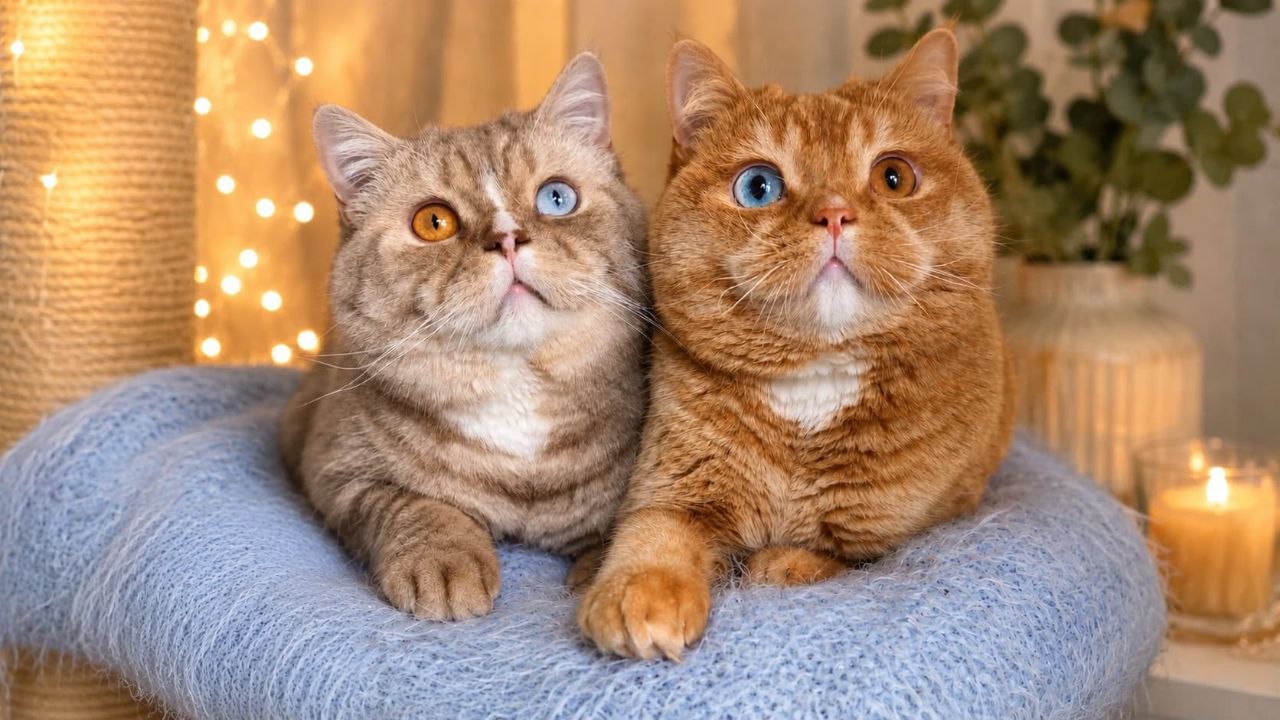
While classical breed tradition pairs the British Shorthair with luminous copper, amber, or fiery orange eyes, a British Shorthair blue eyes feline represents one of the most mesmerizing, sought-after phenomena in modern pedigree breeding. The sapphire gaze of a British Shorthair with blue eyes captures the imagination of cat lovers worldwide, prompting frequent questions regarding genetics, breed standards, and feline health.
Many prospective owners ask: What colour eyes do British Shorthair cats have? Furthermore, do all British Shorthair cats have orange eyes, or are blue eyes an authentic, recognized trait within the breed? From pure snow-white felines with sapphire irises to rare Dominant Blue Eyes (DBE) lines and colorpoint variants, the world of British Shorthair eye color is governed by complex genetic loci that every discerning cat guardian should understand.
In this authoritative guide, Grand Liberty—registered with the Fédération Internationale Féline (FIFe #729) and certified under §11 of the German Animal Welfare Act (TierSchG)—explores the genetics, phenotypic varieties, developmental timelines, and health testing protocols governing British Shorthair cat blue eyes.
Understanding British Shorthair Eye Color: What Colour Eyes Do British Shorthair Cats Have?
When evaluating what colour eyes do British Shorthair cats have, the answer depends strictly on the cat's underlying coat genetics. In pedigreed felinology, eye color is not random; it is genetically coupled with the distribution of melanin in the iris and coat:
1. Solid and Tabby Varieties: Classic solids (such as blue, black, chocolate, cinnamon, lilac, red, and cream) and standard agouti tabbies are required to possess brilliant copper, intense deep orange, or warm amber eyes. 2. Silver and Golden Shaded Varieties: Silver shaded (BRI ns 11), silver chinchilla (BRI ns 12), and golden shaded lines feature luminous emerald green or blue-green eyes framed by dark cosmetic eyeliner. 3. Point / Colourpoint Varieties: British Colorpoints (carrying the Himalayan cs gene) must display striking sapphire blue eyes. 4. Epistatic White Cats: Solid white felines (carrying the dominant W gene) may display deep orange eyes, brilliant blue eyes, or "odd eyes" (heterochromia: one blue eye and one copper/orange eye). 5. Dominant Blue Eyes (DBE Lines): Revolutionary recent bloodlines expressing dominant blue-eye mutations can produce vivid blue eyes across non-pointed, solid-colored coats, including the striking grey British Shorthair blue eyes.
Debunking the Myth: Do All British Shorthair Cats Have Orange Eyes?
A common misconception among first-time cat buyers is that every purebred British Shorthair must exhibit the breed's signature shorthair British orange eyes. While deep copper-orange is indeed the standard for solid blue and traditional varieties, it is completely inaccurate to assume that all British Shorthairs have orange eyes.
International breed standards officially recognize three primary ocular categories:
- Orange / Copper: Standard for solid, tortie, and classic tabby varieties.
- Green: Mandatory for silver and golden tipped/shaded varieties.
- Blue: Standard for colourpoints, epistatic whites, and recognized DBE/heterochromia lines.
Consequently, a blue eyed British Shorthair is not an undocumented crossbreed, provided its blue eyes stem from legitimate, verified genetic mechanisms approved by international felinological bodies.
The Three Genetic Pathways to a British Shorthair with Blue Eyes
To understand how a British Shorthair cat blue eyes phenotype occurs, we must examine the three distinct genetic mechanisms that suppress or eliminate melanin in the feline iris:
1. The Colourpoint / Himalayan Gene (cs/cs)
The most common traditional route to blue eyes in British Shorthairs is the temperature-sensitive Himalayan mutation (cs), inherited from historical crosses with Colorpoint lines.
- The cs allele is an autosomal recessive mutation of the tyrosinase gene (TYR).
- It causes tyrosinase enzyme activity to become heat-sensitive: pigment develops only on cooler extremities (mask, ears, paws, tail), leaving the torso pale.
- Because the iris is situated in a warm area of the head, melanin synthesis is suppressed within the stroma. Light scatters through clear optical layers (Tyndall scattering), reflecting brilliant sapphire blue.
2. Epistatic White (W) and Dominant White Spotting (S)
The blue eye white British Shorthair achieves its blue gaze through a different developmental process:
- The dominant Epistatic White gene (W) suppresses melanocyte migration from the neural crest during embryonic development.
- When melanocytes fail to reach skin and hair follicles, the coat develops pure white.
- If melanocytes fail to migrate into one or both irises, the eye lacks pigment and appears icy blue. If melanocytes reach only one eye, the cat develops heterochromia ("odd eyes" — one blue, one copper).
- A British Shorthair kitten white with blue eyes requires mandatory auditory testing (BAER) due to the physiological role of melanocytes in inner ear hearing.
3. Dominant Blue Eyes (DBE / Altai & Celestial Mutations)
The newest development in British Shorthair breeding is the Dominant Blue Eye (DBE) mutation:
- Unlike recessive cs, DBE is a dominant trait that decouples blue eye color from white fur or point patterns.
- This allows breeders to produce solid-colored felines with sapphire eyes—such as a grey British Shorthair blue eyes or solid black cats with blue eyes.
- DBE lines frequently produce heterochromia (one blue eye paired with radiant copper or green), creating an enchanting gaze.
Genetic and Conformation Matrix of Blue-Eyed British Shorthairs
The table below contrasts the three genetic pathways responsible for blue eyes in British Shorthairs:
| Variety & Genetic Marker | Coat Phenotype | Iris Coloration | Genetic Inheritance | Health & Auditory Testing Protocol |
|---|---|---|---|---|
| Colorpoint (cs/cs) | Seal, blue, lilac, or chocolate points on pale torso | Deep sapphire blue | Autosomal recessive (TYR gene) | Standard PKD1 / HCM screening; normal hearing |
| Epistatic White (W/-) | Pure solid snow white | Brilliant blue or odd-eyed (blue + copper) | Autosomal dominant (KIT gene) | Mandatory BAER hearing test; PKD1 / HCM clearance |
| High White Bicolor (S/-) | Bicolor / Harlequin / Van with high white spotting | Blue or odd-eyed in white facial blaze | Dominant white spotting allele | BAER testing recommended if ear canals lack pigment |
| Dominant Blue Eye (DBE) | Solid blue, black, lilac, or patterned agouti | Vivid crystal blue or heterochromia | Autosomal dominant mutation | Careful pedigree tracking to avoid homozygous defects; PKD1 / HCM |
Iris Maturation: British Shorthair Kitten Eye Colour Development
Prospective pet parents often search for a British Shorthair blue eyes kitten or a British Shorthair kitten with blue eyes, without realizing that all domestic kittens are born with blue eyes:
- The Neonatal Blue Stage (0 to 6 Weeks): When a British shorthair kitten blue eyes opens its eyelids around 7 to 12 days of age, the eyes always appear dark slate-blue. This is not true genetic blue eye color; it is an optical illusion caused by the complete absence of melanin in the immature iris, refracting ambient light through the cornea.
- The Transition Stage (7 to 12 Weeks): As the kitten matures, melanocytes migrate into the iris stroma and begin producing melanin. The eyes transition through cloudy olive, mustard-grey, and dull amber tones. In non-blue-eyed varieties, the blue color completely fades during this period.
- Adult Eye Color Fixation (4 to 9 Months): By 16 to 24 weeks, true adult pigmentation establishes itself. In traditional lines, the eyes deepen into burning copper or fiery orange. In genuine colourpoint, white, or DBE lines, the eyes remain pure, luminous sapphire blue throughout maturity.
Kitten Ocular Development Checklist
- [ ] Week 1–2: Eyelids open; eyes display a generic cloudy slate-blue appearance.
- [ ] Week 6–8: First emergence of pigment; check whether the iris is clearing toward amber/copper or retaining sapphire saturation.
- [ ] Week 12: Core veterinary examination; verify pupil responsiveness, clear corneas, and absence of ocular discharge.
- [ ] Week 14–16: Permanent eye color trajectory is clearly established; genetic blue eyes remain intensely vivid.
Auditory Health and BAER Testing in White and Blue-Eyed Lineages
When considering a blue eye white British Shorthair or a British Shorthair kitten white with blue eyes, ethical health screening is of paramount veterinary importance:
- The Melanocyte-Auditory Connection: The dominant white gene (W) suppresses melanocyte migration. Melanocytes are not only responsible for skin and eye pigmentation; they also play an indispensable physiological role in the stria vascularis of the inner ear, maintaining the endocochlear potential necessary for hearing.
- Risk of Congenital Sensorineural Deafness: If melanocytes fail to reach the inner ear during embryonic development, the organ of Corti degenerates, leading to permanent irreversible deafness in one or both ears. White cats with two blue eyes carry a higher risk than white cats with orange eyes or odd eyes.
- Mandatory BAER Screening: At Grand Liberty, every white breeding cat and kitten undergoes mandatory Brainstem Auditory Evoked Response (BAER) testing by certified veterinary neurologists. BAER testing delivers an objective, computerized audiogram confirming 100% normal bilateral hearing. Never purchase a white, blue-eyed kitten from a breeder who cannot provide certified BAER test certificates.
Grand Liberty Preservation Ethics and Health Testing
At Grand Liberty, our breeding philosophy unites cutting-edge veterinary genetics with uncompromising adherence to European animal welfare legislation. Whether working with traditional solid lines, breathtaking silver shadeds, or rare blue-eyed varieties, every breeding adult undergoes:
1. Laboklin Certified DNA Panels: Guaranteeing 100% negative clearance for Polycystic Kidney Disease (PKD1). 2. Annual Doppler Echocardiography: Performed by certified veterinary cardiologists to ensure total freedom from Hypertrophic Cardiomyopathy (HCM). 3. Infectious Disease Profiling: Strict PCR testing confirming negative status for FeLV and FIV. 4. Official European Accreditation: Registered with FIFe (#729) and licensed under §11 of the German Animal Protection Act (TierSchG) through the Rhein-Hunsrück-Kreis veterinary authority.
We invite you to explore our exceptional breeding adults, view our available kittens, and review our transparent billing and European courier delivery policies.
To discuss upcoming litters featuring rare eye colours and pedigree blue-eyed varieties, schedule a private consultation via our master breeder consultation service.
Sources and Veterinary References
- Fédération Internationale Féline (FIFe). (2024). Breed Standard: British Shorthair Pointed and White Varieties.
- World Cat Federation (WCF). (2023). Judging Guidelines for Dominant Blue Eye (DBE) and Pointed Felines.
- Strain, G. M. (2011). Deafness in Dogs and Cats. CAB International, Wallingford, UK.
- David, V. A., et al. (2014). Endogenous retrovirus insertion in the KIT gene has a major effect on white coat phenotype in cats. Mammalian Genome, 25(7-8), 300-312.
- German Animal Welfare Act (TierSchG §11). Statutory Guidelines for Breeding, Housing, and Neurological Health Verification in Felines.
- Laboklin Clinical Veterinary Genetics Laboratory. DNA Screening Protocols for Tyrosinase Mutations and Congenital Renal Disease. Bad Kissingen, Germany.