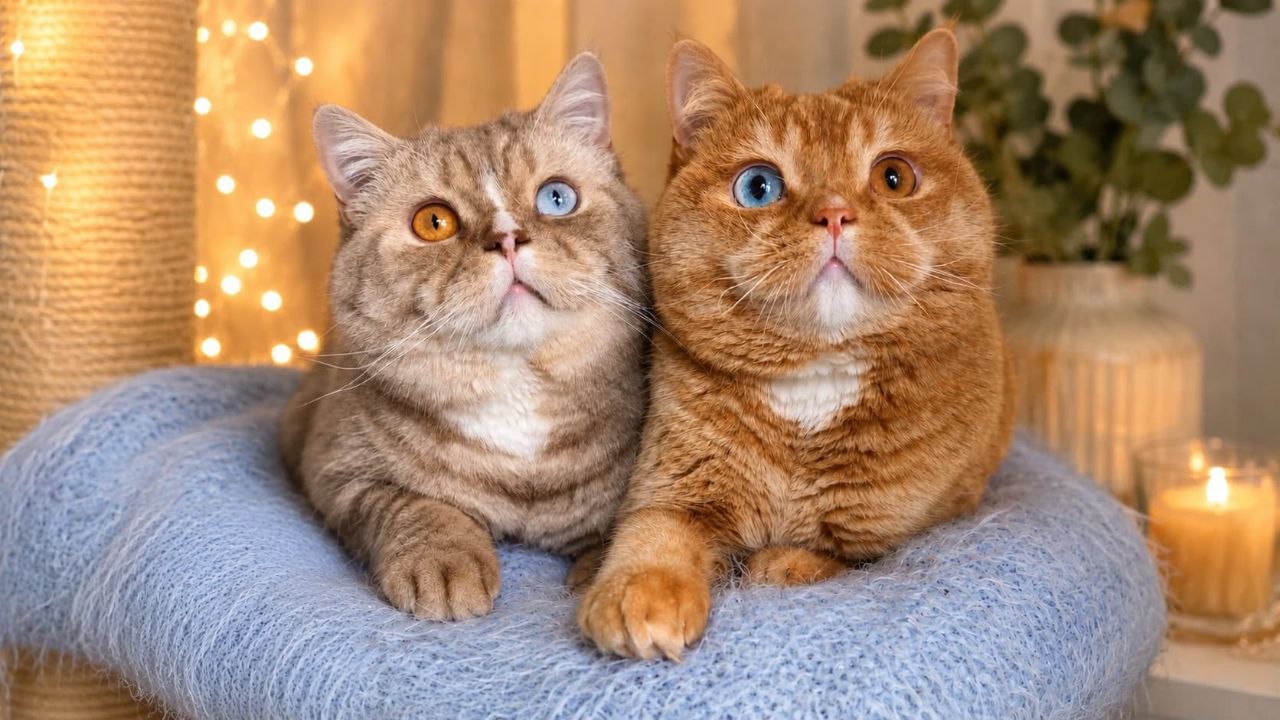
Few literary figures possess the enduring cultural resonance of the grinning trickster from Lewis Carroll's 1865 masterpiece, Alice's Adventures in Wonderland. For over a century, feline enthusiasts and literary historians have recognized the living embodiment of this legendary character in the british shorthair cheshire cat. With its massive spherical skull, prominent whisker pads, broad smiling muzzle, and luminous wide-set eyes, the purebred British Shorthair seems to have stepped directly out of Victorian woodcuts and onto the family hearth.
The connection between the fictional character and the cheshire cat british shorthair is rooted in deep historical, anatomical, and felinological reality. When Carroll conceived his surreal Wonderland, Britain was undergoing a cultural revolution in how it perceived domestic cats. No longer viewed merely as barnyard mousers, felines were celebrated for their beauty, distinct personality, and breeding heritage. At Grand Liberty, operating under Section 11 of the German Animal Welfare Act (§11 TierSchG) and registered with the Fédération Internationale Féline (FIFe Standard #729), we preserve the authentic anatomical architecture that inspired this world-renowned feline silhouette. Backed by certified Laboklin DNA screening (PKD1 N/N) and annual Doppler echocardiograms for Hypertrophic Cardiomyopathy (HCM), our breeding lines maintain the calm, dignified temperament and exquisite jowls of the true British breed. In this historical and anatomical treatise, we trace the origins of Carroll's inspiration, debunk common folklore myths, examine the cranial anatomy behind the famous smile, and explore what it is really like to share a home with a living Cheshire Cat.
The Literary Connection: How the British Shorthair Cheshire Cat Became an Enduring Cultural Icon
The indelible image of the british shorthair cheshire cat emerged from a convergence of folklore, regional trade marks, and Victorian artistic genius. Understanding this history illuminates why the breed remains inextricably bound to Carroll's enigmatic creation:
Lewis Carroll, John Tenniel’s Woodcuts, and Victorian English Felines
Charles Lutwidge Dodgson, writing under the pen name Lewis Carroll, grew up in the rural county of Cheshire, England. In the mid-19th century, native working shorthair cats were familiar figures in English country manors, grain mills, and dairy farms. When Carroll collaborated with renowned political cartoonist and illustrator Sir John Tenniel to create the original 1865 illustrations for Alice's Adventures in Wonderland, Tenniel did not invent a fantastical creature from scratch. Instead, he drew upon the physical appearance of the robust, heavy-boned English domestic cat—the direct ancestor of today's British Shorthair.
Tenniel's wood engravings depict a cat with a broad chest, stout forelegs, a dense coat, wide circular eyes, and unmistakably prominent, curved cheek jowls that form a permanent, benevolent grin. When the English cat fancy formally coalesced in 1871 at the Crystal Palace under the guidance of Harrison Weir, the native shorthair was codified into the British Shorthair breed, immortalizing the very conformation Tenniel had captured on paper.
Historical Myth Busting: Cheshire Cheese Molds, Farm Mousers, and Harrison Weir’s Show Cats
Numerous colorful theories have attempted to explain the origin of the expression "grinning like a Cheshire cat": 1. The Cheshire Cheese Mold Myth: A popular legend claims that local Cheshire dairies molded their cheese wheels into the shape of smiling cats, or stamped a smiling cat emblem onto cheese packaging. While historical records confirm cat emblems were used in regional marketing, Carroll elevated this provincial quirk into an immortal literary archetype. 2. The Caterling Signpost Legend: Another folklore tale attributes the phrase to an inept sign painter in the village of Croft who painted local heraldic lions that resembled smiling housecats. 3. Harrison Weir's Felinological Standardization: While working farm cats provided the raw material, it was Harrison Weir—author of Our Cats and All About Them (1889)—who isolated the distinctive cobby conformation, heavy boning, and calm disposition, establishing the British Shorthair as Britain's first official pedigree breed. The modern cheshire cat british shorthair is thus the product of meticulous felinological refinement rather than accidental folklore.
Anatomical Architecture of the Smile: The Cheshire Cat British Shorthair Jowls and Cranial Conformation
What makes the cheshire cat british shorthair appear as though it is smiling at an inside joke? In feline anatomy, the smile is an optical illusion created by a unique cranial geometry governed by FIFe Standard #729 and WCF breed standards.
Prominent Whisker Pads, Spherical Muzzle, and Zygomatic Arch Development
The famous smile is engineered by four interrelated skeletal and soft-tissue structures:
- The Zygomatic Expansion: The zygomatic arches (cheekbones) are wide, deep, and heavily muscled. In mature stud males, circulating testosterone produces massive subcutaneous fat deposits and muscle density, known in felinology as stud jowls.
- Rounded Whisker Pads: The whisker pads (vibrissal pads) are exceptionally fleshy, plump, and spherical. They curve outward and upward from the muzzle, creating a naturally upturned crescent line along the mouth boundary.
- Absence of Muzzle Pinch: Unlike oriental breeds or domestic domestic shorthairs with pointed faces, the British Shorthair displays no indentation or "pinch" between the cheeks and muzzle. The transition from cheek to muzzle is completely smooth and continuous.
- Deep, Level Jaw and Firm Chin: A broad lower mandible aligns vertically with the upper jaw, giving the chin a solid, curved profile that enhances the upward curve of the lips.
Large Expressive Eyes: Copper, Amber, and Luminous Emerald Optical Geometries
A smile is incomplete without eyes that mirror its intensity. In the british shorthair cheshire cat, the ocular anatomy creates an arresting, slightly hypnotic gaze:
- Circular Aperture: The eye sockets are large, fully round, and set far apart on the broad frontal bone. There is no oriental slant or almond contour.
- Pigment Saturation: In solid blue, black, or lilac coats, the irises display deep, burning copper or vibrant pumpkin orange. In silver shaded (BRI ns 11) and golden shaded (BRI ny 11) varieties, the irises exhibit luminous sea-green or intense emerald chromaticity, framed by pitch-black epidermal eyeliner that heightens contrast.
Morphology Comparison: Fictional Cheshire Depiction vs. Official Breed Standard
| Morphological Feature | Lewis Carroll & John Tenniel Representation | Official FIFe Standard #729 Breed Standard | Biological Function & Structural Cause |
|---|---|---|---|
| Facial Silhouette | Broad, grinning visage with teeth visible | Broad spherical head; no exposed teeth; upturned lips | Prominent zygomatic arches and padded vibrissal cushions |
| Eye Shape & Expression | Wide, unblinking, slightly mischievous eyes | Large, round, open gaze; calm, affectionate aperture | Broad frontal orbital bones set wide apart on skull |
| Cranial Bone Density | Floating, disembodied head with heavy jowls | Solid, heavily boned skull resting on a short muscular neck | Heavy skeletal framework designed for powerful jaw mechanics |
| Body Proportions | Elusive, agile, capable of vanishing in thin air | Cobby, compact, low-slung, heavily muscled torso | Stocky build with low center of gravity; grounded presence |
| Coat Structure | Smooth domestic fur rendered in fine woodcut lines | Dense, crisp, plush double coat standing away from skin | Insulating double coat with crimped undercoat for resilience |
| Vocalization & Demeanor | Philosophical, talkative, paradoxical trickster | Quiet, dignified, rarely meows; peaceful companion | Calm baseline nervous system; highly stable temperament |
Temperament Reality vs Literary Trickster: Living with a Real British Shorthair Cheshire Cat
While the fictional Cheshire Cat was notorious for baffling Alice with riddles, fading into thin air, and leaving chaos in his wake, the real-world cheshire cat british shorthair possesses an entirely different, serene demeanor.
The "Four Paws on the Floor" Philosophy: Dignified Companionship Without Chaos
British Shorthairs are famous for their grounded, composed nature:
- Companionable Proximity: They prefer to share your space without demanding constant physical confinement. A British Shorthair will follow you from room to room, curling up near your feet or on the adjacent sofa cushion, offering steady, reassuring companionship.
- Aversion to Restraint: True to their aristocratic heritage, they value bodily autonomy. While they relish gentle stroking along the head and chin, they generally prefer keeping all four paws securely on the ground rather than being carried around like an infant.
- Acoustic Serenity: Unlike Siamese or Oriental breeds that vocalize incessantly, the British Shorthair possesses a tiny, melodious voice used sparingly for mealtime reminders or gentle greetings.
Sensory Play and Mental Stimulation for an Inquisitive Mind
Despite their placid nature, these cats inherit keen problem-solving instincts:
- Tactile and Scent Enrichment: Provide puzzle feeders, interactive wand toys, and climbing platforms to engage their cognitive abilities.
- Routine and Harmony: They thrive in stable, predictable household environments, adapting seamlessly to quiet evenings, remote work routines, and respectful family interactions.
Ethical Felinology and Modern Health: Breeding Genuine Cheshire Heritage
Preserving the majestic appearance of the british shorthair cheshire cat requires rigorous scientific oversight. Unregulated commercial breeders who exploit the popularity of the "smiling cat" frequently produce animals with severe structural and genetic defects.
Veterinary Screening Standards: Laboklin PKD1 DNA Testing and Annual Doppler HCM Diagnostics
At Grand Liberty, breeding ethical British Shorthairs involves non-negotiable veterinary standards: 1. Laboklin PKD1 DNA Screening: Polycystic Kidney Disease is an inherited renal disorder that causes destructive cysts. All breeding parents must test PKD1 N/N, ensuring kittens are genetically free of this condition. 2. Cardiovascular Doppler Echocardiography: Hypertrophic Cardiomyopathy (HCM) is monitored annually via high-resolution cardiac ultrasound performed by certified veterinary cardiologists. 3. Prevention of Extremes: Ethical breeders reject exaggerated brachycephalic facial flattening that compromises nasal airways or causes epiphora (tear duct overflow). The authentic British Shorthair nose must retain a healthy bridge and unobstructed respiration.
The "Cheshire Smile" Care & Well-Being Protocol: Daily Environmental & Dental Checklist
- [ ] Oral Hygiene Inspection: Clean teeth weekly with feline enzymatic toothpaste; inspect gums for gingivitis, as full jowls require pristine oral health.
- [ ] Cranial & Facial Grooming: Gently wipe orbital corners with a damp sterile saline pad to prevent tear staining around rounded eyes.
- [ ] Undercoat Maintenance: Brush twice weekly with a stainless steel medium-spaced comb to remove loose undercoat without damaging the crisp guard hairs.
- [ ] High-Protein Hydration Diet: Feed moisture-dense wet food (>70% meat content) to prevent obesity and protect kidney and urinary function.
- [ ] Low-Impact Exercise Setup: Provide wide scratching towers with generous landing platforms to accommodate heavy bone mass without jumping stress.
- [ ] Pedigree & Health Verification: Ensure your kitten comes with authentic FIFe or WCF pedigree registration and documented parental Laboklin PKD1/HCM clear certificates.
The british shorthair cheshire cat remains one of the world's most beloved feline companions because it marries literary magic with unmatched domestic tranquility. By choosing a pedigree kitten from a certified, health-tested cattery, you welcome a piece of living history—and a permanent, reassuring smile—into your home.