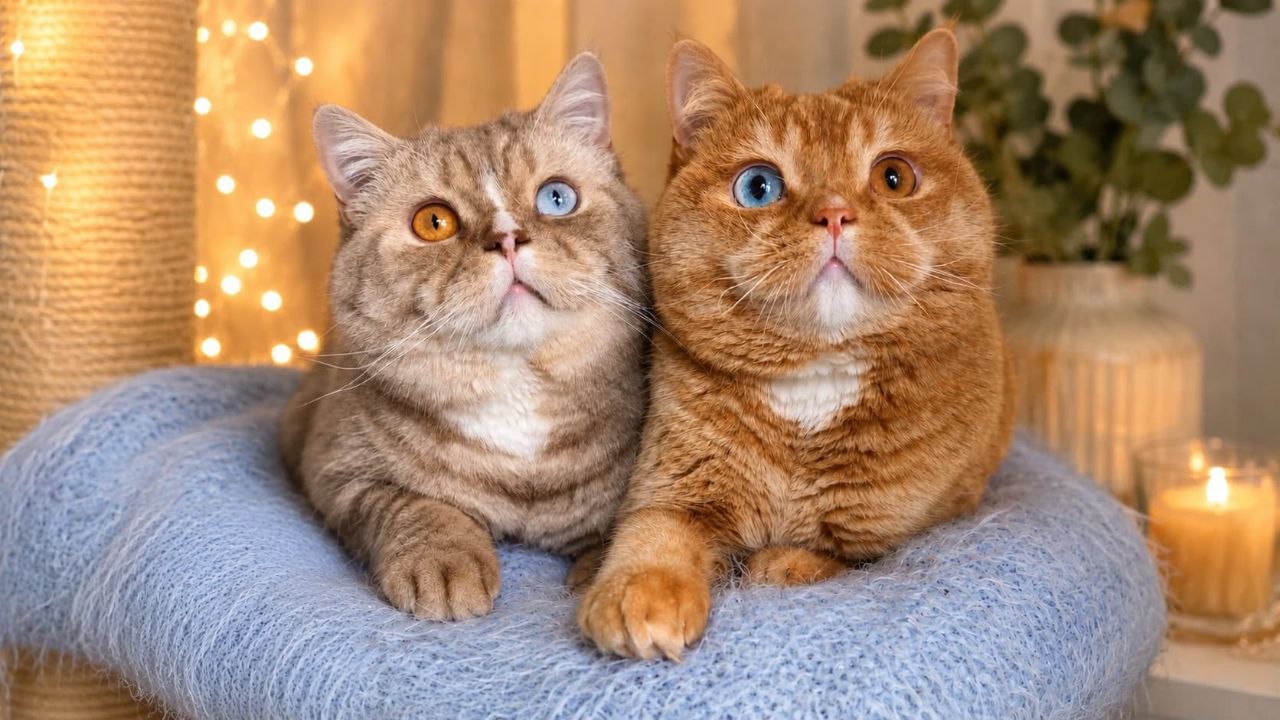
Among the most breathtaking and scientifically fascinating varieties in modern felinology is the british shorthair golden tabby. Combining the warm, glowing luminescence of an apricot undercoat with crisp, intensely pigmented black or dark brown tabby markings, this coat division represents the pinnacle of complex pigment genetics. Prospective cat owners frequently marvel at the contrast between the feline's rich golden ground color and its striking emerald green or turquoise eyes, leading many to search for a golden tabby british shorthair as the crown jewel of their household.
However, significant misunderstanding surrounds the genetic architecture of golden felines. Novice enthusiasts and online classifieds often conflate these rare felines with common red or orange tabbies, using confusing terms such as a golden british shorthair orange. In authentic felinology—governed by the Fédération Internationale Féline (FIFe Standard #729) and the World Cat Federation (WCF)—a golden tabby is genetically distinct from a red cat. While red cats owe their color to the sex-linked Orange gene (O), a golden tabby is an agouti, eumelanin-based cat modified by polygenic wideband inheritance. At Grand Liberty, operating under Section 11 of the German Animal Welfare Act (§11 TierSchG) with FIFe registration #729, our specialized golden lines undergo comprehensive Laboklin DNA testing for Polycystic Kidney Disease (PKD1 N/N) and annual Doppler echocardiograms by certified veterinary cardiologists for Hypertrophic Cardiomyopathy (HCM). In this definitive guide, we analyze the genetic mechanics of wideband inheritance, explore official tabby pattern variations, dispel the orange myth, and detail health protocols for this exquisite variety.
Genetic Architecture: What Defines an Authentic British Shorthair Golden Tabby?
To understand the mesmerizing beauty of the british shorthair golden tabby, one must look beneath the surface into the molecular biochemistry of melanin synthesis. The coat of every feline is colored by two primary pigments: dark eumelanin (black, brown, chocolate) and yellow-to-red pheomelanin.
The Interaction of Agouti (A), Wideband Polygenes (Wb), and Inhibitor Absence
An authentic golden tabby requires a precise combination of genetic factors operating simultaneously: 1. *The Agouti Gene (A/-):* Allows individual hair shafts to develop alternating bands of dark eumelanin and lighter pheomelanin, establishing the agouti background necessary for visible tabby markings. 2. *Absence of the Silver Inhibitor (i/i): In silver tabbies (BRI ns 22/24), the dominant inhibitor gene (I) suppresses pheomelanin production, turning the ground color chalky white. In the golden tabby, the recessive wild-type allele (i/i*) allows pheomelanin to express fully in warm, golden tones. 3. *The Wideband Polygenic Complex (Wb): This polygenic modifier pushes the pigment bands toward the hair tips, dramatically widening the warm apricot/golden pheomelanin band at the base of the hair shaft. In a high-quality golden tabby british shorthair*, the hair roots display clean, radiant apricot coloration completely devoid of cold grey or dull beige undertones. 4. Non-Agouti Markings: The tabby markings themselves (the stripes, spots, or whorls) remain saturated with dense, dark eumelanin, creating high optical contrast against the radiant ground color.
Clarifying the Myth: Why a Golden British Shorthair Orange Misconception Confuses Red (O) with Golden Pheomelanin
A common point of confusion in commercial pet forums involves the label golden british shorthair orange. Buyers searching for an "orange" British Shorthair are often shown golden tabbies, or vice versa, yet their underlying biology is completely different:
- The True Red Tabby (BRI d 22/24): Governed by the sex-linked dominant Orange gene (O located on the X chromosome). It converts all eumelanin into pheomelanin. As a result, both the ground color and the tabby markings are shades of red/orange. The nose leather is pink, and the eye color is strictly deep copper or amber.
- The Golden Tabby (BRI ny 22/24/25): The cat possesses the non-orange genotype (o/o in females, o/Y in males). The markings are true black or dark brown eumelanin. The nose leather is brick red outlined in crisp black eyeliner, the paw pads are black or seal brown, and the eye color is vivid green or blue-green.
- Why the Distinction Matters: Conflating a golden british shorthair orange search with a real golden tabby can lead buyers to acquire a red cat with copper eyes when their true aesthetic goal was an apricot cat with black tabby contrast and emerald eyes.
Genetic & Phenotypic Comparison: Golden Tabby vs. Red Tabby
| Genetic / Visual Trait | Golden Tabby (BRI ny 22 / ny 24 / ny 25) | Red / Orange Tabby (BRI d 22 / d 24) | Key Distinguishing Feature |
|---|---|---|---|
| Primary Gene Mechanism | Agouti (A/-) + Wideband (Wb) + Non-orange (o) | Sex-linked Orange gene (O) converting eumelanin | Eumelanin present in golden; converted to red in orange |
| Ground Color Tone | Warm apricot, radiant golden peach; zero grey | Pale cream, light ginger, or warm reddish-buff | Golden displays rich golden-yellow pheomelanin glow |
| Tabby Marking Pigment | Jet black or dark espresso brown eumelanin | Deep crimson red or dark ginger pheomelanin | Black stripes indicate golden; red stripes indicate red |
| Nose Leather Color | Terracotta brick-red outlined by black eyeliner | Solid salmon pink without dark peripheral eyeliner | Black mucosal rim is mandatory in golden varieties |
| Paw Pad Pigmentation | Pitch black, seal brown, or dark chocolate | Light pink or coral red | Black paw pads confirm non-orange eumelanin genotype |
| Adult Eye Color Standard | Luminous emerald green, blue-green, or hazel-green | Intense deep copper, burnt amber, or golden-orange | Green eyes are standard in golden; copper in red |
Tabby Pattern Variations in the Golden Tabby British Shorthair: Classic, Spotted, and Ticked
Under FIFe and WCF standards, the british shorthair golden tabby is registered under specific EMS (Easy Mind System) codes reflecting its tabby pattern:
Classic Blotched Tabby (BRI ny 22): The Marble and Bullseye Architecture
The classic or blotched tabby is the most dramatic and historic pattern:
- The Butterfly Shoulder Motif: When viewed from above, the markings across the shoulders form the outline of an open butterfly with clearly delineated wings.
- Spinal Tramlines: Three distinct, parallel black lines run down the vertebral column from the butterfly motif to the base of the tail.
- *The Flank Bullseye (Oyster):* On each lateral flank, concentric solid black circles form a continuous "bullseye" or oyster swirl, completely encircled by glowing apricot undercoat.
- Leg Bracelets and Tail Rings: Limbs display broad black bracelets, while the tail is evenly ringed, terminating in a solid black tip.
Spotted Tabby (BRI ny 24) and Ticked Tabby (BRI ny 25)
- Spotted Tabby (BRI ny 24): The body is covered with numerous small, distinct, and sharply defined dark spots. These spots may be round, oval, or rosette-shaped, but must never run together into continuous vertical stripes (mackerel pattern). High contrast between the dark spots and the warm golden base is critical.
- Ticked Tabby (BRI ny 25): The body displays agouti ticking across every hair shaft, with two or three bands of alternating dark eumelanin and golden pheomelanin, without blotches or spots on the torso. The face retains classic facial pencilings and an "M" on the forehead.
Morphological Conformation and Ocular Chromaticity: Green Irises and Contrast Standards
The breeding standard of the golden tabby british shorthair demands uncompromising harmony between coat color, eye hue, and cranial conformation:
- Eye Color Progression: Golden tabby kittens are born with standard neonatal blue eyes. Between 6 and 12 weeks of age, the irises shift to amber or muddy hazel. True adult eye color takes up to two years to fully saturate into deep, luminous emerald green or turquoise.
- Facial Markings: The face must feature an intricate "M" mark on the forehead, delicate "mascara lines" extending from the outer corners of the eyes across the cheeks, and pale golden spectacles around the eyes.
- Cobby Silhouette: Just like solid varieties, the golden tabby must showcase massive bone structure, a barrel chest, short muscular legs, and a spherical head with full cheeks.
Ethical Felinology and Health Genetics at Grand Liberty
Breeding high-caliber golden tabbies requires balancing complex polygenic color selection with strict health preservation. Inexperienced breeders who focus solely on color often inadvertently sacrifice bone density, head roundness, or genetic health.
Mandatory Laboklin DNA Clearance (PKD1) and Certified Veterinary Doppler HCM Screenings
At Grand Liberty, our golden breeding program is anchored by certified medical protocols: 1. Laboklin PKD1 Screening: Polycystic Kidney Disease is systematically eradicated from our lines through verified PKD1 N/N genetic testing. 2. Annual Doppler HCM Diagnostics: Hypertrophic Cardiomyopathy screening is performed annually by board-certified veterinary cardiologists using high-frequency Doppler echocardiography. 3. §11 TierSchG Animal Welfare Compliance: Our cattery operates under rigorous municipal veterinary licensing in Germany, ensuring superior sanitary nursery environments, optimal feline density, and complete maternal socialization until at least 14 weeks of age.
Breeder Verification & Coat Evaluation Checklist for Golden Tabby British Shorthairs
- [ ] EMS Code Verification: Ensure the official pedigree states BRI ny 22 (classic), ny 24 (spotted), or ny 25 (ticked).
- [ ] Parental PKD1 / HCM Clearance: Review original Laboklin DNA certificates and certified cardiologist Doppler ultrasound reports.
- [ ] Ground Color Inspection: Examine the undercoat at the base of the hair; it must be radiant apricot/golden with no cold grey root zones.
- [ ] Eyeliner & Paw Pad Pigment: Confirm the cat displays pitch-black mucosal eyeliner around the eyes and black paw pads (confirming true non-orange golden genetics).
- [ ] Eye Color Development: Verify green or hazel eye pigmentation in adults; in young kittens, confirm clear transition away from neonatal blue toward green.
- [ ] Coat Texture Evaluation: Ensure the coat is short, dense, and crisp, standing away from the body rather than lying flat like a single-coated domestic cat.
The british shorthair golden tabby is an extraordinary testament to the wonders of feline genetics. Combining warm golden radiance, dramatic tabby geometry, and emerald eyes with the calm, affectionate temperament of the British breed, it represents an incomparable companion for the discerning cat guardian.