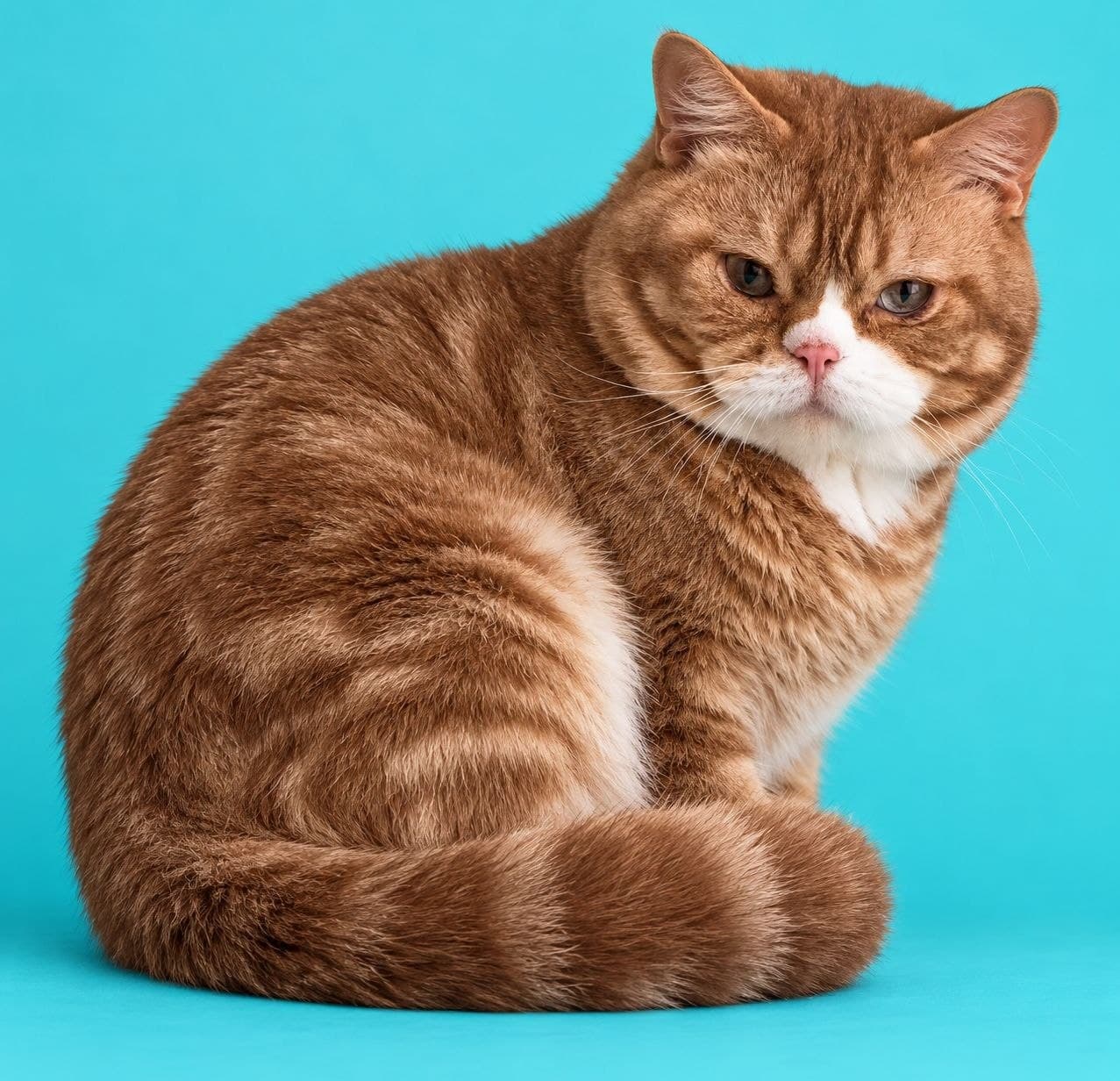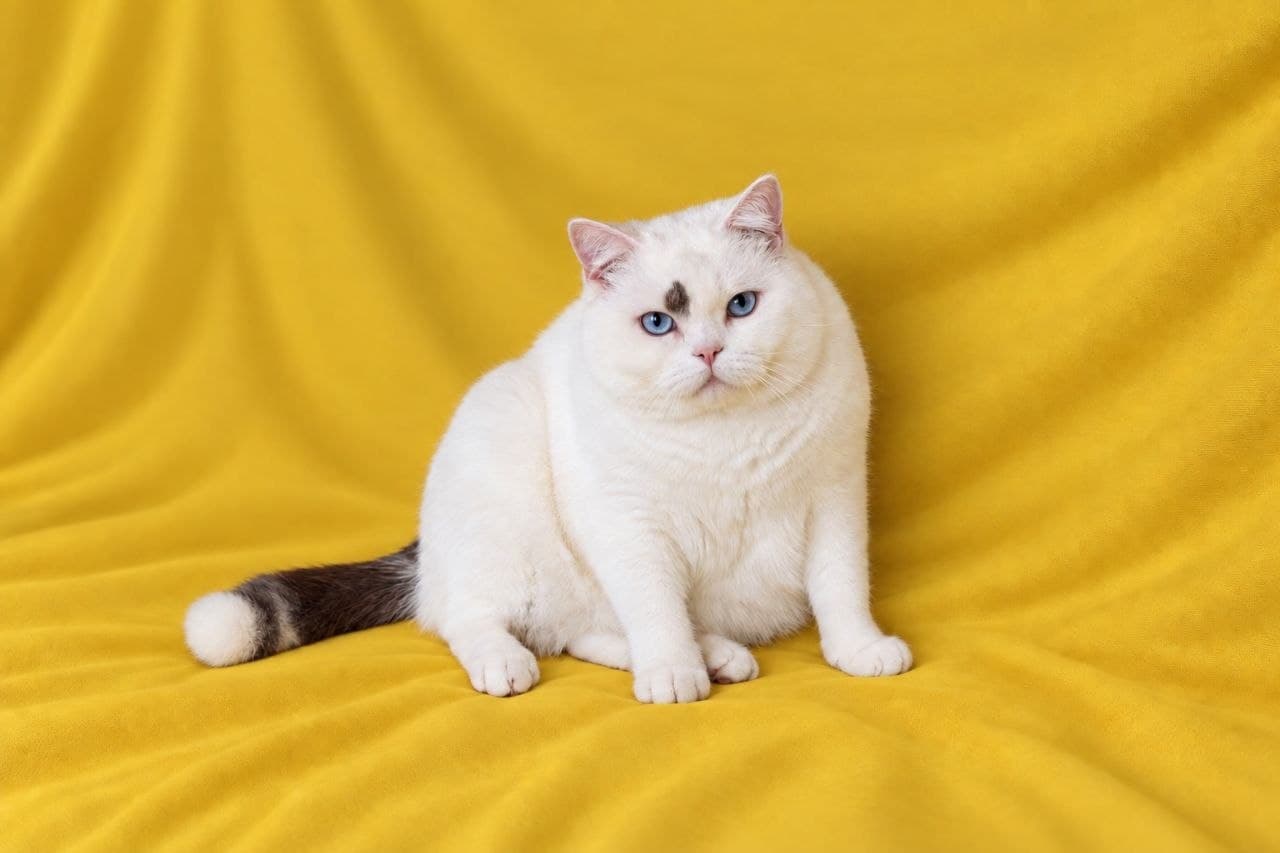
The British Shorthair descends directly from domestic cats brought to the British Isles by Roman legions around the 1st century AD to protect grain stores. Over eighteen centuries, these imports interbred with native European wildcats (Felis silvestris) and adapted to the damp, northern maritime climate, evolving into the resilient, heavy-coated working barn cats of rural England. The breed entered popular folklore as the anatomical basis for Lewis Carroll's grinning Cheshire Cat, before animal artist Harrison Weir formalized their standard at the world's first modern cat show at London's Crystal Palace in 1871.
Roman legions pest control cats in ancient Britain
The presence of domestic felines in Britain began primarily with the Roman conquest under Emperor Claudius in 43 AD. Roman legions operated an extensive logistical infrastructure that transported grain, dried provisions, and animal fodder across long supply routes. To safeguard military storehouses, legionary camps, and coastal forts against rodents such as the black rat (Rattus rattus), Roman soldiers brought domesticated Near Eastern wildcats (Felis lybica lybica), which had earlier become standard fixtures in Roman households and agricultural estates.
Archaeological excavations across Roman Britain—including sites at Londinium, Fishbourne Roman Palace, and along Hadrian's Wall—have uncovered cat remains and paw prints imprinted on Roman clay roof tiles before firing. These archaeological records confirm that cats were integrated into legionary cantonments and early urban centers. When the western Roman administrative machine withdrew from Britain in the early 5th century, these military mousers remained behind, transitioning into the self-sustaining feral and semi-domestic population of the British countryside.
- Archaeological evidence: Tiles bearing feline footprints discovered at Silchester and Roman London confirm camp integration.
- Logistical function: Direct deployment for grain protection in horrea (granaries) alongside legionary garrisons.
- Genetic foundation: Introduction of Near Eastern wildcat ancestry into the British ecological sphere.
historical origins of British domestic cats
Following the departure of Rome, the feline descendants faced severe environmental selection. Across the Anglo-Saxon, Viking, and medieval eras, domestic cats naturalized within Britain's rural villages, mills, and farms. Survival in the damp, colder northern climate favored specimens possessing dense, moisture-repellent double coats, compact bones, thick muscular necks, and broad heads capable of driving powerful jaws for vermin control.
During this protracted period of functional selection, the cats engaged in limited genetic introgression with the indigenous European wildcat (Felis silvestris silvestris). This produced an exceptionally robust landrace: a working feline characterized by a quiet temperament, physical resilience, and innate hunting efficiency. Far from pampered companion animals, these working barn cats were treated as pragmatic working stock by English agrarian communities, receiving protection primarily in exchange for clearing harvest stores of disease-carrying pests.
inspiration for Lewis Carroll Cheshire Cat smile
During the 19th century, the domestic short-haired cat of England had become so familiar a presence that it embedded itself in regional idioms and literary iconography. The most famous example is the Cheshire Cat in Lewis Carroll's 1865 masterpiece, 'Alice's Adventures in Wonderland.' While the idiom 'grinning like a Cheshire cat' predated Carroll—likely originating from painted pub signs or the regional Cheshire cheese molded in the shape of a laughing feline—the visual and behavioral characteristics of the creature drew heavily upon the native domestic cat.
When political cartoonist John Tenniel illustrated Carroll's manuscript, he modeled the Cheshire Cat on the quintessential British domestic shorthair: a heavy, round skull, prominent whisker pads, deep-set round eyes, and fleshy cheeks. In pedigree specimens, the structural arrangement of the zygomatic arches and full jowls creates a natural contour that resembles a persistent, benevolent grin. Tenniel's depiction fixed this anatomical hallmark into the collective consciousness, forever linking the British Shorthair's serene countenance with Carroll's enigmatic creation.
first modern cat show 1871 Crystal Palace London
Despite their ubiquity, domestic shorthairs occupied low social status until July 13, 1871, when the world's first formal, competitive cat exhibition took place at the Crystal Palace in Sydenham, London. Conceived and managed by natural history illustrator Harrison Weir, the exhibition aimed to challenge the prevailing Victorian disregard for the ordinary street and barn cat. Weir argued that the native feline possessed elegance, symmetrical beauty, and stamina rivaling any newly imported exotic breed.
The 1871 exhibition featured approximately 170 cats displayed in tiered cages, evaluated under structured visual criteria. To the surprise of the Victorian press, the ordinary working cat of England—categorized simply as the 'English Shorthair'—became an immediate sensation. The public celebrated their balance of robust form and calm demeanor, shifting domestic cats from disposable utility assets to prized domestic exhibition animals.
Harrison Weir founder of British Shorthair standard
Harrison Weir did not simply organize the Crystal Palace exhibition; he authored the first written points of excellence for the breed, codified in his 1889 monograph, 'Our Cats and All About Them.' Weir distinguished the British Shorthair by demanding an uncompromising standard: a cobby body, deep chest, short and muscular legs, rounded feet, a straight tail with a rounded tip, and a broad head with well-spaced, neat ears. He placed high value on coat density, stating that the fur must be firm, crisp, and short, rather than soft or woolly.
Weir recognized the blue coat coloration—originally called the 'British Blue'—as an archetype of native breeding perfection, though he recognized multiple self-colors and tabbies. Although two World Wars severely depleted breeding stock and required twentieth-century crosses with Persian cats to reconstruct bone mass and density, the modern FIFe standard still preserves the functional, cobby architecture and balanced constitution codified by Weir in late-19th-century England.
Historical Milestones of the British Shorthair
- 43 AD – Roman invasion introduces Felis lybica to Britannia as camp pest control.
- 5th to 18th Century – Centuries of natural selection in rural England create a heavy-coated, cobby working barn cat.
- 1865 – Lewis Carroll publishes 'Alice's Adventures in Wonderland,' popularizing the feline grin illustrated by John Tenniel.
- July 13, 1871 – Harrison Weir organizes the first modern competitive cat show at London's Crystal Palace.
- 1889 – Harrison Weir publishes 'Our Cats and All About Them,' codifying the first official British Shorthair breed standard.
- 1950s to 1970s – Post-war outcrosses to Persians restore genetic diversity and reinforce the classic cobby morphology.
Summary & Next Steps
The British Shorthair's progression from Roman military working cat to pedigreed show feline illustrates how functional environmental selection established the foundations for modern breed standards. For preservation breeders and owners, understanding this history underscores why correct bone density, short crisp double-coating, and balanced temperaments remain non-negotiable points of pedigree health. Continue your study by reviewing the official FIFe Breed Standard (Category 3) to analyze modern conformation points in detail.
Sources & References
- Weir, Harrison. (1889). Our Cats and All About Them: Their Varieties, Habits, and Management. London: R. Clements & Co.
- Simpson, Frances. (1903). The Book of the Cat. London: Cassell & Company.
- Driscoll, C. A., et al. (2007). The Near Eastern Origin of Cat Domestication. Science, 317(5837), 519-523.
- Fédération Internationale Féline (FIFe). (2023). Breed Standard: British Shorthair (BSH). Category 3.