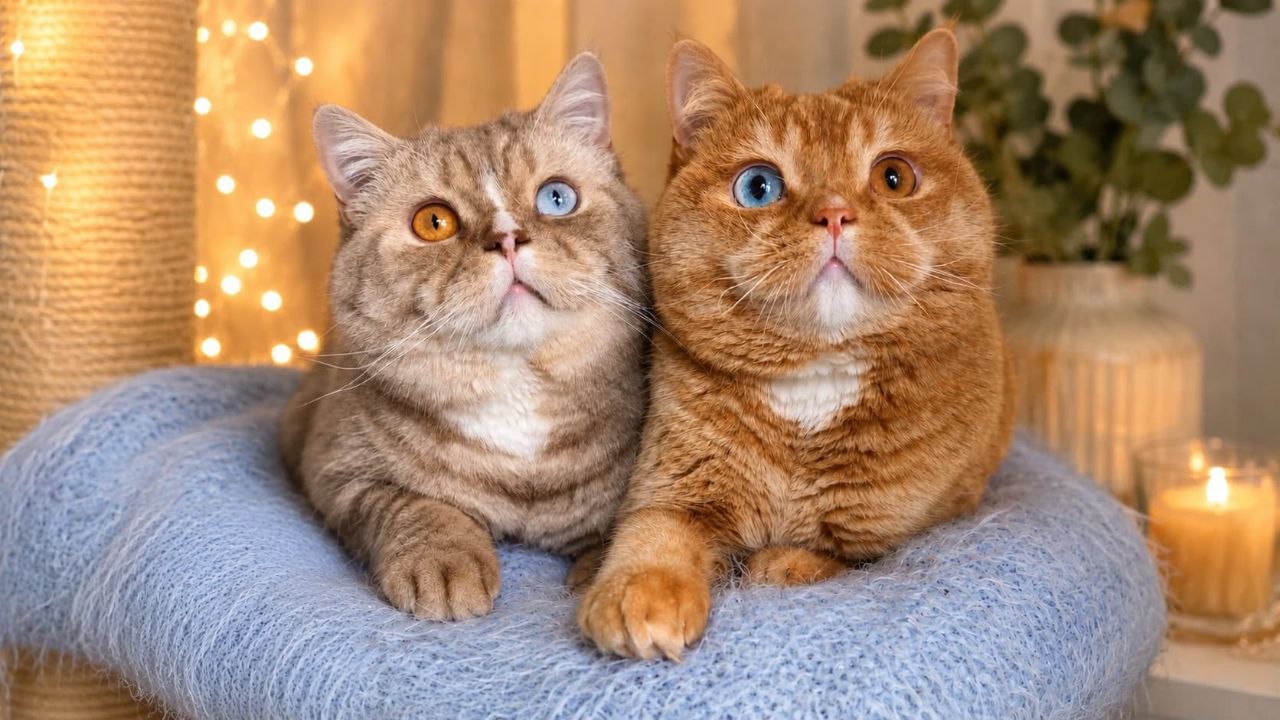
The grey shorthair cat—most famously represented by the iconic British Blue—is the quintessential archetype of pedigree feline composure, dense double coat morphology, and gentle companionship. When feline lovers search for a grey shorthair or envision a sturdy shorthair grey cat, they are almost always picturing the robust, round-faced British Shorthair with its unmistakable blue-grey pelt and luminous copper eyes. Often referenced colloquially as a gray british cat or a gray shorthair, this historic feline variety embodies over a century of refined pedigree selection.
In international felinological registries including the Fédération Internationale Féline (FIFe Standard #729) and the World Cat Federation (WCF), the solid grey phenotype is officially designated as "Blue" (EMS code BRI a). Underneath the colloquial term grey cat shorthair lies a sophisticated genetic architecture and an aristocratic heritage dating back to classical antiquity.
In this definitive breed monograph, Grand Liberty—registered under FIFe since 2006 (#729) and certified under Section 11 of the German Animal Welfare Act (TierSchG)—details the genetic foundations, breed standards, daily care routines, and ethical breeder verification required for prospective guardians of grey shorthair cats.
Historical Heritage of the Grey Shorthair Cat: From Roman Legions to Victorian Show Benches
The lineage of the modern grey shorthair cat represents one of the oldest identifiable domestic cat lines in Europe. Historical records indicate that short-coated grey felines accompanied Roman legionnaires across Gaul and Britannia to safeguard military grain stores. These working cats adapted over centuries to the cool British climate by developing a dense, weather-resistant pelt and a muscular physique.
In 1871, Harrison Weir organized the world's first formal cat show at the Crystal Palace in London. The standout star was a blue-grey British Shorthair, which captivated the public and established the shorthair cat grey as the national show standard of the British Isles.
Following population declines during the World Wars, European preservationist breeders crossbred surviving foundation stock with carefully chosen Persians and Russian Blues to restore genetic diversity, strengthen bone mass, and refine the uniquely plush texture of the grey shorthair coat.
Anatomy and Conformation of the Gray Shorthair Feline
Official judging standards evaluate a gray shorthair on overall balance, muscular density, and distinctive roundness. Unlike slender oriental breeds, the British gray british cat is built like a compact heavyweight.
- Cranial Structure: A massive, broad skull with prominent jowls, creating the famous "smiling" British Shorthair expression. The forehead curves smoothly into a short, broad nose with a gentle profile dip.
- Torso and Skeleton: A low-slung "cobby" conformation characterized by a deep chest, short level back, and heavy bone structure. Adult males weigh 6.0 to 8.5 kg, while females mature between 4.0 and 5.5 kg.
- Limbs and Paws: Sturdy, muscular legs with substantial bone density ending in neat, rounded paws with slate-grey paw pads.
- Coat Quality: Dense, short, and crisp. The fur stands open from the body due to an abundant undercoat, feeling like crisp plush velvet.
Morphological Comparison of Pedigreed Grey Shorthair Cats
The table below delineates the morphological distinctions between the British grey shorthair and other recognized solid blue breeds:
| Breed & EMS Code | Body Geometry | Coat Architecture | Eye Colour Standard | Head & Facial Structure |
|---|---|---|---|---|
| British Shorthair (BRI a) | Cobby, heavy-boned, broad chest | Extremely dense, crisp double coat, stands open | Deep brilliant copper or intense orange | Massive, round skull with full jowls and round contours |
| Chartreux (CHA) | Robust, medium-long, muscular | Dense, slightly woolly, water-resistant pelt | Deep gold to vivid copper | Tapered muzzle, trapezoidal skull with smiling expression |
| Russian Blue (RUS) | Foreign, graceful, elongated, fine boning | Short, silky, plush with distinct silver tipping | Vivid emerald green exclusively | Flat skull, modified wedge, prominent whisker pads |
| Korat (KOR) | Semi-cobby, muscular, heart-shaped chest | Single coat, short, glossy, lying close to skin | Luminous peridot green to amber-green | Heart-shaped head, large expressive rounded eyes |
Dilute Eumelanin Genetics: The Molecular Foundation of the Shorthair Grey Cat
The stunning pelt of a shorthair grey cat is the visual expression of precise eumelanin dilution:
1. *The Primary Black Locus (B): All grey British Shorthairs possess the dominant black gene (B*). Without dilution, the cat would express a solid jet-black coat. 2. *The Dilution Gene (d/d): The transformation from black to grey is governed by the melanophilin gene (MLPH) on chromosome C1. The dilute allele (d) is an autosomal recessive mutation. A cat must inherit two copies (d/d*) to visually express a grey coat. 3. Microscopic Melanin Clustering: In a dense black cat, eumelanin granules are evenly distributed throughout each hair shaft. In a dilute grey cat shorthair, the melanophilin mutation causes pigment granules to clump irregularly. Light scattering across these gaps produces the soft slate-grey hue perceived as blue. 4. Uniformity Down to the Roots: In championship standards for grey shorthair cats, every hair must be colored uniformly from tip to skin. Ghost striping, tipping, or brownish undercoats are considered major show faults.
Eye Colour Standards and Iris Pigmentation in the Gray British Cat
A hallmark feature of the gray british cat is the visual contrast between cool slate fur and warm, radiant eyes:
- Championship Iris Tone: Breed standards require eye colour to range from deep brilliant copper to warm amber or fiery orange. Green-rimmed or pale yellow irises are penalized in competition.
- Ocular Architecture: Eyes must be large, round, wide-set, and exceptionally expressive, emphasizing the cobby head shape.
- Neonatal Transition: Kittens open their eyes at 7 to 10 days showing a slate-blue hue. Between 6 and 10 weeks, melanocytes synthesize pigment, shifting through olive and mustard tones before settling into permanent deep copper brilliance between 5 and 9 months.
Grooming, Nutrition, and Coat Maintenance for Grey Shorthair Cats
While the shorthair cat grey does not tangle like longhaired breeds, its dense coat requires systematic husbandry:
Essential Grooming and Care Checklist
- [ ] Weekly Combing Routine: Comb once or twice weekly with a dual-length stainless steel comb to remove loose undercoat without damaging guard hairs.
- [ ] Seasonal Molt Care: Increase combing to three times weekly during spring and autumn molts to prevent hairball formation.
- [ ] Bathing Protocols: Bathe only when necessary with a hypoallergenic, protein-enriched feline shampoo to protect the natural sebum layer.
- [ ] Sun Protection and Rust Prevention: Extended exposure to intense ultraviolet sunlight can photo-oxidize eumelanin, causing the coat to develop a brownish tint known as "rusting." Position lounging trees in indirect light.
- [ ] Claw and Dental Hygiene: Clip claw tips every 2 to 3 weeks and brush teeth weekly with enzymatic veterinary toothpaste.
Dietary Requirements for Melanin Synthesis
Maintaining coat saturation in grey shorthair cats requires balanced nutrition:
- High-Meat Protein Content: Provide wet or raw complete diets with at least 65% to 70% animal muscle meat and organs.
- L-Tyrosine and Phenylalanine: These amino acids are essential building blocks for tyrosine-hydroxylase during melanogenesis, preventing coat fading.
- Omega-3 and Omega-6 Fatty Acids: Pure wild salmon oil supplies EPA and DHA, nourishing the lipid barrier and supporting coat resilience.
- Renal Hydration: Provide ceramic drinking fountains to promote fluid intake and urinary health.
Ethical Adoption and Health Screening Protocols: The Grand Liberty Standard
When searching for a healthy grey shorthair cat, prospective families must exercise careful due diligence to avoid unregulated backyard operations:
1. Laboklin Certified PKD1 Clearance: Polycystic Kidney Disease (PKD1) is an inherited condition causing renal failure. All Grand Liberty breeding stock undergoes certified DNA testing through Laboklin GmbH, guaranteeing kittens are 100% PKD-negative by parentage. 2. Annual Doppler Echocardiography for HCM: Hypertrophic Cardiomyopathy (HCM) is an inherited cardiac disease. All breeding adults undergo mandatory annual ultrasound scans by certified veterinary cardiologists (Collegium Cardiologicum). 3. Official Pedigree: Every kitten receives an authentic pedigree from FIFe or WCF, documenting 4 to 5 generations of pure ancestry. 4. State Veterinary Certification (§11 TierSchG): Grand Liberty is officially licensed under Section 11 of the German Animal Protection Act by the veterinary authority of Rhein-Hunsrück-Kreis. 5. Age-Appropriate Placement: Kittens are released at 14 to 16 weeks with complete core immunizations (Nobivac Tricat Trio), microchipping (ISO 11784/11785), and thorough socialization.
Explore our distinguished breeding adults to observe our bloodlines, view our currently available kittens, and review our billing and courier delivery policies.
To discuss welcoming an authentic grey British Shorthair, schedule a consultation via our master breeder consultation service.
Sources and Veterinary References
- Fédération Internationale Féline (FIFe). (2024). Breed Standard: British Shorthair (BRI a).
- World Cat Federation (WCF). (2023). Judging Guidelines for Solid Shorthair Breeds.
- German Animal Welfare Act (TierSchG §11). Statutory Guidelines on Cattery Husbandry and Space Requirements.
- Laboklin Clinical Veterinary Genetics Laboratory. DNA Screening Panels for Polycystic Kidney Disease (PKD1) and Dilute Coat Color (MLPH). Bad Kissingen, Germany.
- Ishida, Y., et al. (2006). A homozygous single-base deletion in MLPH causes the dilute coat color phenotype in the domestic cat. Genomics, 88(6), 758-764.
- European Advisory Board on Cat Diseases (ABCD). (2023). Feline Vaccination and Prevention Guidelines.