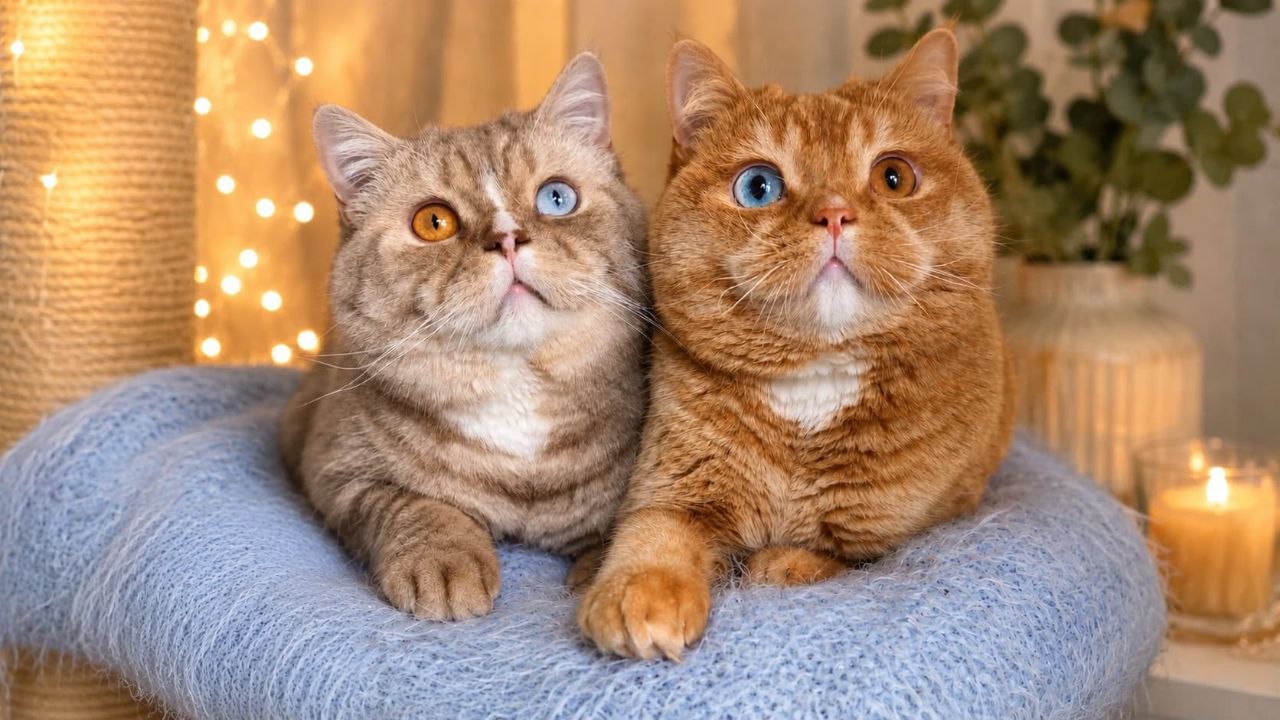
When animal lovers discuss British cat breeds, they are entering the cradle of the modern feline fancy. Britain is the historic birthplace of organized cat breeding, formal conformation standards, and the world's very first cat show, hosted at London's Crystal Palace in 1871 by artist and felinologist Harrison Weir. Today, while many casual observers speak generally of a British cat or admire a lovely cat that looks British, the international pedigree registry recognizes distinct, highly refined breeds that trace their ancestry to the British Isles.
The family of British cats breeds is anchored by two celebrated sister varieties: the world-famous British Shorthair (BSH) and its glamorous semi-longhaired counterpart, the British Longhair (BLH, also known as the Highlander or Britannica). Beyond these recognized pedigreed standards, understanding what defines an authentic British breed cat versus a common domestic feline is essential for any prospective owner or feline enthusiast.
In this authoritative exploration, Grand Liberty—registered with FIFe since 2006 (#729) and certified under §11 TierSchG in Germany—examines the spectrum of British cat breeds, compares their genetics and grooming needs, and explains how to distinguish a genuine pedigree feline from random lookalike domestic cats.
The Spectrum of British Cat Breeds: Shorthair and Longhair Lineages
In international felinological governing bodies—including the Fédération Internationale Féline (FIFe), the World Cat Federation (WCF), and the Governing Council of the Cat Fancy (GCCF)—the term British cat breeds officially designates two closely related pedigreed standards sharing identical bone conformation but distinct coat architectures:
1. The British Shorthair (BSH / FIFe #729): The foundational breed of the group. Celebrated for its compact, cobby physique, broad chest, and dense, crisp double coat that stands open like plush velvet. 2. The British Longhair (BLH): A semi-longhaired variety developed through historic 20th-century crosses with Persian cats to restore genetic diversity and coat density following World War II. The British Longhair carries the recessive longhair gene (l) at the FGF5 locus, resulting in a magnificent ruff, plumed tail, and luxurious medium-long fur while retaining the round head and sturdy cobby conformation of the shorthair.
While casual internet searches often refer to other regional UK breeds—such as the Devon Rex, Cornish Rex, or Scottish Fold—felinological taxonomy strictly classifies only the Shorthair and Longhair as the direct lineage descendants of the classic British domestic cat.
Comparative Matrix: British Shorthair vs. British Longhair
The table below contrasts the anatomical, genetic, and grooming distinctions between the two primary British cat varieties:
| Felinological Parameter | British Shorthair (BSH) | British Longhair (BLH) | Random Domestic Shorthair |
|---|---|---|---|
| FIFe / WCF Recognition | Recognized worldwide since inception | Fully recognized by WCF, TICA, FIFe | Not recognized as a pedigreed breed |
| Coat Structure | Short, dense, crisp, double coat; plush | Semi-long, dense, plush with firm undercoat & ruff | Short, flat-lying, single coat without dense plush |
| FGF5 Gene Status | Homozygous Short (L/L) or Carrier (L/l) | Homozygous Longhair (l/l) | Variable; typically dominant shorthair (L/L) |
| Grooming Frequency | Twice weekly with steel comb; daily in molt | 3 to 4 times weekly; daily de-tangling in molt | Minimal; weekly maintenance |
| Body Conformation | Heavy-boned, cobby, broad chest, short legs | Identical heavy-boned cobby conformation | Varied; typically medium or slender athletic frame |
| Skull & Facial Features | Massive round skull, full jowls, round eyes | Massive round skull, full jowls, round eyes | Triangular to oval skull, flatter cheeks |
Historical Evolution: From Roman Mouser to Victorian Show Bench
The genealogical journey of British cats spans over two millennia. When Roman legions expanded into the British Isles in the first century AD, they brought Egyptian and Near Eastern domesticated cats to protect granaries and military encampments from rodents. Over centuries of exposure to Britain's cold, damp maritime climate, these working felines naturally adapted, developing dense, water-repellent coats, heavy musculature, and thick epidermal skin.
By the 19th century, this resilient working feline—the true British domestic cat—had earned the admiration of Victorian naturalists. Harrison Weir, celebrated as the "Father of the Cat Fancy," recognized that the humble street and barn cat possessed an inherent nobility and structural grandeur. Weir organized the landmark 1871 Crystal Palace exhibition, establishing the initial breed standard for the "English Shorthair," which later evolved into the official British Shorthair.
During the devastating disruptions of World War I and World War II, breeding populations across Europe fell perilously low. Dedicated breeders meticulously reconstituted the lines by judiciously outcrossing with Persians and Russian Blues. These outcrosses enriched bone mass, rounded the cranial contours, and permanently introduced the recessive longhair allele into the British breed gene pool.
Distinguishing an Authentic British Breed Cat from Lookalike Domestic Cats
A common point of confusion among pet seekers is distinguishing between a genuine British breed cat and a random domestic cat that looks British. In shelters and unvetted online ads, gray or chubby domestic felines are frequently mislabeled as "British" simply because they exhibit blue fur or rounded faces.
To determine whether a British looking cat is indeed a true pedigreed feline, evaluate these critical physiological benchmarks:
- Coat Density and Texture: A true British feline coat never lies flat against the spine. When you part the fur with your fingers, it should reveal a thick, insulating undercoat that springs back immediately. Random domestic cats possess smooth, flat coats lacking this plush resistance.
- Bone Mass and Proportions: Pedigreed British looking cats have exceptionally heavy, thick boning in their forelegs and paws. If a cat appears long-necked, high-legged, or lean-bodied, it lacks the cobby architecture mandatory under breed standards.
- The "Cheshire Smile": The prominent round whisker pads and well-developed cheeks of a pedigreed British kitty create the iconic smiling facial contour immortalized by Lewis Carroll.
- Pedigree Provenance: No matter how closely cats that look British resemble the breed visually, a cat is felinologically pedigreed ONLY if accompanied by an official multi-generation registration certificate issued by an accredited international feline registry (FIFe, WCF, TICA, GCCF).
Learn more about skeletal architecture and head shape in our detailed British Shorthair anatomy guide.
Health, Husbandry, and Grooming Across British Cat Breeds
Both varieties of the British cat breed family enjoy robust constitutional health and extended lifespans, frequently living 15 to 18 years when maintained on high-nutrition diets and preventative veterinary schedules. However, prospective owners must appreciate the distinct grooming requirements between the shorthair and longhair:
- British Shorthair Coat Care: The shorthair requires a thorough weekly combing with a fine-toothed stainless steel comb to eliminate shed down hairs from the dense undercoat. During seasonal shedding (spring and autumn), brushing every two days prevents hairball formation.
- British Longhair Coat Care: The longhair requires consistent combing 3 to 4 times per week, paying specific attention to friction-prone zones behind the ears, beneath the armpits, and across the britches to prevent painful matting.
- Genetic Health Screening: Both breeds share an identical genetic susceptibility profile. Certified catteries must screen all breeding individuals for Polycystic Kidney Disease (Laboklin PKD1 DNA test) and conduct annual Doppler echocardiograms to detect Hypertrophic Cardiomyopathy (HCM).
Prospective Owner Checklist for British Cat Breeds
- [ ] Lifestyle Compatibility: Do you prefer the easy-maintenance coat of the Shorthair or the dramatic visual majesty of the Longhair's plush ruff?
- [ ] Indoor Territory: Both breeds are calm indoor aristocrats; ensure scratching posts are tall and heavy enough to accommodate their broad, 6–8 kg muscular frames.
- [ ] Breeder Credentials: Verify that the cattery holds official club registration (#729 FIFe) and complies with municipal welfare standards (§11 TierSchG).
- [ ] Dietary Strategy: British cats have hearty appetites but moderate metabolic rates; strict portion control using meat-rich wet or raw food is vital to prevent obesity.
- [ ] Grooming Tools Prepared: Equip your grooming kit with a wide-spaced metal comb, a fine undercoat comb, and specialized claw trimmers designed for heavy paws.
If you are evaluating which British cat fits your family best, explore our current available kittens or review our adult breeding lines to witness true heritage conformation in person.