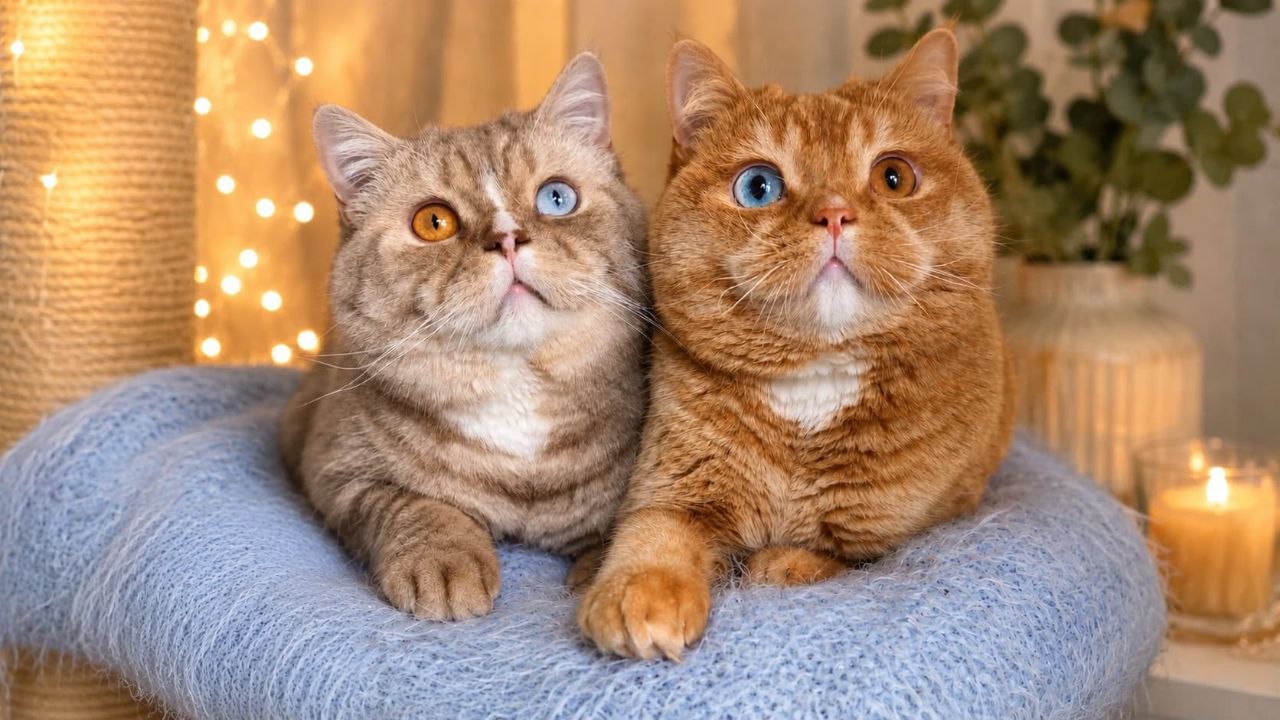
One of the most frequent questions prospective feline guardians ask before welcoming a plush pedigree companion into their home is: do british shorthair cats shed? Because their fur is short and stands neatly away from the body without forming long, trailing plumes, many first-time buyers assume that a shorthaired breed requires almost no coat maintenance. In reality, the answer is an unequivocal yes: British Shorthairs possess the highest hair follicle density of any domestic cat breed, meaning they shed moderately throughout the year and experience two pronounced seasonal molts in spring and autumn.
However, understanding do british shorthairs shed a lot compared to other breeds—and knowing how to manage their unique coat architecture—transforms shedding from a household frustration into an effortless ten-minute weekly routine. At Grand Liberty, licensed under §11 of the German Animal Welfare Act (TierSchG) and registered with FIFe (#729) and WCF, we educate every family on evidence-based dermatological and grooming care. This guide explains the biology of the British double coat, tracks british shorthair kitten shedding milestones, and provides a safe veterinary grooming protocol that reduces loose household fur by up to 85%.
Do British Shorthairs Shed a Lot? Anatomy of the Crisp Double Coat
To understand why owners ask do british shorthair shed a lot, one must examine the microscopic structure of their pelage. In standard domestic cats or Oriental breeds, a single hair follicle typically produces one primary guard hair surrounded by two or three secondary down hairs, all lying flat against the epidermis.
In contrast, selective breeding under FIFe Standard #729 has engineered the British Shorthair coat into a living plush carpet:
- Compound Follicular Bundles: A single follicular cluster in a purebred British Shorthair can sprout one resilient primary guard hair alongside ten to fifteen ultra-fine secondary undercoat (awn and down) hairs.
- Equal-Length Architecture: Unlike longhaired breeds whose guard hairs drape downward, the British Shorthair's undercoat is nearly the exact same length (approximately 2.0 to 2.5 cm) as its outer guard hairs. The dense undercoat acts as a structural scaffold, pushing the guard hairs upright at a perpendicular angle to the skin. This creates the breed's famous "crisp" texture that breaks open over the shoulders and chest like velvet.
- The Trapped-Hair Effect: Because this double coat is so tightly packed, telogen (dead, shed) undercoat hairs often do not fall immediately to the floor. Instead, they remain wedged between live neighboring hairs until dislodged by friction—such as when the cat rubs against a sofa, jumps onto your lap, or grooms itself.
Do British Shorthair Shed a Lot Compared to Other Pedigree Breeds?
The comparison table below illustrates how the British Shorthair's molting profile compares to other popular feline breeds:
| Coat & Shedding Metric | British Shorthair (`BRI`) | Domestic Shorthair | Russian Blue (`RUS`) | Persian / British Longhair |
|---|---|---|---|---|
| Coat Architecture | Ultra-dense, crisp plush double coat | Flat-lying single or light double coat | Short, fine, silky double coat | Long, flowing double coat with deep undercoat |
| Year-Round Shedding Level | Moderate (fine down hairs trapped in plush coat) | Low to Moderate | Low to Moderate | High (daily shedding & mat formation) |
| Seasonal Molt Intensity | High during Spring (Apr–May) & Autumn (Sep–Oct) | Moderate seasonal turnover | Moderate seasonal turnover | Very High seasonal coat blow |
| Matting & Tangling Risk | Extremely Low (fur never knots or mats) | Virtually Zero | Virtually Zero | Extremely High (requires daily combing) |
| Recommended Brushing | 1–2 times weekly (daily during 3-week spring molt) | Once weekly | Once weekly | Daily 15–20 minute thorough session |
British Shorthair Kitten Shedding: The 6-to-10-Month Coat Transition Explained
New guardians are often puzzled by british shorthair kitten shedding dynamics during the first year of life. When your kitten arrives home from an ethical cattery at 14 to 16 weeks of age, you will notice that it barely sheds at all. During early infancy, kittens wear a soft, wispy juvenile coat designed for warmth inside the nursery nest.
Between five and ten months of age, however, every kitten undergoes a major physiological metamorphosis known as the adolescent coat transition:
1. Follicular Multiplication (Months 5 to 7): As growth factors surge during adolescence, secondary hair follicles multiply rapidly across the dermis. The kitten begins shedding its baby fuzz to make room for adult fibers. 2. Emergence of the Crisp Guard Coat (Months 8 to 12): Between eight and twelve months, the soft juvenile fur is progressively replaced by thicker, denser, more resilient adult hairs. During this three-to-four-week transition window, you will notice a temporary increase in british shorthair kitten shedding before the adult coat stabilizes into its mature seasonal rhythm. 3. Color-Specific Coat Density Variations: Within the breed, coat texture varies slightly by genetic color division. Classic solid blue (`BRI a`), lilac (`BRI c`), and cream (`BRI e`) cats typically carry the thickest undercoats, whereas black silver shaded (`BRI ns 11`) and golden shaded (`BRI ny 11`) lines possess a slightly sleeker tipped coat that sheds noticeably less volume during seasonal changes.
Seasonal Molting Cycles, Indoor Photoperiods, and Hairball Prevention
In natural outdoor environments, feline hair follicles respond to changes in daylight duration (photoperiod) mediated by pineal melatonin secretion. As days lengthen in spring, cats shed their heavy winter insulation; as daylight shortens in autumn, they drop their light summer coat to grow a dense winter undercoat.
Because pedigree British Shorthairs live safely indoors exposed to artificial LED lighting and central heating year-round, their pineal glands receive mixed photoperiod signals. Consequently, indoor cats experience a mild baseline turnover of undercoat throughout the year, punctuated by two heavier 3-to-4-week molting peaks in April–May and September–October.
During these seasonal peaks, unbrushed cats ingest large quantities of loose undercoat while self-grooming. Because feline keratin is indigestible, swallowed fur can compact in the stomach into cylindrical trichobezoars (hairballs), causing retching, vomiting, or constipation. Proactive brushing and dietary fiber management during spring and autumn prevent hairball distress.
Professional Cattery Grooming Protocol: Tools to Protect vs. Tools That Ruin the Coat
Many well-meaning owners who ask do british shorthairs shed a lot make the mistake of purchasing aggressive blade-style deshedding tools marketed for dogs. Knowing which grooming instruments preserve the plush double coat—and which destroy it—is paramount.
Why Deshedding Blades (Furminators) Must Be Avoided on Pedigree Plush Coats
Blade-based deshedding rakes work by sliding miniature curved razors through the fur. On a British Shorthair, these blades slice and rip live outer guard hairs while pulling out healthy undercoat roots. Within weeks of using a bladed deshedder, a prize-winning plush coat turns patchy, flat, and dull, and in shaded varieties (`BRI ns 11` / `BRI ny 11`), cutting the dark-tipped guard hairs destroys the delicate mantle pattern for months.
Weekly & Seasonal Grooming Checklist for British Shorthair Owners
Follow this gentle, cattery-approved checklist to keep your home fur-free and your cat's coat in show condition:
- [ ] Use a Soft Silicone or Natural Rubber Grooming Brush: Stroke the coat in gentle circular motions once or twice a week. The electrostatic friction of soft rubber cones acts like a magnet, lifting dead telogen undercoat out of the plush layer without cutting live guard hairs.
- [ ] Follow with a Fine-Toothed Stainless Steel Greyhound Comb: Glide a rounded-pin metal comb gently through the cheeks, chest ruff, flanks, and britches at a 45-degree angle to collect the loosened fluff lifted by the rubber brush.
- [ ] Finish with a Microfiber Cloth or Slightly Damp Chamois: Wipe down the coat from head to tail with a barely dampened microfiber towel to capture microscopic dander and loose surface hairs, leaving a velvety sheen.
- [ ] Increase Brushing to 5 Minutes Daily During Spring/Autumn Molts: For three weeks in April and October, perform a quick daily pass with the rubber brush to intercept shed winter fur before your cat swallows it.
- [ ] Support Gastrointestinal Hair Transit: During peak molting weeks, offer fresh organic cat grass (Cyperus zumula) or a veterinarian-approved sugar-free malt paste twice weekly so ingested hairs pass smoothly through the digestive tract.
- [ ] Never Bathe Unnecessarily: Healthy British Shorthairs are fastidiously clean. Frequent shampooing strips natural sebaceous lipids, drying the skin and triggering reactive dandruff and heavier shedding.
Nutritional and Medical Red Flags: When Excess Shedding Signals Veterinary Issues
While seasonal shedding is physiological, sudden excessive year-round hair loss or patchy alopecia accompanied by scratching or brittle fur signals an underlying nutritional or medical imbalance:
1. Dietary Protein and Omega-3 Deficiencies: Feline hair shafts are nearly 90% keratin protein, and up to 30% of daily protein intake goes toward skin renewal and coat growth. Cats fed cereal-heavy dry kibble rapidly develop dry skin and chronic shedding. Switching to a high-meat (>70% animal protein) wet diet supplemented with marine Omega-3 fatty acids (EPA and DHA from wild salmon or krill oil), taurine, biotin, and chelated zinc strengthens hair follicle anchoring within four to six weeks. 2. Environmental Humidity and Stress: Winter central heating drops indoor humidity below 30%, dehydrating feline skin. Maintaining 45–55% relative humidity and a calm household routine prevents stress-induced telogen effluvium. 3. Dermatological Screening: If bald patches appear, consult your veterinarian to rule out dermatophytosis, ectoparasites, or food allergies. At Grand Liberty, every kitten is backed by parental Laboklin PKD1 and cardiac HCM clearances plus thorough veterinary dermatological inspection prior to release.
Expert Coat Care and Healthy Pedigree Bloodlines at Grand Liberty
So, do british shorthair cats shed? Yes—their signature teddy-bear plushness comes from millions of dense undercoat fibers that renew with the seasons. Yet because their short, resilient fur never mats or tangles, five to ten minutes of weekly brushing with a soft rubber brush and steel comb is all it takes to keep both your cat and your home immaculate.
To learn how species-appropriate nutrition directly strengthens hair follicles and minimizes shedding, read our detailed guide on optimal British Shorthair diet and wet food standards. If you are ready to welcome a well-socialized kitten habituated to gentle grooming from infancy, explore our available British Shorthair kittens for sale, meet our champion breeding cats, review our safe international delivery policies, or schedule a personalized session via our master breeder consultation service.