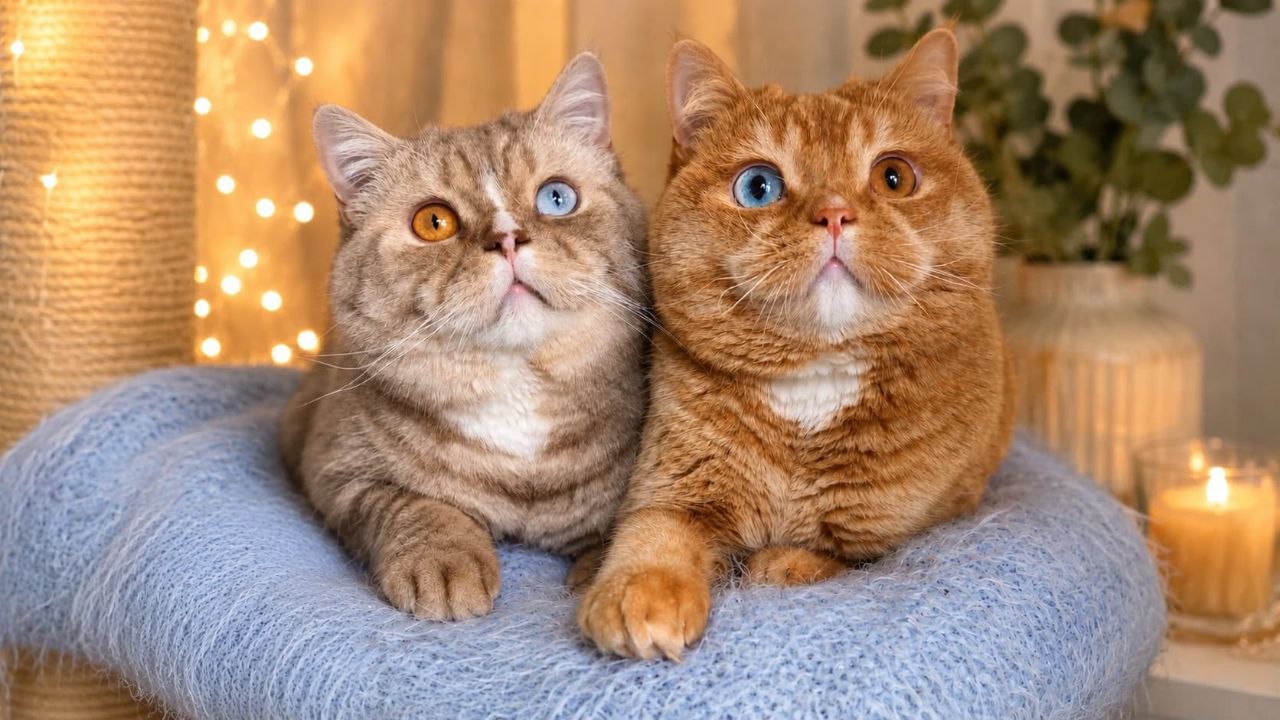
A purebred lilac british shorthair kitten is one of the most mesmerizing and refined color varieties in modern pedigree felinology. Known officially under the Fédération Internationale Féline (FIFe Standard #729) by the EMS code BRI c, this rare coat presents an ethereal, frosted dove-grey hue warmed by subtle pinkish and lavender undertones. Unlike solid blue British Shorthairs whose slate tones stem from dilute black, the true lilac kitten owes its delicate coloration to a double-recessive genetic combination that dilutes rich chocolate pigment into an iridescent frost.
Prospective owners seeking a british shorthair lilac kitten frequently encounter confusion regarding coat shade nuances, eye development, and health verification. Because authentic lilac requires both parents to carry recessive alleles for both chocolate and dilution, breeding a show-standard british shorthair kitten lilac demands deep genetic knowledge and rigorous health diagnostics. At Grand Liberty, operating under Section 11 of the German Animal Welfare Act (§11 TierSchG) with official FIFe registration #729, our specialized breeding program pairs world-class conformation with uncompromising veterinary screening. Every breeding adult undergoes certified Laboklin DNA testing for Polycystic Kidney Disease (PKD1 N/N) and annual Doppler echocardiograms by certified feline cardiologists to rule out Hypertrophic Cardiomyopathy (HCM). In this comprehensive guide, we explore the molecular genetics of lilac, examine morphological standards, chart ocular transitions, and detail essential care protocols.
Genetic Architecture of the Lilac Coat: The Interaction of Chocolate and Dilution
The creation of an authentic lilac British Shorthair is an intricate scientific endeavor governed by Mendelian genetics. Far from being a pale blue, its molecular reality is fundamentally distinct:
The Dilute Locus (D) and Chocolate Locus (B) Interaction
Feline coat coloration relies on primary pigment enzymes: 1. *The Primary Black/Brown Locus (B): The dominant allele (B) produces black eumelanin. A mutation (b) yields chocolate pigment, while (b^l) produces cinnamon. An authentic lilac cat must be homozygous recessive for chocolate (b/b), lacking the dominant black (B*) allele. 2. *The Dense/Dilution Locus (D): The dominant allele (D) provides full pigment density. The recessive mutation (d*) disrupts melanocyte deposition, causing pigment granules to cluster irregularly along the hair shaft. This clustering allows light refraction through the translucent hair cortex, creating a diluted tone. 3. The Synergistic Homozygous Recessive Genotype: To produce a lilac british shorthair kitten, the animal must possess the genotype b/b d/d, inheriting a chocolate allele and a dilution allele from both sire and dam. If either parent transmits a dominant black (B) or dense (D) allele, the kitten cannot express a solid lilac phenotype.
Distinguishing Lilac (BRI c) from Blue (BRI a) and Fawn (BRI p)
Genetic and physical markers clearly separate these dilute varieties:
- *Lilac (BRI c - b/b d/d):* A frosty dove-grey with a pinkish, lavender bloom and no cold bluish cast. Nose leather and paw pads are soft faded lavender-pink (withered lilac).
- *Blue (BRI a - B/- d/d):* A cool, slate-grey tone with silver tipping. Nose leather and paw pads are dark slate blue or charcoal.
- *Fawn (BRI p - b^l/b^l d/d):* The dilute of cinnamon, producing a warm, rosy-beige mushroom tone with pinkish-fawn leather.
Morphological Standards of the Lilac British Shorthair Under FIFe #729 and WCF
Beyond coat color, a show-quality british shorthair lilac kitten must exemplify the iconic cobby architecture that defines the breed:
Cranial Structure, Stud Jowls, and Facial Contours
- The Skull: The head must be massive, round, and broad, set on a short, heavily muscled neck. The forehead curves gently into a short, straight, broad nose with a subtle dip, without a Persian stop.
- Whisker Pads and Jowls: Adult specimens develop prominent, fleshy cheek jowls and well-cushioned whisker pads that give the breed its characteristic smiling visage.
- Ears: Medium-to-small in proportion, rounded at the tips, and set wide apart to preserve the circular skull silhouette.
Cobby Body Conformation and Crisp Double Coat
- Torso and Musculoskeletal Build: The torso is compact, broad, and low-slung (cobby), featuring a massive chest and level backline. Boning is substantial throughout the legs, ending in firm, round paws.
- Coat Density and Crispness: The coat features a dense, plush undercoat and resilient texture (crisp). It stands away from the body like velvet rather than lying flat. In lilac specimens, the fur must remain uniform to the roots, free from white tipping or oxidation.
Eye Color Development: From Natal Blue to Deep Glowing Copper
All kittens open their eyes at 7 to 10 days displaying an undifferentiated slate-blue hue. In a british shorthair kitten lilac, ocular pigmentation matures progressively: 1. Weeks 4 to 8: The iris shifts from muddy blue to smoky hazel as stroma melanocytes begin producing melanin. 2. Months 3 to 6: Pigmentation intensifies into rich amber or honey-gold. 3. Months 7 to 18: The iris reaches its final hue: deep, luminous copper or brilliant orange glow. In lilac cats, warm copper irises provide an arresting contrast against the frosty lavender-grey coat.
Phenotypic Comparison: Lilac vs. Blue, Chocolate, and Fawn British Shorthairs
| Variety & EMS Code | Genetic Formula | Coat Color Tone | Nose Leather & Paw Pads | Target Eye Color (Adult) |
|---|---|---|---|---|
| Lilac (BRI c) | b/b d/d | Frost dove-grey with pink/lavender bloom | Soft withered-lilac / pale pinkish-grey | Deep glowing copper to orange |
| Blue (BRI a) | B/- d/d | Slate-grey to medium blue with silver cast | Slate grey / charcoal | Brilliant copper or deep amber |
| Chocolate (BRI b) | b/b D/- | Rich warm milk chocolate to chestnut brown | Deep milk chocolate / chestnut | Deep copper / vibrant orange |
| Fawn (BRI p) | b^l/b^l d/d | Warm rosy-beige / powdered mushroom | Pinkish-fawn / warm beige | Intense copper / amber |
Pediatric Development and Coat Clearing in Lilac Kittens
When raising a british shorthair lilac kitten, guardians should understand normal pediatric developmental phases:
Ghost Markings and Tabby Clearance
Young kittens frequently display faint residual ghost tabby markings on the tail and flanks between 6 and 16 weeks of age. These faint markings reflect universal agouti genetics beneath non-agouti (a/a) solid masking. As the adult double coat emerges between 5 and 9 months, ghost markings fade into a pristine monochrome frost.
Sunlight Exposure and Coat Tarnishing
Because dilute eumelanin pigment granules are delicate, prolonged direct exposure to intense ultraviolet sunlight can cause photolytic oxidation, turning hair tips slightly brassy ("rusting"). Filtered indoor daylight and omega-3 fatty acids preserve the pristine dove-grey sheen.
Health, Blood Types, and Ethical Breeding Standards
Breeding dilute varieties requires heightened veterinary diligence to ensure lasting vitality:
Feline Blood Groups and Neonatal Isoerythrolysis (NI) Prevention
British Shorthairs possess a high prevalence of Type B blood (up to 30–50% in European lineages). When a Type B queen is bred to a Type A stud, maternal colostrum antibodies attack Type A kittens' red blood cells, causing fatal Neonatal Isoerythrolysis (NI). At Grand Liberty, all breeding adults are genetically typed via Laboklin, eliminating blood incompatibility risks through systematic mating selection.
Genetic Diagnostics: PKD1 and Cardiomyopathy Screening
- Polycystic Kidney Disease (PKD1): An autosomal dominant mutation causing destructive renal cysts. Grand Liberty parent cats are verified PKD1 N/N via Laboklin PCR sequencing, guaranteeing that every lilac british shorthair kitten is free of this defect.
- Hypertrophic Cardiomyopathy (HCM): Adults undergo regular Doppler echocardiography by certified veterinary cardiologists to ensure optimal left ventricular wall dynamics.
Nutrition and Digestive Care for Growing Lilac Kittens
- Animal Protein: High-moisture, grain-free wet foods with at least 70% real meat (poultry, rabbit) rich in natural taurine support dense muscle and coat development.
- Essential Fatty Acids: Cold-pressed wild salmon oil (EPA/DHA) optimizes the dermal barrier and supports double coat plushness.
- Controlled Energy Density: Avoiding high-carbohydrate kibble prevents juvenile adiposity and protects the developing cobby frame.
Preparation Checklist for Adopting a Lilac British Shorthair Kitten
Before welcoming a british shorthair lilac kitten, ensure your home environment is fully prepared:
- [ ] Pedigree Verification: Confirm a certified 4–5 generation pedigree from FIFe (Standard #729), WCF, or TICA verifying EMS code BRI c.
- [ ] Parental Health Certification: Review verified Laboklin PKD1 N/N DNA certificates and cardiologist Doppler HCM clearance.
- [ ] Veterinary Passport: Verify an official EU Pet Passport with ISO 11784/11785 microchip, core vaccinations, and deworming.
- [ ] Socialization Timeline: Ensure handover occurs no earlier than 12 to 14 weeks of age for optimal behavioral stability.
- [ ] Low-UV Nursery Area: Position resting beds in shaded indoor areas to prevent UV coat oxidation during juvenile coat transitions.
- [ ] Heavy-Duty Scratching Post: Provide broad, sturdy sisal scratching posts to support the kitten's muscular adult build (4.5–7.5 kg).
- [ ] Nursery Diet Continuity: Supply high-protein wet food matching the cattery diet for a smooth 14-day digestive transition.
- [ ] Veterinary Baseline Exam: Schedule a routine wellness checkup within 5 to 7 days of arrival to register microchip details.
A purebred lilac british shorthair kitten embodies gentle affection and aristocratic elegance. Verified pedigree heritage and scientific health screening ensure your companion enjoys 15 to 20 years of vibrant health.