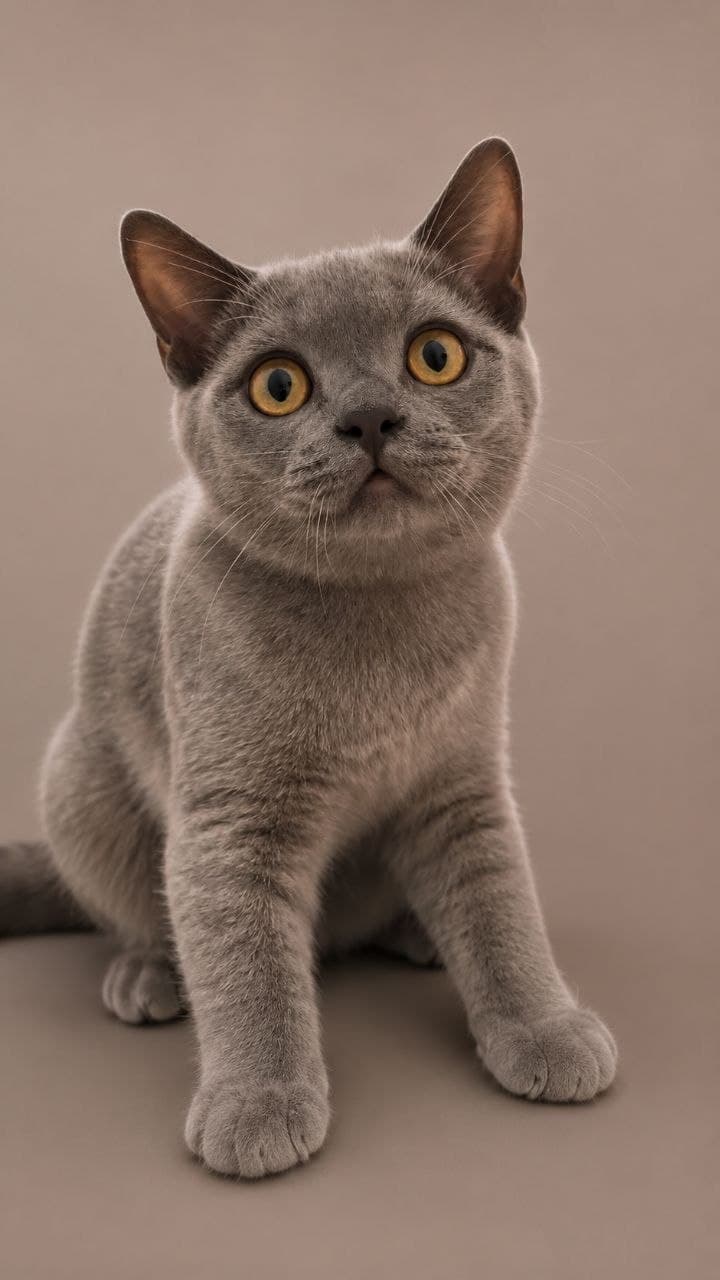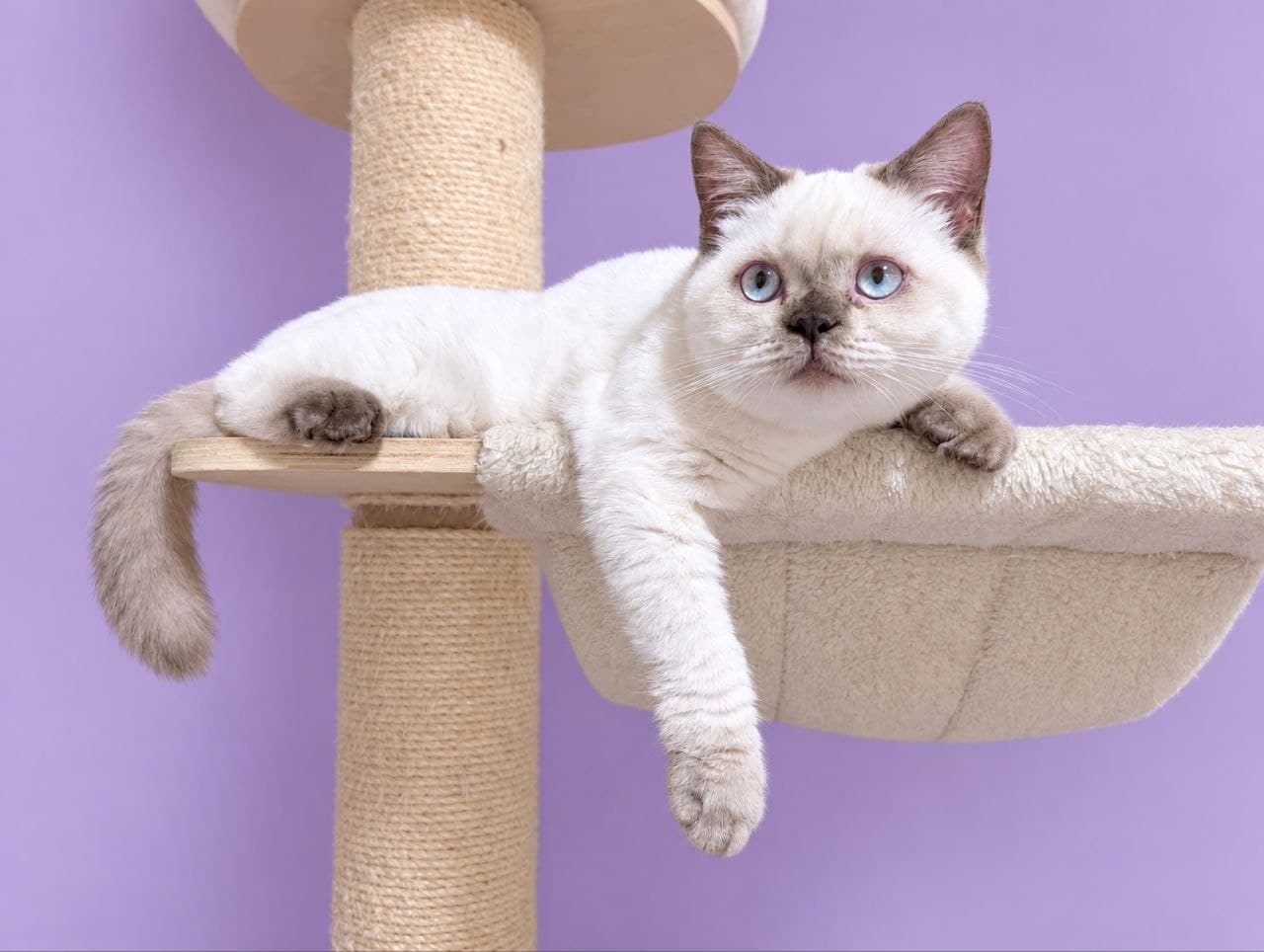
An adult female British Shorthair typically weighs between 3.2 kg and 5.5 kg (7 to 12 lbs), while a fully mature adult male weighs between 5.0 kg and 8.5 kg (11 to 18.7 lbs), with select robust bloodlines reaching up to 9.0 kg without clinical obesity. Because the British Shorthair possesses a slow-maturing cobby phenotype that takes three to five years to reach full skeletal density, body condition scoring (BCS 5 on a 9-point scale) via manual rib palpation is far more reliable than scale numbers alone to prevent excess adiposity.
British Shorthair Kitten Growth Weight Chart: Month-by-Month Development
British Shorthairs do not follow the rapid linear growth trajectory typical of lighter, semi-foreign or oriental cat breeds. Instead, they undergo extended skeletal ossification and delayed muscle accretion that spans three to five years. During the first twelve months, kittens experience substantial somatic growth, but their development often occurs in irregular spurts, alternating between elongation of the spine and subsequent filling out of the rib cage and shoulders.
A healthy British Shorthair kitten should gain roughly 100 to 150 grams per week during the initial weaning and rapid growth phases (weeks 8 through 20). Males consistently outpace females from roughly twelve weeks onward, reflecting sexual dimorphism that becomes heavily pronounced in adulthood. Monitoring growth with a digital gram scale weekly ensures that lean tissue accretion occurs without precipitating early hepatic lipidosis risk or juvenile orthopedic stress.
- Month 2 (8 weeks): Males 0.9–1.2 kg | Females 0.8–1.0 kg (weaning to balanced solid meals)
- Month 3 (12 weeks): Males 1.4–1.8 kg | Females 1.2–1.5 kg (rapid muscle development phase)
- Month 4 (16 weeks): Males 2.0–2.6 kg | Females 1.7–2.2 kg (transition to juvenile body framework)
- Month 6 (24 weeks): Males 3.0–3.8 kg | Females 2.4–3.1 kg (pre-pubertal slowing of vertical height)
- Month 9 (36 weeks): Males 4.0–5.2 kg | Females 3.0–4.0 kg (initial chest broadening occurs)
- Month 12 (1 year): Males 4.8–6.2 kg | Females 3.2–4.5 kg (end of primary skeletal height phase; horizontal frame thickening begins)
Ideal Weight for Adult Male British Cat: Phenotype and Boning Variations
Determining the ideal weight for an adult male British Shorthair requires evaluating individual genetic lineage, bone caliper, and hormonal status. A healthy intact or early-neutered male generally stabilizes between 5.5 kg and 8.0 kg once fully mature at four years old. Large-framed males from traditional European Grand Champion lines frequently carry substantial bone mass and well-developed masseter muscles (stud jowls), which naturally push their healthy baseline toward 8.5 kg.
However, body weight must correlate strictly with frame width. A male with a short dorsal length and medium bone diameter carrying 8.0 kg is almost certainly obese, placing extreme mechanical stress on the coxofemoral joints and stifle ligaments. Conversely, a large-framed male with broad pectoral spacing and wide pelvic architecture may carry 8.0 kg while exhibiting an optimal Body Condition Score. Weigh-ins must always be contextualized against physical measurements and lumbar muscle tone.
Body Condition Scoring Cobby Build vs Fat: Clinical Palpation Standards
The standard British Shorthair conformation is cobby: compact, low on the legs, with a broad chest, powerful shoulders, and a short, level back. This natural stockiness frequently leads owners and less experienced evaluators to confuse skeletal breadth with clinical adiposity, or conversely, to dismiss harmful visceral obesity as 'just big bones'. In accordance with veterinary standards and Grand Liberty breeding criteria, we evaluate all felines using the standardized World Small Animal Veterinary Association (WSAVA) 9-point Body Condition Score (BCS).
An ideal British Shorthair must sit squarely at a BCS of 5 out of 9. At this score, the ribs are easily palpable beneath a light subcutaneous fat layer without applying heavy pressure. Viewed from above, a subtle waist should be identifiable behind the rib cage, despite the breed's barrel chest. The primordial pouch—a normal anatomical flap of skin on the lower abdomen—must be differentiated from visceral fat pads; a healthy pouch consists of loose skin folds that swing freely without firm, dense adipose deposit.
- BCS 4-5 (Ideal): Ribs palpable with minimal pressure; slight dorsal waist visible; minimal abdominal fat pad; firm loin musculature.
- BCS 6 (Overweight): Ribs palpable only with distinct manual pressure; waistline obscured from dorsal view; noticeable fat roundness at ventral abdomen.
- BCS 7-9 (Obese): Ribs inaccessible under thick adipose layer; spine and pelvis masked; heavy pendulous abdominal fat; loss of neck definition and lethargy.
Preventing Weight Gain in Neutered Cats: Metabolic Management
Surgical gonadectomy (neutering or spaying) significantly alters feline endocrine dynamics. Following the removal of testosterone or estrogen, the feline basal metabolic rate (BMR) drops by approximately 20 to 30 percent, while systemic appetite and satiety dysregulation often surge due to altered leptin and ghrelin signaling. If feeding volumes remain unchanged post-surgery, a British Shorthair will gain significant fat mass within eight to twelve weeks.
To mitigate post-operative weight gain, recalculate the cat's Daily Energy Requirement (DER) immediately following surgery. Transition from growth formulas to a high-protein (minimum 40% dry matter), moderate-fat (10-14%), and controlled-carbohydrate wet diet that maximizes satiety through moisture and biological protein rather than indigestible plant starches. Free-feeding dry kibble must be eliminated entirely, as ad-libitum feeding almost universally triggers clinical obesity in neutered cobby breeds.
Portion Control and Indoor Feline Exercise: Daily Caloric Calculations
Precision feeding requires daily portion tracking using a gram kitchen scale rather than volumetric measuring cups, which can introduce up to a 25 percent margin of error per serving. To establish caloric targets, calculate the resting energy requirement (RER) using the standard clinical formula: RER (kcal/day) = 70 * (body weight in kg)^0.75. For a neutered adult British Shorthair maintaining optimal weight, multiply the RER by a maintenance factor of 1.0 to 1.2 depending on active expenditure.
Environmental enrichment under §11 TierSchG and modern feline welfare principles requires actively engaging the British Shorthair's instinctual prey drive. While naturally calm and sedentary indoors, British Shorthairs excel at explosive anaerobic sprints. Structuring three 10-minute daily interactive play sessions with feather wands, laser protocols ending in a tangible catch, or food puzzle dispersion ensures caloric balance and stimulates lean muscle retention across their mature lifespan.
Clinical Assessment Protocol: Lean Mass vs Adipose Accumulation
- Digital Scale Weigh-in: Record weight at identical times bi-weekly before morning feeding.
- Costal Margin Palpation: Run flat palms over ribs; ribs should feel like the back of a knuckles-extended hand.
- Dorsal Silhouette Assessment: View cat from above; confirm distinct indent behind ribs before pelvic flare.
- Abdominal Tuck Inspection: Profile check to ensure the ventral underline rises gently toward the inguinal region.
- Primordial Pouch Tactile Check: Confirm skin flap is soft and empty, devoid of dense, lard-like fat cores.
- Gram Portion Control: Measure every wet and dry meal portion strictly on a calibrated kitchen scale.
Summary & Next Steps
Maintaining a British Shorthair at an optimal Body Condition Score (BCS 5/9) protects their heavy-boned framework from premature degenerative joint disease, diabetes mellitus, and hepatic stress. Evaluate your cat's ribcage weekly using tactile palpation rather than visual assumptions. To calibrate your cat's specific dietary caloric targets or review our cobby bloodline standards, consult our Grand Liberty breed wellness archive.
Sources & References
- World Small Animal Veterinary Association (WSAVA) Global Nutrition Committee: Body Condition Score (Feline)
- Fédération Internationale Féline (FIFe): British Shorthair Breed Standard (BSH)
- German Animal Welfare Act (§11 TierSchG): Guidelines for Companion Animal Management and Conformation Health
- National Research Council (NRC): Nutrient Requirements of Dogs and Cats (Caloric Density and DER Formulations)