The British Shorthair lifespan is celebrated throughout the feline fancy for its impressive longevity and constitutional resilience. Prospective and current owners frequently ask: how long do British Shorthairs live, how long do British Shorthair cats live, and what specific husbandry protocols maximize the life expectancy British Shorthair companions enjoy?
On average, the lifespan of British Shorthair cat companions ranges between 12 and 18 years, with many well-cared indoor individuals comfortably reaching 19 to 20 years. In terms of human equivalency, an 18-year-old British Shorthair has lived the physiological equivalent of an 88-year-old human. Achieving this remarkable longevity is not merely a matter of genetic chance; it requires proactive veterinary screening, tailored nutritional management, and environmental protection.
In this definitive health guide, Grand Liberty—registered with FIFe since 2006 (#729), affiliated with the World Cat Federation (WCF), and certified under §11 of the German Animal Welfare Act (TierSchG)—analyzes the biological stages of feline aging, breaks down the genetic foundations of longevity, and provides actionable protocols to support your cat through every stage of life.
Understanding British Shorthair Lifespan: Longevity Statistics and Life Expectancy
When examining British Shorthair life expectancy, veterinary studies consistently rank the breed among the hardiest of all pedigreed felines. Unlike hyper-typed breeds with extreme brachycephalic facial structures or elongated spines, the British Shorthair possesses a balanced, moderate skeletal conformation and broad respiratory passages that support lifelong physiological health.
However, statistics on British Shorthair life span vary dramatically based on living conditions:
- Indoor-Only Lifestyle: British Shorthairs maintained exclusively indoors enjoy an average life expectancy of 14 to 18+ years. They are protected from vehicle collisions, infectious viral transmission (FeLV, FIV, FIP), parasite vectors, and territorial fights.
- Unsupervised Outdoor Access: Cats allowed free-roaming outdoor access face significantly reduced average lifespans of 5 to 8 years due to accidental trauma, rodenticide poisoning, and infectious diseases.
- Pedigreed vs. Unregulated Breeding: Kittens from certified catteries with documented parental DNA screening against Polycystic Kidney Disease (PKD1) and annual cardiology screening (HCM) exhibit significantly lower rates of premature organ failure compared to unvetted backyard stock.
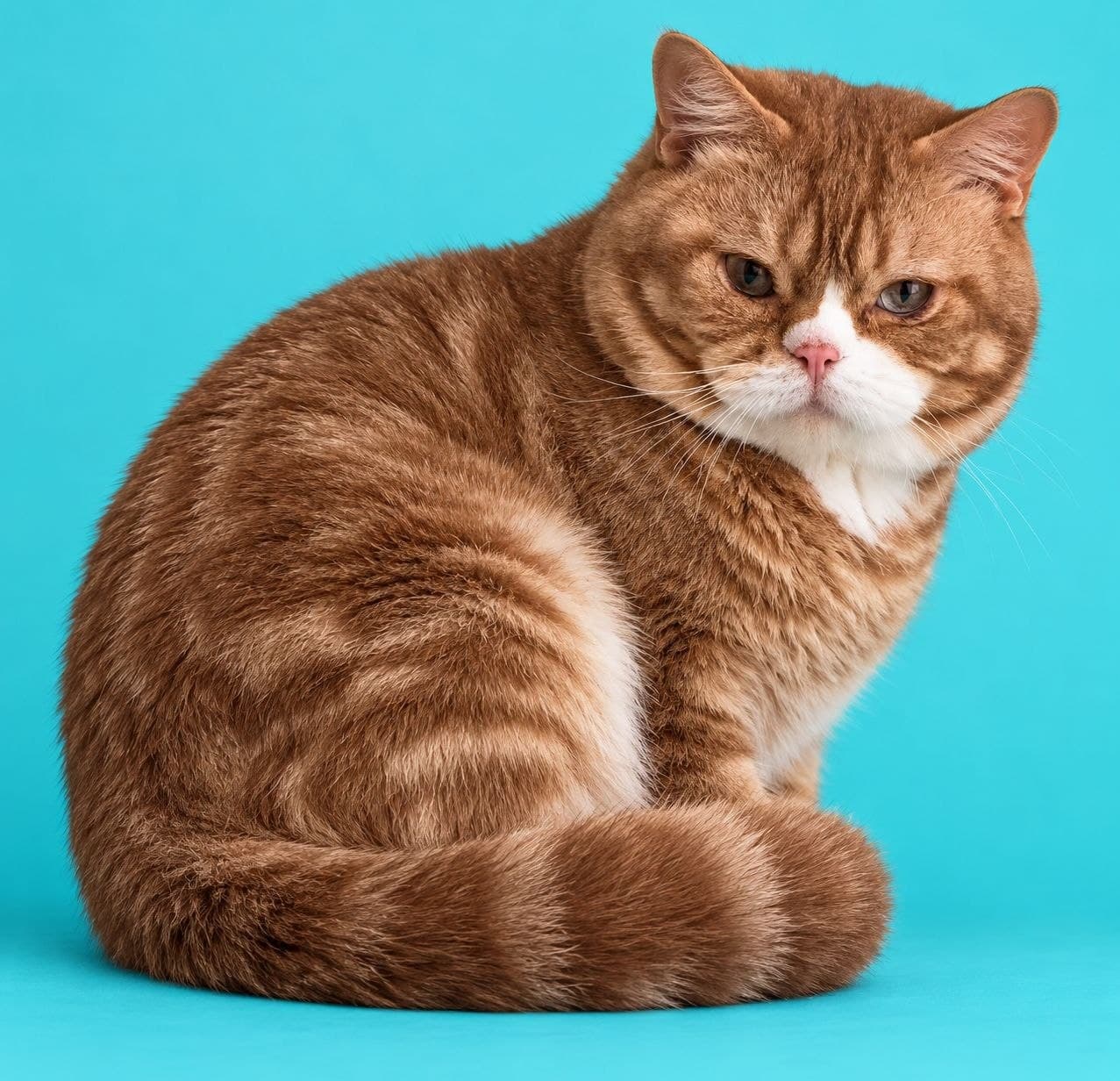
Whether raising a classic blue feline or monitoring an orange British Shorthair lifespan, adhering to veterinary wellness guidelines is the single greatest determinant of longevity.
Feline-to-Human Age Conversion Matrix
The following chart outlines the physiological aging milestones for the British Shorthair:
| Feline Life Stage | Age in Cat Years | Human Biological Equivalent | Primary Veterinary Focus & Milestones |
|---|---|---|---|
| Kittenhood | 0 – 12 Months | 0 – 15 Years | Core vaccination series, microchip, dental eruption, desexing |
| Junior / Young Adult | 1 – 6 Years | 16 – 40 Years | Musculoskeletal maturation, weight control, baseline bloodwork |
| Mature Adult | 7 – 10 Years | 44 – 56 Years | Bi-annual dental scaling, renal panel, blood pressure checks |
| Senior | 11 – 14 Years | 60 – 72 Years | Comprehensive geriatric blood chemistry (SDMA, T4), ultrasound |
| Geriatric / Super Senior | 15+ Years | 76 – 100+ Years | Renal support, joint mobility care, sensory cognitive enrichment |
The Five Stages of Feline Aging: Physical and Behavioral Changes
To understand how long do British Shorthair cats live in vibrant health, owners must recognize how nutritional and physiological requirements evolve across the five primary life stages:
1. Kittenhood (0 to 12 Months)
During the first year, British Shorthairs undergo rapid physical development. However, unlike smaller breeds that mature within 8 months, the heavy-boned British Shorthair develops slowly. Bone density and muscle mass continue to accumulate until approximately 3 to 4 years of age. Nutrition must be rich in animal-derived proteins, essential amino acids (taurine, arginine), and balanced calcium-to-phosphorus ratios.
2. Junior / Prime Adult (1 to 6 Years)
During this vibrant adult phase, the cat reaches its full conformational grandeur, including wide jowls in males and broad shoulders in females. The primary health concern during this stage is metabolic management: because British Shorthairs have calm, sedentary temperaments, excessive caloric intake quickly leads to adiposity. Weight management protocols are vital to protect hip joints and lumbar vertebrae.
3. Mature Adult (7 to 10 Years)
At age seven, the feline metabolism begins to slow. Subclinical conditions such as feline lower urinary tract disease (FLUTD), early dental resorption (FORL), and subtle renal changes can begin to develop. Annual veterinary blood chemistry panels and blood pressure monitoring should commence during this period.
4. Senior (11 to 14 Years)
Senior cats exhibit subtle reductions in grooming flexibility and slight changes in sleep architecture. Renal glomerular filtration rates naturally decline. Switching to highly digestible, low-phosphorus wet nutrition helps maintain lean muscle mass while easing renal metabolic load.
5. Geriatric (15+ Years)
Geriatric felines require thoughtful environmental adaptations: low-entry litter boxes, orthopedic memory-foam resting cushions, and heated indoor pads to soothe arthritic joints. Regular cognitive engagement and loving, calm interaction keep senior cats mentally sharp and emotionally secure.
Genetic Foundations of Longevity: Eliminating Hereditary Risks
The cornerstone of an extended British Shorthair cat lifespan is selective genetic health screening conducted by ethical breeders before mating occurs:
- Polycystic Kidney Disease (PKD1): An autosomal dominant genetic mutation that causes fluid-filled cysts to progressively destroy renal parenchyma, resulting in premature kidney failure between 4 and 8 years of age. At Grand Liberty, every breeding queen and stud undergoes certified Laboklin DNA testing, guaranteeing that all kittens are 100% PKD-free by parentage.
- Hypertrophic Cardiomyopathy (HCM): A hereditary heart condition causing concentric left ventricular hypertrophy, leading to congestive heart failure, pulmonary edema, or aortic thromboembolism. Because no universal DNA test covers all HCM mutations in British Shorthairs, annual Doppler echocardiography performed by certified veterinary cardiologists is mandatory throughout a cat's breeding career.
- Dental Resorption (FORL): Feline Odontoclastic Resorptive Lesions affect up to 60% of cats over five years of age. Regular professional dental hygiene under anesthesia prevents chronic systemic inflammation that strains kidney and heart function.
Explore our full health testing documentation to review our comprehensive clinical screening protocols.
Preventing the Big Three: Obesity, Kidney Failure, and Dental Disease
To ensure your cat lives comfortably into its late teens, owners must proactively mitigate the three most common life-shortening ailments:
1. Combating Feline Obesity
The broad, stocky build of the British Shorthair can mask dangerous adipose accumulation. Maintaining a healthy Body Condition Score (BCS 4 to 5 on a 9-point scale) extends feline life by up to 2.5 years. Avoid free-feeding dry carbohydrates; provide measured, portion-controlled meals of moisture-rich wet or raw food. Consult our complete diet guide for precise daily caloric targets.
2. Safeguarding Renal Function
Chronic Kidney Disease (CKD) is the leading cause of mortality in aging domestic felines. Because cats have low evolutionary thirst drives, feeding moisture-depleted dry kibble leaves them in a state of chronic mild dehydration, straining the renal nephrons. Ensure your home features multiple circulating water fountains and prioritize high-moisture canned or BARF diets.
3. Professional Dental Care
Bacteria from untreated tartar, gingivitis, and periodontal disease enter the bloodstream through inflamed oral mucosa, colonizing cardiac valves and renal filtration barriers. Annual oral examinations and prompt dental cleanings are indispensable longevity tools. Read our specialized guide on feline dental hygiene.
Senior British Shorthair Wellness Checklist
Support your companion's senior years with this preventative care checklist:
- [ ] Twice-Yearly Geriatric Exams: Schedule veterinary check-ups every six months once your cat reaches 10 years of age.
- [ ] Comprehensive Blood & Urine Diagnostics: Request annual symmetric dimethylarginine (SDMA), serum creatinine, electrolyte, total T4 (thyroid), and urinalysis screening.
- [ ] Blood Pressure Monitoring: Screen annually for feline hypertension, which frequently accompanies renal compromise or hyperthyroidism.
- [ ] Home Accessibility Upgrades: Provide step ramps to favorite sofas, wide low-sided litter boxes, and non-slip rugs on slick hardwood floors.
- [ ] Gentle Grooming Assistance: Brush senior coats twice weekly to prevent matting in areas the cat can no longer easily reach due to spinal stiffness.
- [ ] Targeted Joint Support: Supplement with omega-3 fatty acids (EPA/DHA) and veterinary-grade green-lipped mussel extract to support cartilage integrity.
If you are seeking a healthy, genetically screened kitten bred for vitality and longevity, explore our currently available kittens or review our adult breeding lines.