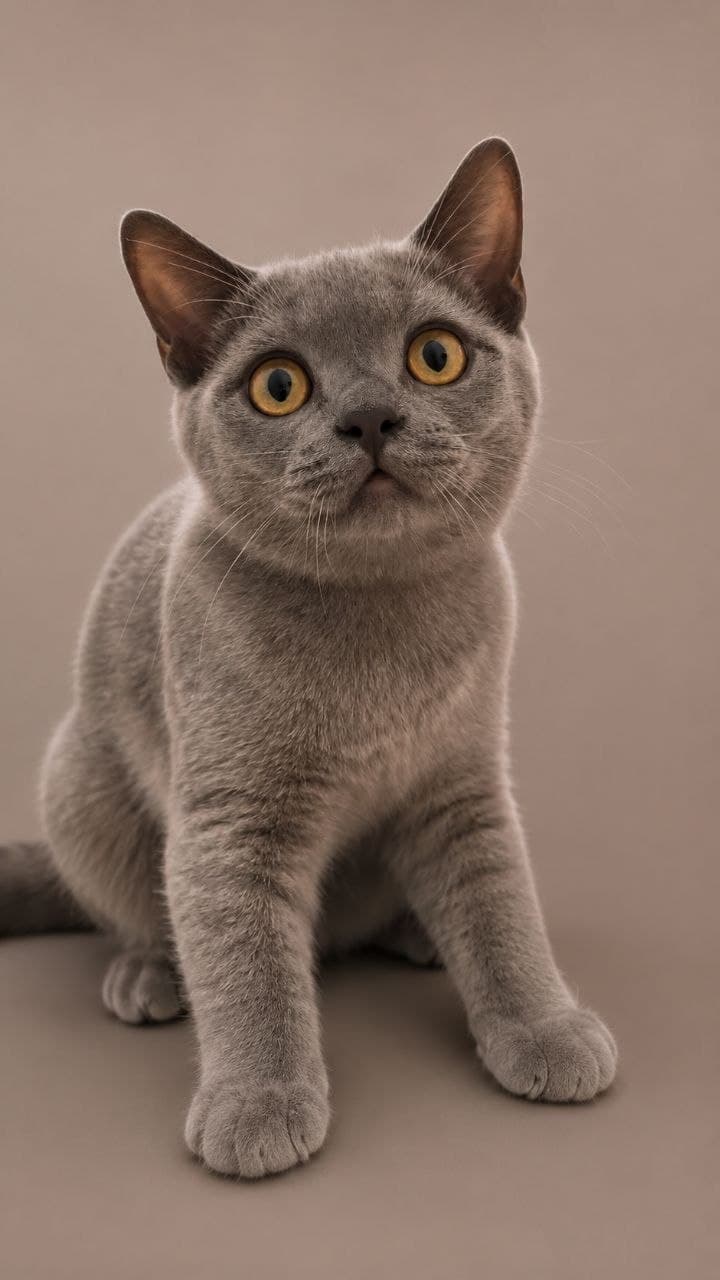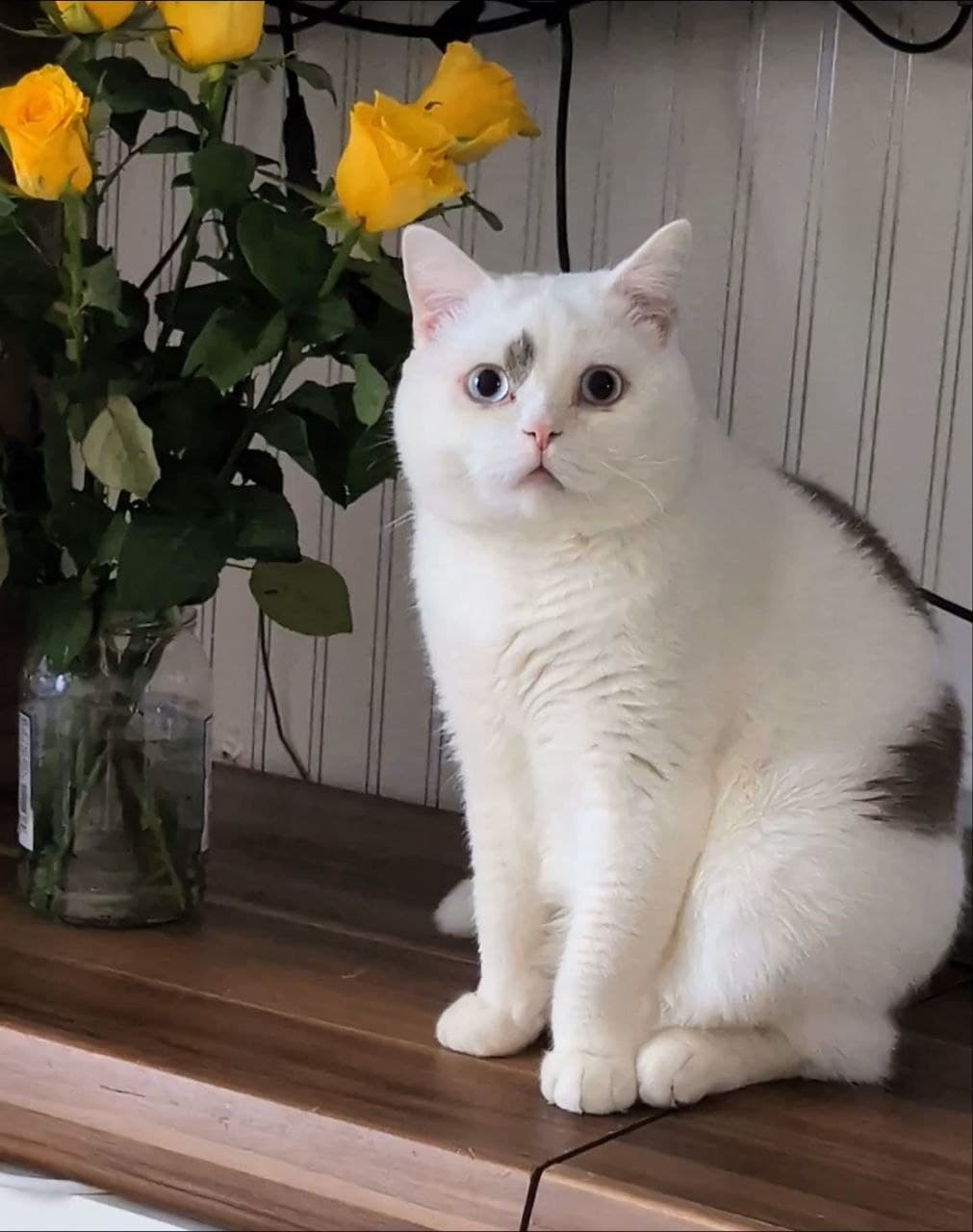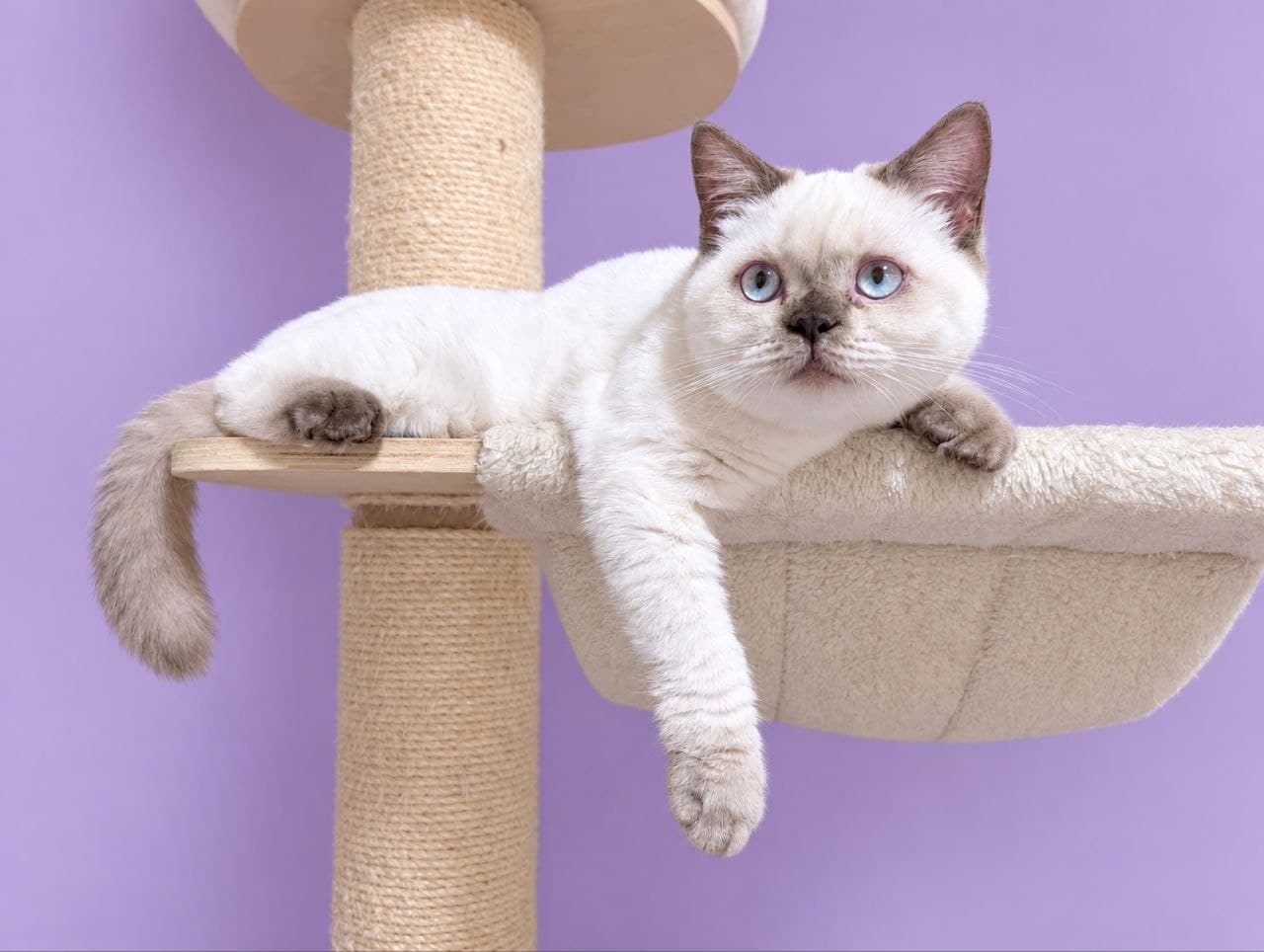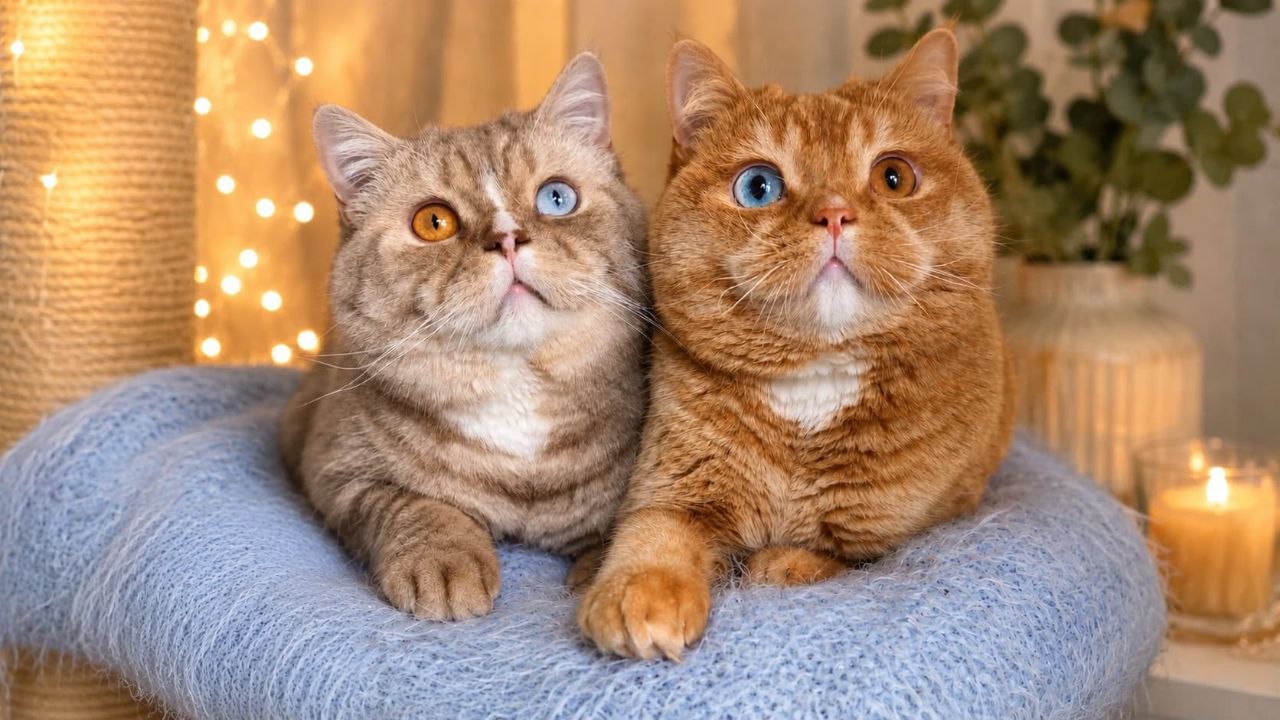
Many prospective owners wonder how two chocolate British Shorthairs can produce a delicate lilac kitten, or why a warm amber-eyed litter might suddenly include a kitten with vibrant sky-blue eyes. In pedigree feline breeding, coat color is never random luck—it is a precise mathematical expression of genetic inheritance.
In this guide, we break down the genetics behind British Shorthair colors into clear, human terms, complete with a practical loci comparison table and real photo examples from our cattery.
From Roman Legionaries to Persian Bloodlines: How the Coat Evolved
The British Shorthair traces its heritage back over two thousand years. Roman soldiers introduced sturdy domestic cats to the British Isles to guard grain supplies. Through natural selection and interbreeding with native European wildcats, these working cats developed a dense, weather-resistant pelt and a compact cobby frame. The historical benchmark of the British Isles was the solid grey-blue coat—the iconic British Blue.
However, following World War II, the surviving pedigree population in Europe was nearly lost. To preserve the breed from extinction and restore its substantial bone structure, dedicated breeders strategically outcrossed survivors with Persian cats.
This pivotal outcross contributed two permanent hallmarks to modern British Shorthairs:
- Conformation: The signature massive round head with plump cheeks (jowls) and the crisp, resilient double coat.
- Genetic Palette: Persian lines introduced recessive alleles for rare colors into the British gene pool—including chocolate, cinnamon, dilution (lilac and fawn), as well as silver and golden shaded varieties.
The Two Core Feline Pigments
No matter how complex or subtle a feline coat appears, all coat coloration derives from just two biochemical forms of melanin:
1. Eumelanin (Black Pigment Foundation): Dense, elongated granules that create the black, chocolate, and cinnamon series depending on allele mutation. 2. Phaeomelanin (Red Pigment Foundation): Spherical granules responsible for warm red and cream tones, governed by the sex-linked Orange locus on the X-chromosome.
Every other glorious variation in our cattery is shaped by modifier genes that dilute granules, organize them into bands, or inhibit pigmentation at the hair base.
British Shorthair Coat Genetics Loci Table
In feline genetics, dominant alleles are capitalized and express whenever present; recessive alleles are lowercase and require two matching copies to display visually.
| Genetic Locus | Allele Hierarchy | Coat Expression (Phenotype) | Grand Liberty Real Example |
|---|---|---|---|
| B (Brown) | B (Black) > b (Chocolate) > b' (Cinnamon) | Solid Black (B/-), Deep Chocolate (b/b), Warm Cinnamon (b'/b') | Donna (BRI b 25 chocolate ticked) |
| D (Dilution) | D (Dense) > d (Dilute) | Black + d/d = Blue Chocolate + d/d = Lilac Cinnamon + d/d = Fawn |
Cosmos (BRI c 25 lilac ticked male) |
| T (Tabby) | T^a (Ticked) > T (Mackerel) > t^b (Classic Blotched) | Agouti hair with 3 to 5 alternating dark and light rings without torso stripes | A-Dendi litter (BRI d 25 red ticked) |
| I / Wb | Melanin Inhibitor & Wideband | Silver Shaded (ns 11) and Golden Shaded (ny 11 / ny 25) with emerald eyes | Grand Liberty exhibition breeding queens |
| DBE (Blue Eyes) | Dominant Blue Eye Mutation (Altai) | Vivid sky-blue eyes or odd-eyes (heterochromia) in full-colored non-white coats | Stud male Uran (Uran) |
The Chemistry of Dilution: How Lilac and Fawn Kittens Occur
A common question from kitten buyers is: “Why are lilac and fawn kittens rarer and more sought after?”
The answer lies in recessive inheritance: 1. For a kitten to display a lilac coat, it must inherit two recessive chocolate alleles (b/b). 2. Simultaneously, it must inherit two recessive dilution alleles (d/d).
If either parent passes down a dominant black allele (B) or dense pigmentation gene (D), the kitten will visually appear black or chocolate, merely carrying dilution silently. The authentic lilac British plush is a breathtaking, frost-kissed dove-grey with delicate lavender-pink undertones.
Ticked Tabby (BRI 25): The Royal Moiré Effect
While many domestic cats carry classic stripes or spots, Grand Liberty specializes in the sophisticated Ticked Tabby variety (EMS code 25).
Under the influence of the agouti T^a allele, body striping completely dissolves. Each single hair shaft displays multiple alternating bands of dark and light pigment, creating an iridescent, sand-ripple moiré texture reminiscent of a mink coat. Paw pads and the tip of the tail retain the saturated primary base tone.
Dominant Blue Eyes (DBE): Dispelling the Deafness Myth
For centuries, blue eyes in cats were restricted to all-white coats or the temperature-sensitive Siamese colorpoint pattern. In all-white cats, blue eyes frequently co-occurred with congenital deafness caused by cochlear degeneration.
Recent scientific breakthroughs introduced the Dominant Blue Eyes (DBE / Altai) mutation:
- DBE redistributes melanin selectively within the iris without compromising the inner ear auditory pathways.
- All Grand Liberty DBE breeding cats possess verified 100% normal bilateral hearing confirmed by clinical BAER testing.
- This allows us to breed healthy solid chocolate, lilac, and ticked kittens with mesmerizing cornflower-blue eyes or odd-eyes (heterochromia).
Understanding Feline Eye Color Maturation
Every kitten opens its eyes with a cloudy slate-blue hue. This is an optical effect caused by the absence of melanin in the infant iris stroma, not its final adult shade.
- Between 2 and 4 Months: Melanocytes migrate into the iris. The color shifts through grey and hazel tones.
- Between 12 and 18 Months: The permanent adult eye color stabilizes into radiant copper or deep amber in solid coats, or brilliant emerald green in silver and golden shaded varieties.
Advice for Prospective Buyers: Prioritizing Health Over Color
When choosing a pedigree companion:
- Coat color does not dictate personality—gentle, affectionate temperaments stem from familial socialization and balanced parents.
- Rare color varieties demand rigorous genetic and cardiac screening.
- All Grand Liberty breeding parents are tested negative for Polycystic Kidney Disease (PKD) via certified Laboklin DNA panels and undergo routine Doppler echocardiography (HCM).
Summary & Next Steps
Feline genetics represents a marriage of historical resilience and modern scientific ethics. By understanding coat inheritance, you can choose your ideal companion with complete confidence.
Explore our available kittens in the adoption directory or schedule a private consultation with our master breeder.
Sources & References
- Fédération Internationale Féline (FIFe) Official Breed Standard & Color Codes.
- World Cat Federation (WCF) Feline Color Nomenclature & Genetics Compendium.
- Laboklin Clinical Veterinary Genetics Laboratory Documentation (Bad Kissingen, Germany).